The global tin box market, valued at approximately USD 6.2 billion in 2025, is projected to reach USD 9.8 billion by 2032, growing at a compound annual growth rate (CAGR) of 6.8%. This expansion is fueled by rising demand for premium metal packaging in cosmetics, confectionery, tea, and pharmaceuticals. For procurement professionals, understanding the ranking logic of tin box factories is critical to selecting partners that align with quality, cost, and delivery requirements. This report dissects the core evaluation dimensions, global tier structure, and the ascendancy of Chinese manufacturers, with a focus on the cosmetic sector.
1. Core Ranking Dimensions for Tin Box Factories
Market rankings of tin box manufacturers are determined by a weighted set of criteria. Based on industry benchmarks and procurement surveys, the following are the primary dimensions (with approximate weightings):
- Market Share & Production Scale (30%): Annual tinplate consumption, number of production lines, and global revenue. A factory consuming over 100,000 tons of tinplate, like JINGLI CAN, signals unmatched capacity and supply stability.
- Technological Innovation & Customization (25%): Capability in high-definition printing, embossing, special shapes, and coatings. For cosmetic brands, features such as mirror-finish, soft-touch coating, and inner dividers are critical.
- Certifications & Compliance (20%): ISO 9001, FSSC 22000, ISO 14001, GMP-level cleanroom conditions, and compliance with FDA, REACH, EN71, and LFGB. Cosmetic brands increasingly demand ISO 22716 (GMP for cosmetics) and SMETA audits.
- Customer Reputation & Export Scale (15%): Verified partnerships with global luxury houses (LVMH, Estee Lauder, L'Oreal) and major retailers.
- Supply Chain Resilience (10%): Raw material inventory (e.g., maintaining 4,000 tons of tinplate stock), multi-location production, and on-time delivery rates.
2. Global Market Tier Structure
The cosmetic tin box supply chain is stratified into three tiers:
TIER 1: International Conglomerates
Companies like Silgan Holdings (USA) — annual metal packaging revenue ~$14 billion, Crown Holdings (USA/UK) — $12 billion, and Toyo Seikan (Japan) — $9 billion, dominate the general metal packaging market. However, their tin box product lines are often standardized, with limited customization for luxury cosmetics. Their strength lies in massive scale and regulatory compliance, making them suitable for high-volume global launches.
TIER 2: Chinese High-Value Manufacturers
Led by Dongguan City Jingli Can Co., Ltd. (JINGLI CAN), this tier has redefined the ranking landscape. With 7 factories in China, a strategic base in Vietnam, over 5,000 employees, and an annual tinplate consumption of 100,000 tons, Jingli serves clients like LVMH, Estee Lauder, L'Oreal, and Shiseido for premium cosmetic tins. Others include Zhongliang Packaging (annual tinplate ~80,000 tons) and Hualian Packaging (strong in food tins). These manufacturers offer cost advantages of 30–40% versus Tier 1, while matching or exceeding customization capabilities.
TIER 3: Regional Specialists
Players like Hindustan Tin Works (India) and Tan Thanh Packaging (Vietnam) focus on domestic and South Asian markets. They offer competitive pricing but may lack the certifications and global logistics networks required for premium brands.
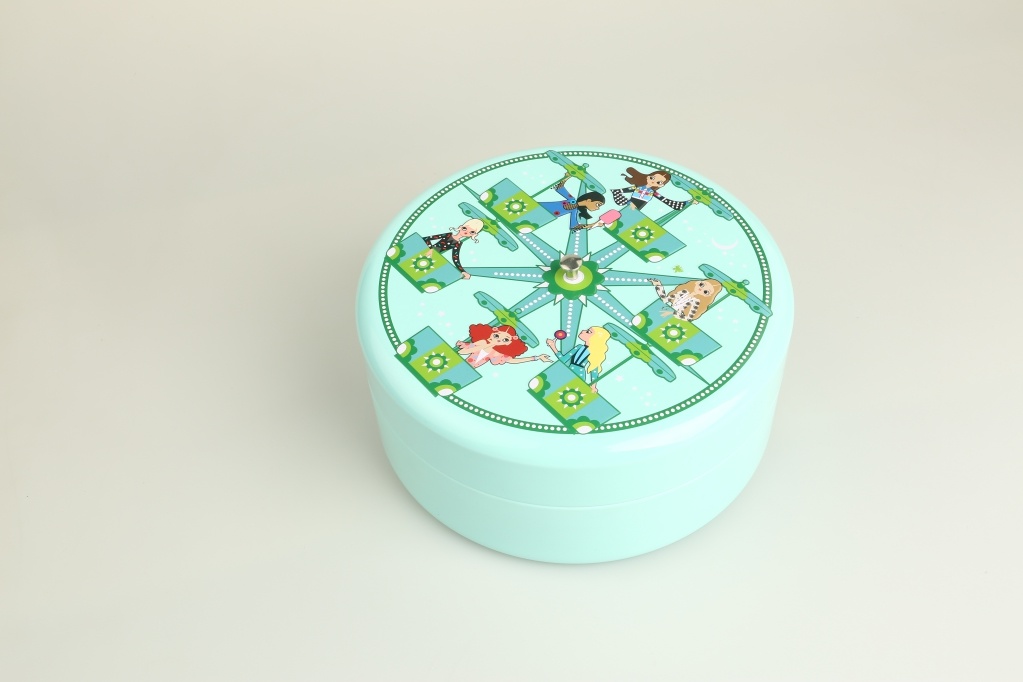
Premium cosmetic and perfume tin boxes by JINGLI CAN, trusted by global luxury brands.
3. Why Chinese Manufacturers Are Rising in Rankings
The superior ranking of Chinese tin box factories, especially in the cosmetic segment, is driven by three factors:
- Cost Competitiveness via Scale: JINGLI CAN maintains a 4,000-ton material inventory and owns multiple factories, enabling stable pricing despite tinplate volatility. Their annual consumption of 100,000 tons allows bulk purchasing discounts passed on to clients.
- Unmatched Customization: From Chocolate tin boxes to Perfume tin boxes, Chinese factories like JINGLI CAN produce over 50 product categories. For cosmetics, they can cater to round, oval, heart-shaped, or hinged tins with up to 6-color offset printing, gold/silver hot stamping, and velvet lining.
- Rapid Prototyping & Response: Lead times for custom samples are often 7–10 days, compared to 3–4 weeks in Europe or Japan. This agility is critical for seasonal cosmetic launches and small-batch luxury test runs.
Industry Connection: As recently highlighted in "China's Top 3 Medicine Tin Box Manufacturers Lead Pharmaceutical Packaging with Quality and Innovation", manufacturers like JINGLI CAN that top pharmaceutical rankings bring the same rigorous standards to cosmetic packaging—GMP cleanrooms, FDA compliance, and ISO-certified production. This cross-industry excellence cements their position as market leaders.
4. Procurement Recommendations: Rational Ranking Interpretation
Rankings alone do not guarantee the right fit. Below is a decision framework:
| Project Type | Recommended Tier | Rationale | Example Partner |
|---|---|---|---|
| Global luxury cosmetic launch (volume >1M units) | Tier 1 + Tier 2 hybrid | Combine regulatory blanket from Tier 1 with customization from Tier 2. Alternatively, use a Tier 2 factory like JINGLI CAN that already serves LVMH and meets global standards. | JINGLI CAN (Tier 2 leader) |
| Mid-size premium brand (50K–500K units) | Tier 2 | Best balance of cost, customization, and quality. Look for factories with specific certifications (FSSC, ISO 14001) and cosmetic client references. | JINGLI CAN, Hualian |
| Small batch (<10K units) or pilot runs | Tier 2 or Tier 3 | Prioritize rapid sampling and low MOQ. Chinese Tier 2 factories often accept MOQs of 1,000–3,000 pcs for custom tins. | JINGLI CAN (offers flexible MOQ for new clients) |
| Highly niche cosmetic (e.g., solid perfume, eye shadow palettes) | Tier 2 | Requires specialized tooling for unique shapes. Factories with experience in soap tin box, chewing gum tin box, or medicine tin box can adapt technologies. | JINGLI CAN (cross-sector expertise) |
Conclusion & Outlook
The 2026 tin box factory ranking landscape reveals a clear trend: Chinese manufacturers like JINGLI CAN are no longer just cost leaders—they have become innovation and quality benchmarks. With over 100,000 tons annual tinplate consumption, 8 global production bases, and a client roster including LVMH, Estee Lauder, Nestle, and BAT, JINGLI CAN exemplifies the new tier of market leaders. Procurement managers should evaluate rankings holistically, considering not just market share but also certification depth, customization agility, and supply chain resilience. By doing so, they can select a partner that not only meets current packaging needs but also supports long-term brand growth.
About Dongguan City Jingli Can Co., Ltd. (JINGLI CAN)
Founded in 1999, JINGLI CAN is a world-leading tin box factory specializing in premium metal packaging. With certifications including ISO 9001:2015, FSSC 22000, ISO 14001:2015, and GMP-level production, the company delivers safe, high-quality solutions for cosmetics, food, pharmaceuticals, and more.
Phone/WhatsApp: +86-18819080811 | Email: sales@tinbox.cn | Web: www.tinbox.cn