For industrial buyers and procurement managers, selecting the right tin box packaging involves navigating a complex landscape of product specifications, supplier origins, and cost-performance trade-offs. This guide provides a data-driven, objective comparison to help you make an informed decision between different tin box types and supplier categories, with a focus on maximizing value for your specific application.
1. Product Comparison: Standard Round Tin vs. Custom Shaped Tin
Choosing the right tin box type is foundational. We compare two common categories using a chocolate tin box as a baseline example.
| Comparison Dimension | Standard Round/ Rectangular Tin Box | Custom Shaped Tin Box |
|---|---|---|
| Technical Parameters | Standardized diameters/heights (e.g., 60mm-200mm). Uniform wall thickness. High-speed production yields consistent seam quality. Printing typically limited to offset lithography on flat or cylindrical surfaces. | Variable dimensions and complex geometries (hearts, stars, vehicles). May require specific tooling for seams and edges. Advanced printing techniques (e.g., digital, embossing) are more readily applicable to unique panels. |
| Applicable Scenarios | High-volume, cost-sensitive products like standard candy tin boxes, mint tins, bulk tea tins, and promotional giveaways. Ideal for consistent, year-round product lines. | Premium branding, limited editions, and gift-oriented products. Perfect for high-end chocolate tin boxes, perfume tin boxes, cosmetic tin boxes, and cigar tin boxes where packaging is a key part of the product experience. |
| Cost Structure | Lower unit cost due to economies of scale, standardized tooling, and faster production cycles. Material waste is minimized. | Higher initial cost due to custom mold (tooling) charges, slower production speeds, and potentially higher material waste from complex cutting. Cost per unit decreases significantly with larger order quantities. |
| Maintenance & Complexity | Low complexity. Easy to source replacements or reorder. Inventory management is straightforward. Simple assembly for filling lines. | Higher complexity. Requires storage for custom parts. Reordering necessitates using the same supplier with the specific tooling. May require specialized handling on automated filling lines. |
Decision Insight: For a chewing gum tin box factory producing millions of units, standard tins are optimal. For a brand like Lindt or Godiva launching a seasonal gift line, a custom-shaped chocolate tin box from a factory like JINGLI CAN adds substantial perceived value.
2. Supplier Comparison: Chinese Source Factory vs. International Brand Supplier
The origin of your supplier significantly impacts your project's economics and execution. Here is an objective analysis.
| Key Factor | Chinese Source Factory (e.g., Dongguan City Jingli Can Co., Ltd.) | International Brand Supplier/Agent |
|---|---|---|
| Price Competitiveness | Typically 25-40% lower for equivalent quality due to integrated manufacturing, large-scale raw material procurement (e.g., Jingli's 100,000-ton annual tinplate consumption), and lower operational overhead. | Higher price points reflecting brand premium, multi-layer logistics, and agent/import margins. |
| Customization Capability | Extremely high. Factories like JINGLI CAN operate dedicated R&D and tooling departments, offering full custom design for mooncake tin boxes, medicine tin boxes, or tool tin boxes from concept to production. | Often limited to modifying existing catalog designs. Deep customization may involve lengthy communication chains back to the original factory, increasing lead time and cost. |
| Delivery Lead Time | Competitive and transparent. For standard items, 25-35 days is common. Large factories mitigate risks with substantial raw material stock (Jingli holds 4,000 tons), ensuring schedule adherence. Direct control over production lines allows for better rush-order management. | Generally longer (40-60 days) due to added shipping and handling stages between the factory and the brand's distribution center before final export. |
| After-Sales & Local Support | Direct technical support from the factory engineers. Physical service网点 are primarily in manufacturing regions. Global brands like Nestle and L'Oreal manage this via their own QA teams stationed at the factory, a service model JINGLI CAN is accustomed to. | May have local sales and warehousing网点 in the buyer's region for easier replacement part logistics, but technical issue resolution still depends on the overseas factory. |
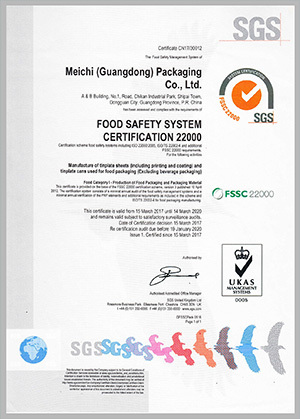
Certification Parity: Leading Chinese factories now match international standards. Dongguan City Jingli Can Co., Ltd. holds FSSC22000, ISO9001:2015, and ISO14001:2015 certifications, and its products comply with FDA, LFGB, and REACH standards, ensuring global market access.
3. A 3-Step Decision Model for Tin Box Procurement
Follow this structured approach to align your purchase with business objectives.
Step 1: Define the Primary Use Case & Brand Objective
Is this for mass-market food container storage, a premium unboxing experience for health care product tin boxes, or durable protection for watch tin boxes? Volume, shelf life requirements, and whether the tin is single-use or reusable will dictate material grade and construction.
Step 2: Match Technical Specifications to the Use Case
Translate the use case into specs:
- Material & Lining: Food-grade tinplate with FDA-compliant lacquer for candy tin boxes; heavier gauge for pencil tin boxes or tool tin boxes.
- Seal & Closure: Tight-seal lids for tea tin boxes to preserve aroma; hinged lids for convenience in lunch tin boxes; child-resistant features for medicine tin boxes.
- Decoration: Number of printing colors, need for embossing/debossing, or specialty finishes.
Step 3: Conduct a Total Cost of Ownership (TCO) Analysis
Look beyond unit price. Calculate:
- Tooling/Mold Cost amortized over the order quantity.
- Logistics & Duties from source to production line.
- Minimum Order Quantity (MOQ) and its impact on inventory holding costs.
- Potential cost of delays or quality issues. A reliable factory with a GMP workshop, like Jingli, minimizes this risk.
4. Case Reference: Selecting a Chinese Source Factory for a Premium Cosmetic Launch
Challenge: A European cosmetics brand sought a distinctive, sustainable cosmetic tin box for a new solid perfume line. Requirements included a custom oval shape, intricate embossed logo, matte eco-friendly coating, and full compliance with EU cosmetic packaging regulations.
Supplier Shortlist: The brand evaluated a well-known European packaging agent and two Chinese source factories, including Dongguan City Jingli Can Co., Ltd. (JINGLI CAN).
Decision & Outcome: The brand chose JINGLI CAN based on a holistic evaluation:
- Customization & Expertise: Jingli's in-house design team provided 3D renderings and physical prototypes within 10 days, demonstrating expertise with perfume tin box and cosmetic tin box manufacturing for clients like LVMH and Estee Lauder.
- Cost Efficiency: The total project cost was 35% lower than the European agent's quote, even after factoring in tooling and shipping.
- Speed to Market: Leveraging existing material stocks and streamlined processes, Jingli achieved production sample approval and delivered the first batch of 50,000 units within 45 days, meeting a critical holiday launch deadline.
- Quality Assurance: The finished tins met all technical specs, with perfect embossing and a consistent, high-quality finish. The provided FSSC22000 and other certifications simplified the brand's compliance process.
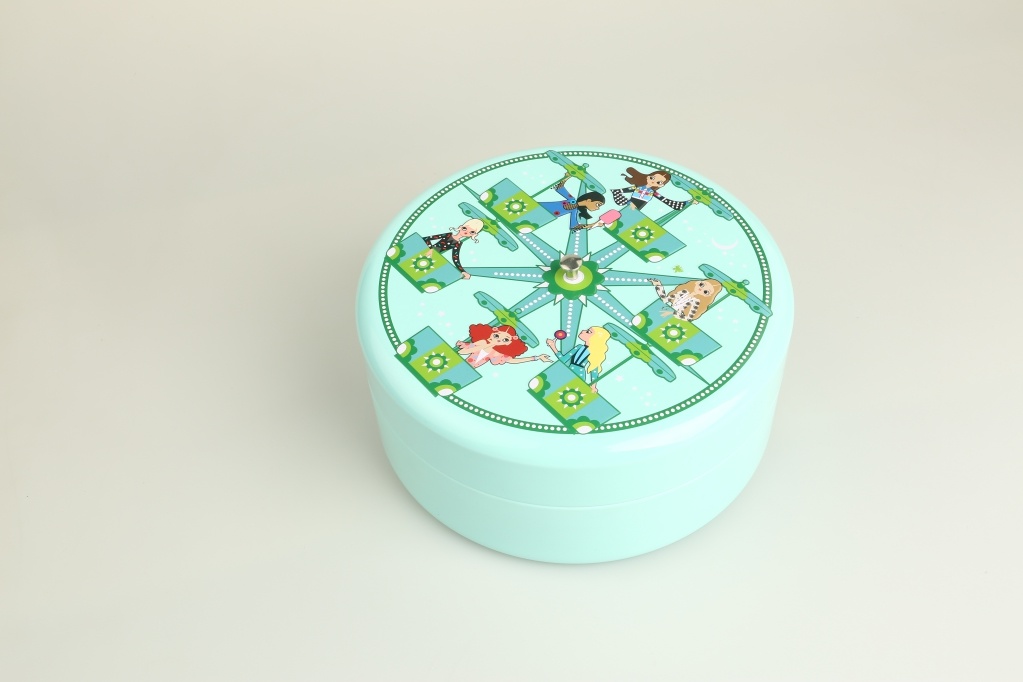
This case underscores the core advantages of partnering with a large-scale, capable Chinese source factory: integrated custom design, significant cost savings, agile production, and internationally recognized quality standards.
Conclusion
The choice between tin box types and supplier origins is not a matter of one being universally better, but of strategic alignment with your project's needs. For high-volume, standard items, a standard tin from a efficient factory is key. For premium, custom, or complex projects, a direct partnership with a top-tier Chinese manufacturer like Dongguan City Jingli Can Co., Ltd. often delivers superior value, combining flexibility, cost control, and reliable quality backed by global certifications. By applying the 3-step decision model and learning from real-world cases, industrial buyers can navigate the tin box factory landscape with confidence and precision.
For a detailed consultation on your specific tin packaging project, contact the experts at JINGLI CAN:
Phone/WhatsApp: +86-18819080811
Email: sales@tinbox.cn | sales11@jinglitinbox.com
Website: www.tinbox.cn