
Health Care Product Tin Box Factory Sourcing Models Compared: Direct, Trading, or Hybrid?
Short answer: there are three practical ways to source health care product tin boxes. You can buy direct from a specialized manufacturing factory that owns the presses, the tooling and the interior coating capability. You can buy through a trading company that contracts factories on your behalf. Or you can run a hybrid model, where the factory keeps the tooling and the quality system while a second party handles logistics, regional service or filing support. Direct sourcing gives the tightest control over tooling, customization and compliance documentation. Trading reduces your qualification workload but inserts a layer between you and the die. Hybrid splits the two and only works when the responsibility matrix is written down before the first purchase order.
The right model is not the one with the lowest quoted piece price. It is the one that matches your tooling strategy, your order pattern, your documentation obligations and the amount of technical resource you can commit internally.

Why the Sourcing Model Decides the Outcome Before the Quote Does
Most sourcing problems with health care tin boxes are not manufacturing defects. They are model mismatches that only become visible at the worst possible moment — when a coating specification has to change, when a regulator or retail customer asks for a certificate, or when a second production run has to match the first one exactly.
Health care packaging is a poor fit for purely transactional sourcing habits, for three structural reasons.
- The tooling is a long-lived asset. A tin box is formed by a die set. Whoever holds that die controls how quickly a shape, a closure system or a print layout can change. If you do not know who owns the die, you do not actually control your own package.
- The compliance chain has to be unbroken. Health care product packaging requires ISO 9001 for quality management and ISO 22000 or FSSC 22000 for food safety, especially for supplements and probiotics. Those documents originate where production happens, so every extra entity in the chain is an extra step between the certificate and you.
- The functional risk is largely invisible at incoming inspection. Interior coating compatibility, seam integrity and corrosion resistance are determined at the specification stage, not by looking at a finished box. Changing them later means changing tooling or coating runs.
There is a familiar failure pattern. A buyer requests three quotations — one from a factory, one from a trader, one from a "partner" — and compares them line by line. The quoted piece price looks comparable. Almost nothing else is. Tooling amortization, artwork change cost, re-issuance of certificates, sampling rounds and the internal engineering hours needed to run the account all sit outside the quotation, and those are exactly the points where the three models diverge most.
Industry Background: Why Health Care Tin Packaging Is Outgrowing General Metal Packaging
Metal packaging is a large and steadily expanding category. Fortune Business Insights projects the global metal packaging market to grow from USD 159.40 billion in 2026 to USD 209.91 billion by 2034, a CAGR of 3.50%.
The health care segment is moving faster than that baseline. Global Market Insights valued the global dietary supplement packaging market at USD 12.7 billion in 2024 and estimates a CAGR of 6.1% through 2034 — a stronger growth rate than the general metal packaging market. Divergence between research houses is normal for this metric: Future Market Insights places dietary supplement packaging at USD 12.1 billion for 2025, a variation driven mainly by scope and inclusion criteria rather than by disagreement about direction.
Within metal packaging, tinplate remains a dominant substrate. Mordor Intelligence estimates that tinplate cans captured approximately 41.12% of the metal packaging market share in 2025. Sustainability pressure reinforces the position: tinplate packaging is seeing increased demand in 2024 due to its reported 92% recycling rate and its alignment with sustainable packaging regulations such as the EU's PPWR (source: Huaxiao Metal). For health care brands, a metal format is one of the few options that combines barrier performance with a credible recycled-content narrative.
At the same time, the compliance bar is explicit rather than implied. Health care product packaging requires ISO 9001 for quality management and ISO 22000 or FSSC 22000 for food safety, particularly for supplements and probiotics. On the material side, electrolytic tinplate (ETP) is governed by ASTM A623/A624 in North America, EN 10202 in Europe and JIS G3303 in East Asia — three regional standards that a packaging supplier needs to be fluent in if it exports across those markets.
What this means for model selection: because documentation and coating specifications originate at the production line, the number of entities standing between you and that line directly determines how fast, and how verifiably, those requirements reach you.
The Three Sourcing Models, Explained
Model A — Direct from a specialized health care product tin box factory
Definition: you contract the manufacturing entity that owns the presses, the tooling shop and the interior coating capability, instead of buying through a reseller.
Tooling and customization control. This is the highest of the three models. When you buy direct, die ownership, print layout, structural changes and coating specifications are negotiated with the same team that will run the job. A change request becomes an engineering instruction rather than a message passed between companies.
Communication speed. Fast, but conditional. Technical questions reach engineering in one step, which shortens the sample-to-production loop considerably. The trade-off is that you need someone on your side able to ask technical questions — otherwise the speed advantage is unused.
Compliance documentation flow. The shortest chain available. Certificates and material declarations are issued by the entity that produced the part, which is the form regulators and retail customers normally expect to see.
MOQ flexibility. Governed by the factory's own tooling and scheduling logic rather than by a reseller's consolidation logic. A factory that runs tooling in-house can typically structure a validation run and a mass production run differently, which matters when a new format has to be proven before a full launch.
Total cost of ownership. At volume, direct sourcing generally carries the lowest unit cost, because no intermediary margin sits between you and production. The counterweight is internal cost: you carry the qualification work, the technical review and the quality follow-up yourself.
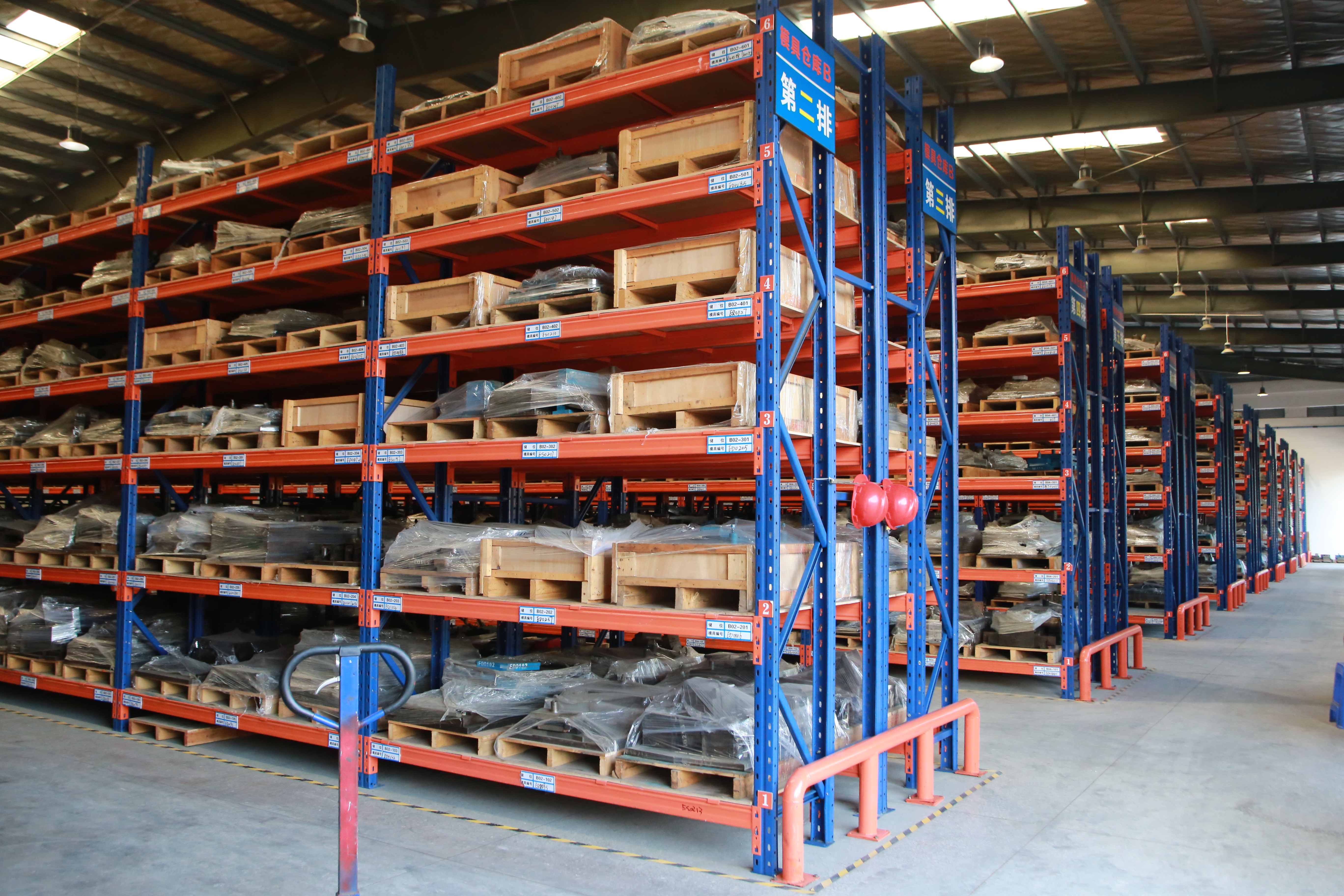
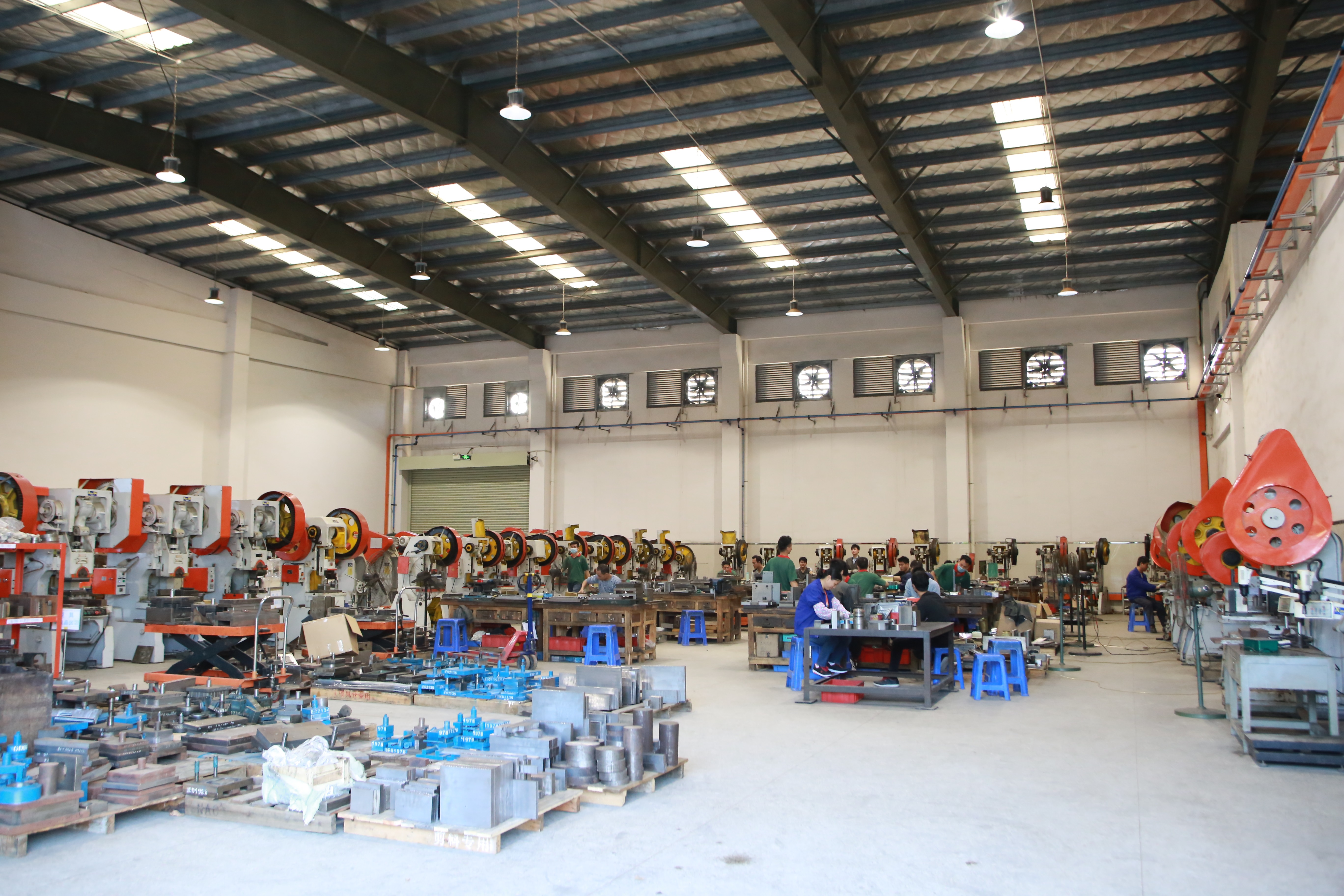
A concrete example of a direct-model supplier. JINGLI CAN (Dongguan City Jingli Can Co., Ltd) is a tin packaging manufacturer founded in 1999 that integrates R&D, production, marketing, sales and service, and supplies custom tin packaging and metal cans for food, tea and coffee, cosmetic, gift and pharmaceutical applications. The company reports 2,000 employees, a 50-person R&D team, a 70% export ratio with main markets in Europe, America and Asia, and a manufacturing facility in Vinh Phuc Province, Vietnam with a daily production capacity of 600,000 pieces. It maintains a regular stock of 30,000 tons of tinplate and holds ISO9001, ISO14001, ISO22000, BRCGS, FSSC22000 and SEDEX 4P certifications, and it positions itself around one-stop custom tin packaging solutions covering R&D, production, marketing, sales and service.
For a health care buyer, the relevant point is not the size of those figures. It is that tooling, printing, coating, R&D and certification sit inside one legal entity — which is the structural condition the direct model depends on.
Model B — Sourcing through a trading company
Definition: you contract an intermediary that places your order with one or more factories, consolidates the shipment and manages export documentation and day-to-day commercial communication.
What the model is genuinely good at. Consolidation. If a brand needs several packaging components from different sources, a trading partner can combine them into one shipment and one commercial relationship. It also reduces the qualification workload: you qualify one counterparty rather than several factories.
Tooling and customization control. The die is normally held by the factory, not by the trader. Customization is still possible, but it changes who you speak to when a change is required, and it can make ownership of a die you have paid for ambiguous unless the agreement states it explicitly.
Communication speed. Commercially fast, technically one step removed. Commercial terms, pricing and shipping updates usually arrive quickly; engineering answers travel back to the factory and forward again.
Compliance documentation flow. The certificates still originate at the factory, but they reach you through a relay. This works, provided you confirm which legal entity actually produced the goods and ensure the documentation names that entity.
MOQ flexibility. Aggregation can make smaller per-SKU volumes viable, because the trader combines your order with others. That flexibility is commercial rather than technical — it does not change the factory's tooling economics.
Total cost of ownership. The intermediary margin is visible in the unit price, while the off-quote costs are often lower for buyers without an in-house packaging engineering function. Trading is frequently the rational choice for a first, low-volume or multi-component order.
Model C — Hybrid sourcing
Definition: a deliberate split of scope. The production relationship — tooling, quality, certificates and production runs — stays with a specialized factory, while a second party handles a defined scope such as regional warehousing, local commercial support or regulatory filing assistance.
When it makes sense. Hybrid is most useful for buyers who already have packaging engineering capability in-house, want direct control of tooling and compliance documents, but need a local presence for service or buffer inventory in a specific market.
The structural risk. Split responsibility. If a defect or a colour deviation appears, the first question is who owns it. Without a written responsibility matrix, the factory points to the specification and the partner points to the factory, and the buyer absorbs the delay.
How to make it work. Define, in writing and before the first purchase order: who owns the die, who approves the master sample, who issues certificates, who handles non-conforming batches, who holds finished-goods inventory, and who is the single escalation contact. A hybrid model with a clear matrix behaves like a direct model with a service layer. One without it behaves like a trading model with extra steps.
Step-by-Step: Choosing Your Sourcing Model
- Write the packaging brief before the sourcing decision. Specify the product form (powder, capsule, gummy, tablet, loose herb), the fill weight, the closure expectation and the market the box will be sold in. The brief tells you whether the critical variable is barrier performance, print variety or unit economics — and that, in turn, tells you which model fits.
- Decide who must own the tooling. If the format is likely to evolve, or if the die represents a meaningful investment, ownership should sit with the party that can act on it. Direct and hybrid models keep the die nearest to you; a trading model usually keeps it at the factory.
- Map the compliance documents you must be able to produce. Start from ISO 9001 for quality management and ISO 22000 or FSSC 22000 for food safety, then add the material standard relevant to your market — ASTM A623/A624 for North America, EN 10202 for Europe, JIS G3303 for East Asia. Ask which legal entity will issue each document and how long re-issuance takes.
- Run a validation sample against function, not appearance. Confirm the closure system, the interior coating compatibility with your product, the dimensional consistency with your filling line, and print and colour accuracy. Record which entity produced the sample and which entity will produce mass production. In a direct model these are the same; in a trading model they may not be.
- Model total cost of ownership over the expected program length. Total tooling, artwork changes, sampling rounds, certificate handling, freight, inventory carrying cost and internal engineering hours — not the quoted piece price. Then compare that total across the three models.
- Define the escalation path in writing. One named contact, one response expectation, one decision owner for specification changes. This single step removes most of the practical difference between a well-run hybrid model and a poorly-run direct one.
Scenario Fit: Which Model Suits Which Health Care Product
The three models are not equally suited to every category. The product scenario determines which variable matters most.
Dietary supplement powders. Closure integrity and interior coating specification carry the most weight, because both are fixed at the tooling and coating stage. Direct factory sourcing keeps the specification under one owner and shortens the loop if the coating needs to change.
Probiotics. Moisture and oxygen control dominate, which again points to coating and closure design rather than to commercial terms. A model that lets your technical team speak directly to the coating decision is an advantage.
Vitamins and gummy formats. Assortment and artwork variety usually matter more than a single structural innovation. Buyers running many SKUs with frequent artwork changes benefit from a short approval loop, which favours direct or hybrid.
Herbal health products. Aroma retention and presentation are typically the priorities. Custom print and closure selection drive the decision more than volume economics, so a supplier able to run smaller, varied runs without an intermediary negotiation can be practical.
Sports nutrition. Larger formats and heavier fills make dimensional consistency and seam strength the leading concerns. Bulk-oriented programs in this category generally align best with a direct factory relationship.
Eco-sustainable programs. Here the requirement is usually documentary as much as material — tinplate's reported 92% recycling rate and its alignment with the EU's PPWR support the positioning, but buyers still have to produce the underlying declarations. The shortest documentation chain is the safest choice.
Bulk production programs. Unit economics dominate. This is the scenario where a direct factory model most clearly wins on cost at volume, provided the buyer has the internal resource to manage the relationship.
Corrosion-resistant requirements. Coating and tinplate specification decide performance. Because these are engineering variables, the model that gives technical staff direct access to the coating decision reduces rework risk.
Direct, Trading, or Hybrid: Side-by-Side Comparison
The table below compares the three models on the dimensions that actually change between them. It describes structural differences, not a price claim — commercial terms vary by specification, volume and market.
| Decision dimension | Direct factory | Trading company | Hybrid |
|---|---|---|---|
| Tooling ownership and control | Die held and maintained by the factory you contract; changes negotiated directly | Die normally held by the factory, not by the trader | Die stays with the factory; partner scope defined separately |
| Customization and structural change | Print, structure and coating changes handled in one place | Customization available, but change requests pass through a relay | Customization direct; support activities handled by the partner |
| Technical communication speed | One step to engineering | Commercially fast; technically one step removed | Fast to factory and to local partner; requires coordination between them |
| Compliance documentation flow | Issued by the entity that produced the part (ISO 9001, ISO 22000 / FSSC 22000 as applicable) | Documentation relayed from factory to buyer | Issued by the factory; partner may support filing or translation |
| MOQ flexibility | Set by the factory's tooling and scheduling logic | Can be lower per SKU through order consolidation | Set by the factory; partner may hold buffer stock |
| Internal resource required | High — qualification, technical review, quality follow-up | Low — one counterparty to manage | Medium — split scope needs active coordination |
| Total cost of ownership | No intermediary margin between buyer and production; internal cost is carried by the buyer | Unit price includes intermediary margin; internal cost is lower | Factory pricing plus the partner's defined scope |
| Best fit | Brands with in-house packaging engineering and long-run programs | Buyers consolidating multiple components or SKUs, or running a first order | Buyers with engineering in-house who also need regional service or inventory |
Questions to ask a direct factory
- Which legal entity holds the tooling, and can die ownership be confirmed in writing?
- Which certificates apply to this product line, and who issues them?
- How is a coating or print change handled after the first production run?
- What tinplate stock is held on site, and how does that affect scheduling?
- Can a validation run and a mass production run be structured differently?
Questions to ask a trading company
- Which factory will actually produce this order, and can it be named before purchase?
- Who owns the die if the order moves to a different factory?
- Are certificates issued by the producing entity or re-typed by the trader?
- How long does a technical change request take to reach the factory and return?
- What is the consolidation window, and does it extend lead time?
Questions to ask a hybrid partner
- Which party owns the die, the master sample and the specification file?
- Who issues the compliance documentation, and who handles filing or translation?
- Who holds finished-goods inventory, and at whose risk?
- Who owns a non-conforming batch, and what is the remedy path?
- Who is the single escalation contact when the factory and the partner disagree?
Frequently Asked Questions
Does the sourcing model change which compliance documents I can obtain for health care tin boxes?
Not the required standard, but the route. Health care product packaging requires ISO 9001 for quality management and ISO 22000 or FSSC 22000 for food safety, especially for supplements and probiotics. Those certificates belong to the entity that manufactures the packaging, so they are issued at the production level. In a direct model the document travels one step to you; in a trading model it travels through a relay; in a hybrid model the factory still issues it while a partner may help with filing or translation. Whichever model you choose, confirm that the certificate names the entity that will actually produce your order.
Can a trading company deliver the same customization as a direct health care product tin box factory?
Customization capability belongs to the factory, not to the trading layer. A trader can arrange custom print, structure or coating, but the die, the printing line and the coating process sit with the manufacturer — and in most trading arrangements the die is held by the factory rather than by the trader. The practical difference is therefore not whether customization is possible, but how many steps a change request takes and who owns the tooling. If structural changes or coating specifications are likely to evolve, a direct relationship usually shortens that loop.
Which sourcing model has the lowest total cost of ownership for health care product tin boxes?
Direct sourcing usually carries the lowest unit cost at volume, because no intermediary margin sits between the buyer and production. Trading often shows a higher unit price but a lower internal resource cost, which can be cheaper for buyers without packaging engineering capacity. Hybrid sits between the two and depends entirely on how the partner's scope is priced. The reliable way to compare is to total tooling, artwork changes, sampling rounds, certificate handling, freight and internal engineering time across the expected program length — not the quoted piece price.
How should I validate a sample before committing to a sourcing model?
Validate the sample against function, not only appearance. For health care tin boxes, the sample round should confirm the closure system, interior coating compatibility with your product, print and colour accuracy, and dimensional consistency with your filling line. Ask who produces the sample and who will produce mass production — in a direct model these are the same entity, and in a trading model they may not be. Keep the approved sample and its written specification as the reference for the first production run.
Which model gives the fastest and most stable lead time?
Stability comes from material availability and scheduling control rather than from the model label. A factory that holds tinplate stock and runs its own tooling controls both variables directly — JINGLI CAN, for example, maintains a regular stock of 30,000 tons of tinplate and reports a daily production capacity of 600,000 pieces. In a trading arrangement, lead time depends on the factory's schedule plus the intermediary's consolidation cycle. In a hybrid arrangement, it depends on which party holds inventory. If lead time is critical, the useful question is not which model, but who owns the material and the schedule. To review a specific health care tin box program, request a sample or a quotation from JINGLI CAN at sales11@jinglitinbox.com or through www.tinbox.cn.
Conclusion: Match the Model to the Risk You Are Carrying
Direct, trading and hybrid sourcing are not ranked options. They are three different allocations of risk, and each one suits a different kind of buyer.
Choose direct when tooling control, coating specification and compliance documentation have to sit with one entity, and when you have — or are willing to build — the internal technical capacity to run the relationship. Choose trading when the priority is consolidating several components or SKUs, reducing qualification workload and lowering internal resource cost, and when the format is unlikely to change frequently. Choose hybrid only when you can write down who owns the die, the sample, the certificates, the inventory and the escalation path before the first order.
The most repeatable decision rule is simple: identify the variable you cannot afford to lose control of — tooling, documentation, lead time or unit economics — and then choose the model that keeps that variable closest to you. Everything else can be negotiated. That one cannot.
Reviewing a Health Care Tin Box Program?
For a direct-factory evaluation, request a sample, a quotation or the catalog from JINGLI CAN. The company holds ISO9001, ISO14001, ISO22000, BRCGS, FSSC22000 and SEDEX 4P certifications and supplies one-stop custom tin packaging for food, cosmetics, gift and pharmaceutical applications across Europe, America and Asia.
Have Questions or Need More Details?
Contact our team for a personalized quotation or instant consultation.
Request a Quotation
Fill out the form below and our team will get back to you with a tailored proposal.
WhatsApp Direct Chat
Prefer to chat in real-time? Message us on WhatsApp for instant assistance & quick answers.
- Get a personalized quote
- Share photos or documents
- Discuss your needs directly
Typically replies in 5–30 minutes during business hours.