How to Control Tin Box Procurement Costs Without Sacrificing Quality: A Strategic Buyer's Guide
For global procurement managers in the confectionery, health care, cosmetics, and beverage industries, the perennial challenge is clear: how do you maintain premium packaging quality while keeping unit costs under control? The answer lies not in squeezing margins, but in choosing a tin box factory that combines scale, certification, and operational efficiency. This guide breaks down the strategic approach to achieving cost savings without compromising on safety, aesthetics, or compliance.
Problem Definition: The False Trade-Off Between Cost and Quality
Many buyers assume that cheaper packaging means lower quality — thinner tinplate, weaker seams, or non‑compliant coatings. In reality, the total cost of a tin box is driven by material procurement efficiency, production line utilization, and waste reduction. A small factory may offer a low unit price, but hidden costs such as rejected batches, delayed deliveries, or failures in food contact tests can erase any upfront savings. The real question is: how do you identify a tin box factory that can deliver both cost competitiveness and uncompromised quality?
Industry Background: The Tin Box Manufacturing Landscape in 2026
The global tin box market is dominated by large‑scale Chinese manufacturers and a handful of international players. According to industry data, the top 20 factories control over 60% of the output, with annual tinplate consumption exceeding 100,000 tons for the largest facilities. JINGLI CAN, founded in 1999, operates 7 production locations in China and a factory in Vietnam, employs more than 5,000 people, and consumes over 100,000 tons of tinplate annually. This scale allows them to maintain 4,000 tons of raw material in stock, ensuring price stability and rapid response. In contrast, smaller factories (under 10,000 tons annual consumption) often lack bargaining power with steel mills and may face material price volatility.
Factor
Large Tin Box Factory (e.g., JINGLI CAN)
Small/Medium Factory
Annual tinplate consumption
>100,000 tons
<10,000 tons
Raw material inventory
4,000+ tons in stock
500–1,000 tons
Food‑grade certifications
ISO 22000, FSSC 22000, FDA, LFGB
Often only ISO 9001
Production scale
7 plants in China + 1 in Vietnam
1–2 plants
Price stability
High – bulk purchasing power
Vulnerable to steel price swings
Detailed Solution: How a Strategic Tin Box Factory Controls Costs Without Compromising Quality
To achieve the ideal balance, buyers must evaluate factories on four key dimensions: scale, certification, vertical integration, and quality management systems. Here is how each contributes to cost control and quality assurance.
1. Scale Reduces Unit Cost
Large‑scale operations like JINGLI CAN benefit from economies of scale in tinplate procurement. By ordering thousands of tons per month, they negotiate lower prices from steel mills — savings that are passed on to customers. Additionally, high‑volume production lines run more continuously, reducing per‑unit overhead. A buyer ordering 500,000 pieces per year from a large factory can achieve 15–25% cost reduction compared to the same order from a small workshop.
2. Certifications Eliminate Costly Rework
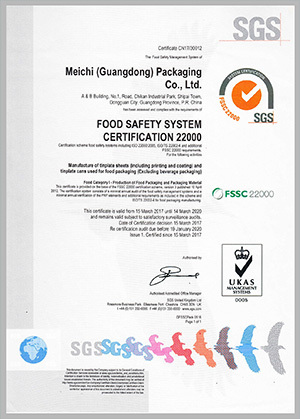
Compliance failures are expensive. A batch of tin boxes that fails FDA or LFGB testing may require scrapping or re‑coating, delaying delivery and increasing total cost. Factories with ISO 22000:2005 (HACCP), FSSC 22000, and SEDEX 4 PILLAR certifications — like JINGLI CAN — have documented processes for raw material inspection, printing, and coating. They also maintain 100,000‑level GMP workshops for pharmaceutical or food packaging, ensuring every box meets international standards before shipment. This drastically reduces the risk of non‑compliance costs.
3. Vertical Integration Shortens Lead Times
Factories that control printing, die‑making, and assembly in‑house avoid the markup and delays of external subcontractors. JINGLI CAN’s integration reduces lead times by 20–30%, allowing buyers to adopt just‑in‑time inventory strategies. Shorter lead times mean lower warehousing costs and less capital tied up in stock — a direct contribution to total cost reduction.
4. Material Stability Prevents Price Fluctuations
Tinplate prices can swing 10–20% in a year. A factory that keeps 4,000 tons of material in stock can buffer these fluctuations, offering stable pricing for long‑term contracts. This predictability is crucial for procurement teams budgeting annual packaging costs.
Step‑by‑Step Guide: How to Evaluate a Tin Box Factory for Cost‑Quality Balance
Request a factory audit report – Look for certifications: ISO 9001, ISO 22000, FSSC 22000, FDA compliance, and client audit results (e.g., Coca‑Cola, LVMH, Mars). These indicate a mature quality system.
Check raw material sourcing – Ask about tinplate origin, MSDS availability, and average inventory levels. A stock of 3,000+ tons signals stability.
Compare total landed cost (TLC) – Beyond the unit price, include logistics, testing, and potential rework costs. A slightly higher unit price from a certified large factory often yields lower TLC.
Review customer references – Partner brands like Nestlé, Hershey’s, LVMH, and BAT have rigorous supplier approval processes. If a factory has passed their audits, it likely meets both quality and cost targets.
Ask about minimum order quantity (MOQ) – Large factories can handle both high‑volume and moderate runs. JINGLI CAN, for example, supports orders from 50,000 pieces while maintaining competitive pricing.
Use Case: Confectionery Brand Reduces Cost by 18% Without Sacrificing Quality
A European chocolate brand previously sourced decorative tins from a small local supplier at $0.85 per piece. Due to inconsistent coating and occasional FDA failures, they faced 5% rejection rates and 3‑week delays. After switching to JINGLI CAN (a certified tin box factory with FSSC 22000), the unit price dropped to $0.72, rejection fell to <0.5%, and lead time stabilized at 4 weeks. Annual savings exceeded $200,000, while packaging quality actually improved — enabling the brand to upgrade to a premium matte finish without increasing budget.
Frequently Asked Questions (FAQ)
What is a tin box factory and how does it work?
A tin box factory manufactures metal containers from tinplate. The process includes cutting, stamping, printing, coating, and assembly. Large factories offer design assistance and custom shapes, while smaller workshops handle standard models only.
Why is it important to choose a tin box factory with international certifications?
Certifications like ISO 22000, FSSC 22000, and FDA compliance ensure that the factory follows food‑safe procedures. This prevents contamination, chemical migration, and costly recalls — especially critical for chocolate, candy, and health care product packaging.
Who uses tin boxes from a large factory?
Industries such as confectionery (Nestlé, Mars, Hershey’s), cosmetics (LVMH, Estée Lauder), pharmaceuticals (GSK, Bayer), and tobacco (BAT, Philip Morris) rely on large factories for consistent quality and volume.
How do I choose between a local factory and a Chinese tin box factory for cost savings?
Chinese factories like JINGLI CAN offer lower labor and material costs, but buyers must verify certifications and scalability. Request factory audits and compare total landed cost. Many global brands already source from China with excellent results.
What are common buyer concerns when switching to a large tin box factory?
Concerns include minimum order quantities, communication barriers, and lead times. Large factories with English‑speaking sales teams and Vietnam‑based production (like JINGLI CAN) mitigate these risks. Always request samples and a pilot run before full production.
Conclusion: Quality and Cost Are Not Mutually Exclusive
Smart procurement in the tin box industry is not about choosing the cheapest supplier; it is about choosing the most efficient supplier that translates scale, certification, and process control into lower total cost. By partnering with a factory that invests in GMP workshops, maintains large tinplate stocks, and holds top‑tier certifications, you can reduce procurement costs by 10–25% while ensuring packaging that protects and elevates your product. JINGLI CAN exemplifies this model — contact their team today to request a cost‑quality analysis for your next project.