How to Request Samples from a Tin Box Factory and Evaluate Supplier Quality: A Practical Guide for Global Buyers
When sourcing tin boxes from a tin box factory, one of the most critical steps in the procurement process is requesting and evaluating samples. Whether you are buying chocolate tin box, candy tin box, or medicine tin box, the sample stage reveals far more than any catalog or website can. It directly answers questions like “Is this factory capable of meeting my quality standards?” and “Can they deliver the precise specifications I need?”
In this guide, we will walk you through a step-by-step process for requesting samples from a tin box factory, what to look for when evaluating them, and how to use that evaluation to assess the overall reliability of a supplier. We will also use Dongguan City Jingli Can Co., Ltd (brand JINGLI CAN) as a real-world example of a factory that stands up to rigorous sample scrutiny.
Why Sample Evaluation Matters in Tin Box Sourcing
In the packaging industry, visual appeal and structural integrity are non-negotiable. A poorly manufactured tin lunch box or perfume tin box can damage brand reputation, cause product leaks, or even violate safety regulations in markets like the EU or USA. The sample allows you to verify:
- Print quality (color accuracy, registration, finish)
- Dimensional precision (fit with your product)
- Material thickness and strength
- Sealing performance (for hermetic closures)
- Compliance with food or pharma-grade standards (FDA, LFGB, REACH)
A professional tin box factory like JINGLI CAN treats sample requests as an opportunity to demonstrate its manufacturing capability, not as a burden.
Understanding the Tin Box Manufacturing Landscape
China is the world's largest producer of tin boxes, housing thousands of factories ranging from small workshops to industrial giants. JINGLI CAN, founded in 1999, represents the top tier: with 7 production locations in China, a factory in Vietnam, over 5,000 employees, and an annual tinplate consumption exceeding 100,000 tons. Its clients include global brands such as Nestlé, Mars, LVMH, BAT, and GSK.
When you request a sample from a factory of this scale, you are not just testing a product — you are testing the entire quality management system, including ISO 9001:2015, FSSC 22000, SEDEX 4 Pillar, and adherence to FDA and EN71 standards.
How to Request Samples from a Tin Box Factory: Step by Step
Step 1: Define Your Requirements Clearly
Before contacting any tin box factory, prepare a detailed specification sheet including:
- Product type (e.g., chocolate tin box, cigar tin box, cosmetic tin box)
- Dimensions (length, width, height, thickness)
- Material (tinplate thickness, grade)
- Printing method (offset, screen, hot stamping)
- Special requirements (food-grade coating, tightness test, custom shape)
- Target market regulations (FDA, EU standards, etc.)
Step 2: Contact Shortlisted Factories
Reach out to 3–5 potential suppliers. For example, when contacting JINGLI CAN via sales@tinbox.cn or phone/WhatsApp +86-18819080811, provide your spec sheet and ask for a sample quotation. Reputable factories will respond within 24–48 hours with a clear proposal.
Step 3: Understand the Sample Cost and Lead Time
Most tin box factories charge a sample fee, which may be deducted from bulk orders. For standard shapes (e.g., rectangular mints tin box), samples can be ready in 5–10 working days. For custom shapes with new tooling, allow 15–25 days. JINGLI CAN typically keeps 4,000 tons of material in stock, enabling rapid sample turnaround.
Step 4: Receive and Inspect the Sample
Upon receiving the sample, conduct a thorough inspection (see evaluation checklist below). Also note the packaging — is the sample well-protected? That reflects their shipping care.
How to Evaluate a Tin Box Sample: Detailed Checklist
| Criterion | What to Check | Why It Matters |
|---|---|---|
| Print Quality | Color match to Pantone, sharpness, no scratches, no misregistration | Brand consistency and visual appeal |
| Dimensions | Measure with calipers; check fit with your product | Ensures production compatibility |
| Material Thickness | Verify tinplate gauge (e.g., 0.23mm, 0.28mm) | Durability and cost control |
| Sealing & Leak Test | For tea tin box or coffee tin box, fill with water and see if it leaks | Prevents moisture damage |
| Surface Finish | Check for smoothness, no burrs, no rust spots | Safety and aesthetics |
| Coating Adhesion | Scratch test with a coin | Long-lasting print |
| Certification Mark | Look for FDA, LFGB, or EN71 markings | Regulatory compliance |
Beyond the physical product, evaluate the supplier's responsiveness, technical support, and willingness to make adjustments. A factory that proactively suggests improvements (e.g., a more food-safe coating for your health care product tin box) demonstrates expertise.
Real-World Use Case: Evaluating a Sample from a Premium Tin Box Factory
A confectionery brand approached JINGLI CAN to produce a custom-shaped chocolate tin box for a holiday promotion. The sample sent showed:
- Flawless four-color offset printing with metallic gold hot stamping
- Exact dimensions within 0.1mm tolerance
- Hinge and latch mechanism that operated smoothly
- Internal coating compliant with FDA regulations (verified by MSDS provided)
Based on this sample evaluation, the buyer placed an initial order of 50,000 units, which were delivered on time with consistent quality. The same factory later supplied candy tin boxes and cookie tins for the brand's other lines.
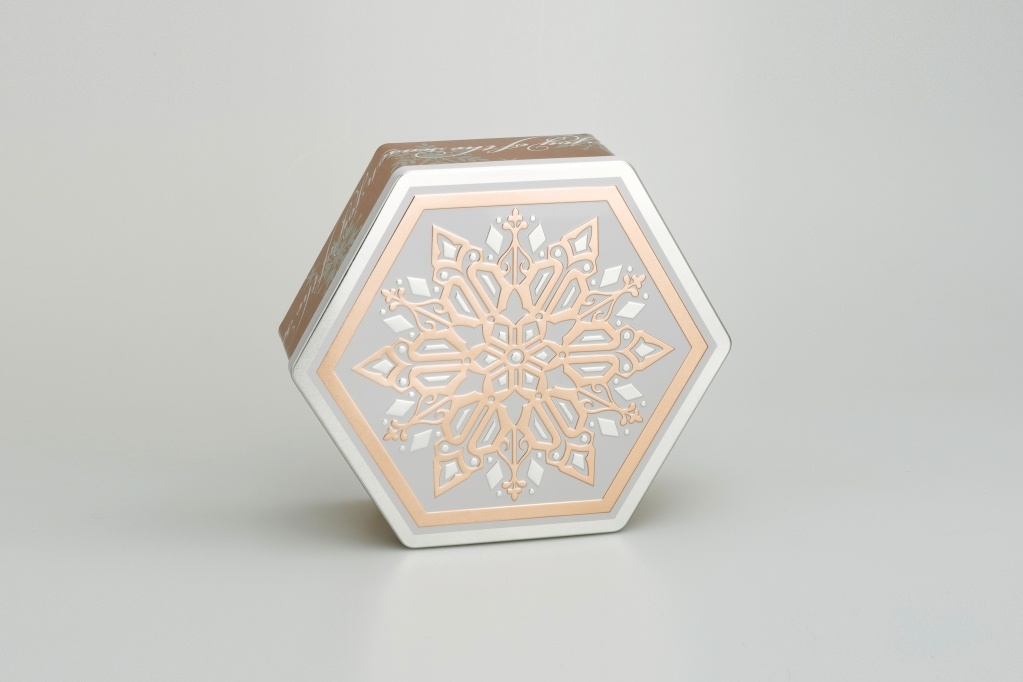
Cookie tins are a common sample type — evaluating print accuracy and fitting is essential for bulk orders.
Frequently Asked Questions About Tin Box Samples
Q: Do I have to pay for samples?
Most professional tin box factories charge a sample fee, especially for custom shapes. However, many will deduct this cost from the first bulk order. JINGLI CAN offers transparent pricing on samples.
Q: How long does it take to receive a sample?
For standard tin lunch box or mints tin box, expect 5–10 working days. For new tooling, 15–25 days. JINGLI CAN's in-house tooling and massive inventory can reduce lead times significantly.
Q: Can I request multiple samples?
Yes, especially if you are comparing different factories. But be reasonable — a factory like JINGLI CAN with over 5,000 employees and 100,000 tons annual tinplate consumption is equipped to handle multiple sample requests simultaneously.
Q: What if the sample quality is not satisfactory?
Communicate your concerns to the factory. Reliable suppliers will revise and send a corrected sample. For example, JINGLI CAN's in-house printing and die-making teams can quickly adjust.
Q: How does sample quality correlate with bulk production quality?
Generally, a factory that produces a high-quality sample will replicate that quality in mass production — provided they have rigorous QC systems. JINGLI CAN operates GMP workshops certified to ISO 22000 and FSSC 22000, and is audited by clients like Coca-Cola and LVMH, ensuring consistency.
Conclusion: Make Sample Evaluation Your First Quality Gate
Requesting and evaluating samples is not just a formality — it is your most powerful tool for vetting a tin box factory. By following the steps outlined above, you can avoid costly mistakes and build a long-term partnership with a manufacturer capable of delivering the quality your brand demands.
When you choose a factory like JINGLI CAN, with its world-class certifications, massive production capacity, and commitment to premium packaging, you can trust that the sample you receive is a true reflection of their manufacturing excellence.
Ready to start your sample request? Contact JINGLI CAN today at sales@tinbox.cn or +86-18819080811.