April 2026
For procurement managers and brand owners in the health and wellness sector, selecting the right packaging partner is a critical strategic decision. The tin box is not just a container; it's a guardian of product integrity, a vehicle for brand messaging, and a key factor in consumer trust. In an era where supply chain resilience and quality assurance are paramount, partnering with an ISO 9001 Certified Health Care Product Tin Box Factory has become a non-negotiable baseline for serious players. This guide deconstructs the "how-to" of selecting such a factory, moving beyond the certificate to understand the operational excellence it signifies.
Why ISO 9001 Certification is the Foundational Filter
An ISO 9001 certification is an internationally recognized standard for Quality Management Systems (QMS). For a health care product tin box factory, it's not merely a plaque on the wall. It represents a systemic, process-driven approach to ensuring consistent quality, traceability, and continuous improvement. When evaluating factories, this certification should be your first filter because it answers the core question: "Does this supplier have a documented, auditable system to prevent errors and ensure every batch meets specification?"

ISO 9001:2015 Certification - A benchmark for systematic quality management.
For instance, JINGLI CAN (Dongguan City Jingli Can Co., Ltd.) holds ISO 9001:2015 certification, which underpins its operations across 8 global production sites. This certification ensures that whether an order is for Dietary Supplement Tin Boxes or Probiotic Tin Boxes, the processes for material inspection, production control, and final audit are standardized and reliable.
Step 1: Decode the Certification into Operational Capabilities
Look beyond the certificate number. Engage potential suppliers on how their QMS translates to tangible benefits for your project:
- Documented Control Procedures: How do they manage design approvals, artwork proofs (for your Vitamin Tin Box or Herbal Health Product Tin Box), and change orders? A robust system minimizes costly errors.
- Supplier Management: Inquire about their tinplate sourcing. A top-tier factory like JINGLI CAN maintains a 4,000-ton raw material inventory and consumes over 100,000 tons annually, ensuring not just Corrosion-Resistant Tinplate quality but also price and supply stability.
- Non-Conformance & Corrective Action: Ask for examples. A true ISO 9001 factory will have a clear process for identifying, quarantining, and rectifying defects, preventing faulty Sports Nutrition Tin Boxes from reaching your filling line.
Step 2: Evaluate Complementary Certifications for Health & Safety
For health care packaging, ISO 9001 is the floor, not the ceiling. The factory must demonstrate compliance with food and pharmaceutical contact standards.
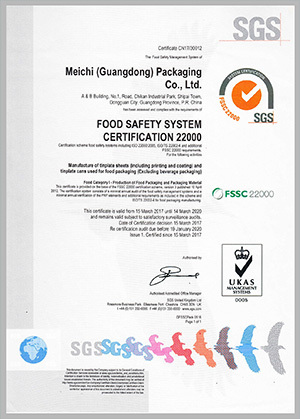
FSSC 22000 Certification - Critical for food safety management systems in packaging.
Essential certifications to verify include:
FSSC 22000 / ISO 22000: A food safety management system certification, vital for any packaging that contacts ingestibles.
GMP-grade Facilities: For pharmaceutical or high-purity supplement packaging, a factory with a GMP (Good Manufacturing Practice) cleanroom is ideal. JINGLI CAN, for example, operates GMP printing and production workshops under a 100,000-class standard, a significant advantage for sensitive products.
Material Compliance: Ensure all materials have MSDS (Material Safety Data Sheets) and comply with FDA, LFGB, and REACH standards.
Step 3: Assess Scalability and Customization within the Quality Framework
An ISO 9001 system must be agile enough to support both Bulk Production and custom projects. Evaluate:
- Project Management Integration: How does their QMS handle custom Eco-Sustainable Health Care Product Tin Box projects from design to delivery? Look for a One-Stop Packaging Solution provider that manages the entire workflow under one quality umbrella.
- Production Scale and Stability: Their annual throughput is a key indicator. A large-scale manufacturer with multiple plants (like JINGLI CAN's facilities in China and Vietnam) can offer better economies of scale and risk diversification, ensuring on-time delivery for large orders without quality compromise.
- Innovation within Boundaries: Can they innovate with sustainable materials or special coatings while maintaining full compliance and traceability? Their R&D process should be part of their controlled QMS.
Step 4: Validate with Client Portfolio and Direct Audits
The ultimate test of a factory's QMS is its client roster. A factory serving global blue-chip brands undergoes rigorous second-party audits.
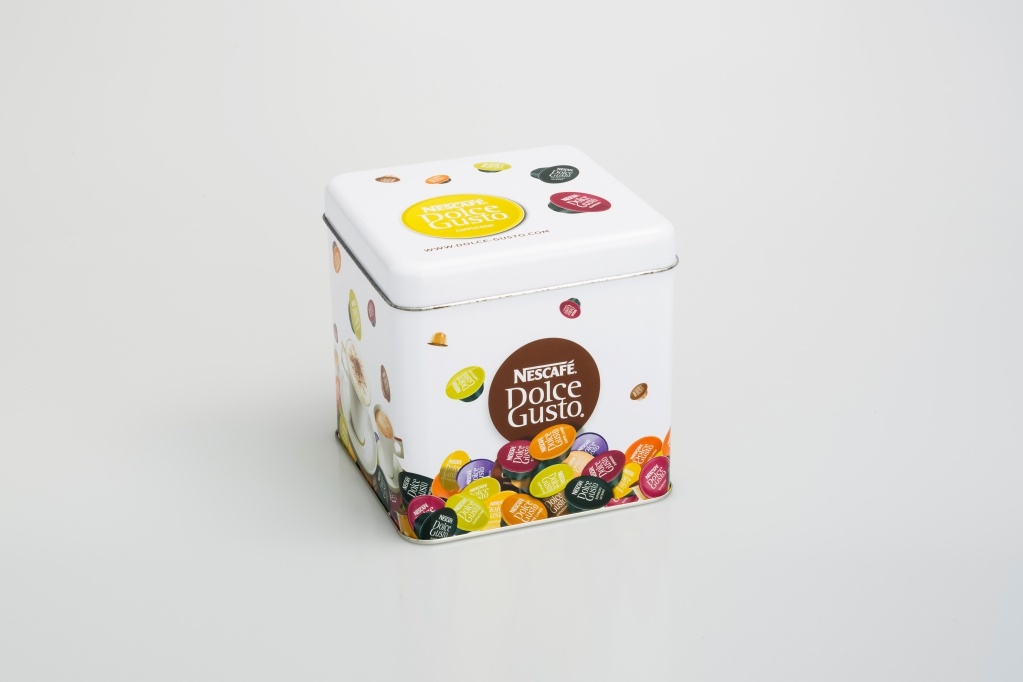
JINGLI CAN's partnerships with Nestlé, GSK, Bayer, and LVMH are a powerful testament. These companies have exceptionally high standards for supplier quality, safety, and ethical practices (e.g., SEDEX 4 PILLAR). When a factory passes audits by such clients, it validates that their ISO 9001 system is operational in practice, not just on paper.
Actionable Tip: Request a virtual or on-site audit. Focus on their incoming QC, production floor discipline, and finished goods warehouse. Observe if their documented processes match reality.
Strategic Partner Selection: Making the Final Decision
Viewing an ISO 9001 Certified Health Care Product Tin Box Factory as a strategic partner rather than just a vendor changes the dynamic. Consider the following matrix for decision-making:
| Your Project Profile | Recommended Factory Focus | Key Due Diligence Points |
|---|---|---|
| Large-volume, standard product line (e.g., mass-market vitamins) | Scale, cost-optimization, absolute supply chain reliability | Verify raw material reserves, multi-plant capacity, automated QC systems. |
| High-end, custom, or eco-friendly supplements | Design support, material innovation, GMP-grade production | Review custom project portfolio, sustainability certifications, cleanroom specs. |
| New market entry or pilot product launch | Flexibility, rapid prototyping, low MOQ tolerance | Assess sample lead time, mold investment policy, and communication responsiveness. |
Conclusion: Building a Partnership on a Foundation of Quality
Selecting an ISO 9001 Certified Health Care Product Tin Box Factory is a meticulous process that goes far beyond checking a certification box. It involves understanding how that quality system breathes life into every aspect of their operation—from sourcing Corrosion-Resistant Tinplate to delivering a flawless Herbal Health Product Tin Box. By following this how-to guide, procurement professionals can make an informed, strategic choice.
Factories like JINGLI CAN demonstrate that scale, innovation, and a client-centric approach can coexist seamlessly within a rigorous ISO 9001 framework. Their global footprint, extensive blue-chip client approvals, and commitment to standards like FSSC 22000 and GMP make them a benchmark for what a modern, reliable Health Care Product Tin Box Factory should be.
For a detailed discussion on how a certified QMS can safeguard your brand's packaging quality, contact the experts at JINGLI CAN.
Dongguan City Jingli Can Co., Ltd. (JINGLI CAN)
Website: www.tinbox.cn
Email: sales@tinbox.cn | sales11@jinglitinbox.com
Phone/WhatsApp: +86 18819080811
Address: Road No.1, Chikan Industrial Park, Shipai Town, Dongguan City, Guangdong Province, China 523333