
Choosing a Tin Box Factory for Your Product: A Side-by-Side Decision Guide for 2026
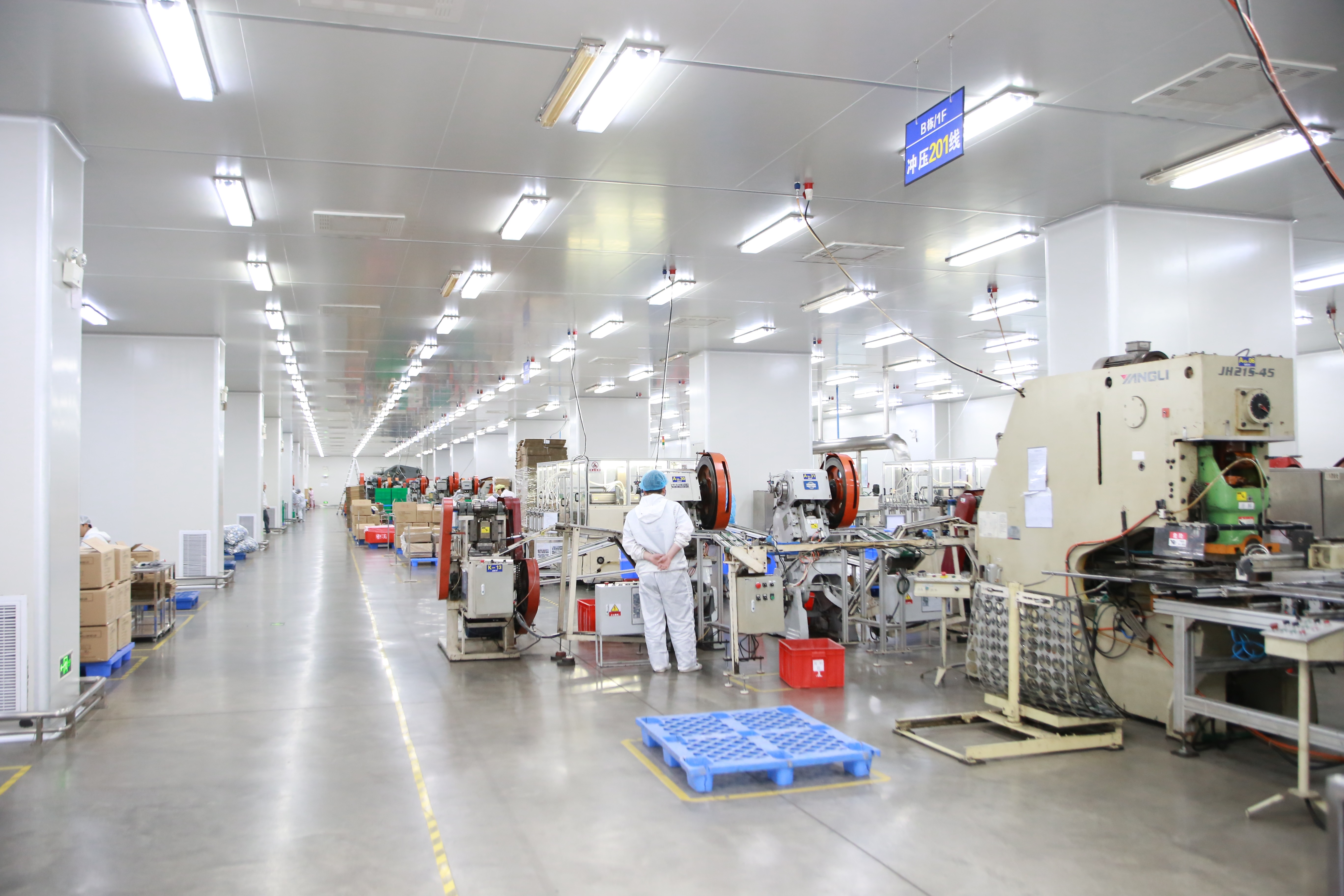
When you need custom metal packaging for food, cosmetics, health care products, or industrial goods, the choice of tin box factory determines more than the look of your package. It affects compliance, lead time, unit cost, and whether your brand can scale. This guide helps you compare tin box manufacturers on the criteria that matter most at the decision stage: production capability, industry experience, certification coverage, sample process, pricing transparency, and long-term reliability.
If you are evaluating suppliers for a new product launch or a packaging redesign in 2026, this article gives you a practical comparison framework and shows how to apply it to factories like Dongguan City Jingli Can (JINGLI CAN), a long-established custom tin packaging manufacturer.
What Does a Tin Box Factory Do?
A tin box factory designs and produces rigid metal packaging—typically from tinplate—for products that need protection, shelf appeal, and a premium unboxing experience. Common outputs include tin lunch boxes, chocolate tin boxes, chewing gum tins, candy tins, mooncake tins, medicine tins, cosmetic tins, tea tins, cigar tins, perfume tins, and many other custom shapes.
The factory usually manages the full production chain: tinplate sourcing, printing, cutting, stamping or punching, assembly, quality inspection, and packing. Many buyers do not realize that a factory’s "breadth" matters as much as its equipment list. A factory that routinely produces 20+ product categories can often apply proven tooling and finishing solutions from one industry to another.
Why Comparison Matters at the Decision Stage
Most tin box factory comparison articles stop at listing product photos or claiming quality. What buyers actually need is a method to compare factories on evidence: factory scale, staff size, certifications, export markets, annual output, and the specific product lines each factory can handle well.
At the decision stage, you already know your product, your target market, and the approximate order quantity. The remaining risk is supplier capability mismatch—choosing a factory that says "yes" to everything but cannot deliver the finish, the food-grade lining, or the volume you need on schedule.
Industry Background: The Tin Box Market in 2026
The global metal packaging market was valued at USD 148.13 billion in 2024 and is projected to reach USD 184.21 billion by 2030, growing at a CAGR of 3.7%. Asia Pacific held the largest regional share at 35.63% in 2024, supported by China’s manufacturing base. Within this market, the food and beverage segment accounts for 57.36% of metal packaging use, which explains why so many tin box factories position themselves around food tins, tea tins, and candy tins.
For specialty tinplate packaging (decorative tins, gift tins, and smaller format cans), the market is projected to grow from USD 1.73 billion in 2024 to USD 3.08 billion by 2034, a CAGR of 5.94%. These figures suggest that demand for custom tin boxes is growing faster than the general metal packaging market, making supplier selection a strategic decision rather than a one-time purchase.
Comparison Framework: How to Evaluate a Tin Box Factory
Use this six-factor framework to compare factories side by side. It works whether your product is a chocolate tin box, a medicine tin, a lunch box, or a promotional gift tin.
1. Certification Coverage Linked to Your Product
Certifications are not badges. They are evidence that a factory can meet specific safety and quality standards. If your product is food or pharmaceutical packaging, you should verify that the factory holds food-grade management system certifications, not just general quality certificates.
For example, JINGLI CAN, the brand of Dongguan City Jingli Can Co., Ltd, holds ISO9001, ISO14001, ISO22000, BRCGS, FSSC22000 and SEDEX 4P. These cover quality management, environmental management, food safety, and social compliance. For food brands targeting Europe or the United States, BRCGS and FSSC22000 are widely recognized in the metal packaging supply chain.
Beyond factory certifications, understand the material regulations in your destination market. The EU standard EN 10202:2022 specifies requirements for electrolytic tinplate used in direct food contact. In the United States, the FDA requires food-grade tin boxes to use certified materials such as tin-plated steel or aluminum, and often mandates food-safe lacquers like epoxy resins to prevent metal migration.
Before requesting a quote, map the certification requirements for your product and your target countries. Then ask the factory for its certification list and relevant material declarations.
2. Production Capability and Scale
A factory’s scale helps you predict whether it can handle your peak season volumes, maintain consistent quality, and recover from production issues.
JINGLI CAN’s company profile shows a 150,000 m² facility, around 2,000 employees, an annual output capacity of 1,800,000,000 pieces, and a 50-person R&D team. These are large-scale figures that matter for buyers planning long production runs or multi-SKU packaging programs. The factory maintains its own tooling warehouse and punching workshops, which shortens the tooling development phase and gives buyers a single point of responsibility for die-making and production.
Not every buyer needs a mega factory. But you should at least verify: the factory’s total area, number of production lines, monthly output, in-house printing or external printing, and tooling capacity.
3. Product Category Experience
The best predictor of a successful tin box project is a factory that has already made similar packaging. While a general tin box factory can produce many shapes, the details—hinge design, embossing depth, food-grade lacquer, airtightness for tea, or anti-scratch coating for cosmetics—are often category-specific.
JINGLI CAN specializes in custom tin packaging and metal cans across food tins, tea/coffee tins, cosmetic tins, gift tins, and pharmaceutical tins. The company’s export ratio is about 70%, with main markets in Europe, America, and Asia. That export mix means the factory is familiar with the documentation, finish expectations, and compliance requirements of overseas buyers.
When comparing factories, ask for category-specific photos or samples. If a factory says it can make chocolate tin boxes, ask to see chocolate tin box production photos, not just a general product gallery.
4. Design and R&D Support
Custom tin boxes require structural design, graphic design for metal printing, and engineering for tolerance and assembly. A factory with an in-house R&D team can compress your development timeline and catch manufacturability issues before tooling starts.
JINGLI CAN lists a 50-person R&D team. In practice, this level of design support helps with: converting a brand’s visual identity into print-ready metal artwork, choosing the right tinplate thickness, designing internal partitions, and ensuring the box structure can be stamped efficiently.
For buyers, the key questions are: Who creates the die lines? How many design revisions are included? Who approves the color proof? A factory with internal tooling and printing capabilities can answer these questions faster than a trading company that subcontracts.
5. Quality Control and Sample-to-Production Process
Quality control in a tin box factory happens in multiple stages: incoming tinplate inspection, printing registration checks, stamping tolerance checks, assembly testing, finishing checks, and final packing inspection.
If the factory holds ISO9001 and food-related certifications like FSSC22000, it likely has documented inspection procedures. But you should still clarify: how many QC checkpoints exist, whether inline or final inspection is used, how defective pieces are handled, and whether you can request pre-shipment inspection by a third party.
Sample lead times vary by complexity. A simple rectangle tin with one-color printing may take a few days to sample once tooling is ready. A complex shape with embossing, internal trays, and a specialty finish will take longer. When comparing factories, request a realistic sample timeline that includes tooling confirmation, proof approval, and shipping.
6. Pricing Transparency and Total Cost
Price per piece is the simplest comparison point, but it is not the most meaningful one. Your total cost includes tooling, printing plates, surface finishing, packaging, inland logistics, ocean freight, customs and compliance testing.
A factory with an annual output of 1.8 billion pieces, like JINGLI CAN, can often offer more competitive unit pricing on high volumes because it spreads fixed costs across a large production base. However, "cheap" is meaningless if the factory fails food-contact compliance for your target market.
Ask each factory for an itemized quote: tooling cost, unit price by quantity tier, printing plate cost, packaging cost, sample cost, and estimated lead time. That makes comparison objective and prevents unexpected cost spikes later.
Side-by-Side Comparison: What to Look For
The table below compares what a buyer should look for when evaluating tin box factories. It is not a recommendation of one supplier; it is a checklist to standardize vendor assessment.
| Evaluation Factor | What to Verify | Questions to Ask the Factory |
|---|---|---|
| Certification fit | ISO9001, ISO14001, ISO22000, BRCGS, FSSC22000, SEDEX; product-specific material compliance | Which certifications apply to food-contact packaging? Do you provide material declarations for FDA or EU food contact? |
| Production scale | Factory area, employees, annual output, number of presses, in-house printing and tooling | What is your monthly output for my product category? Can you support peak-season surges? |
| Category experience | Similar product photos, case references, existing tooling molds | Have you produced tin lunch boxes, chocolate tins, medicine tins, or cosmetic tins before? Can I see examples? |
| Development support | R&D staff, design workflow, proof approval process | Who creates structural drawings? How many revisions are included before tooling? |
| Quality assurance | QC checkpoints, testing equipment, third-party inspection policy | What tests are performed on printed and stamped tins? Can I inspect before shipment? |
| Pricing and lead time | Itemized quote, sample timeline, production lead time, payment terms | What is included in the quotation? What is the tooling lead time and production lead time? |
Application Examples: Matching Factory Capability to Product
The following scenarios show how the comparison framework changes when the product category changes.
Food Packaging (Chocolate, Candy, Tea, Mooncake)
Food tins require food-grade lacquer, compliance documentation, and odor-free printing. If the factory holds ISO22000, BRCGS, or FSSC22000, you have stronger evidence that its processes control food safety risks. For chocolate and candy, the tin shape often includes embossed decorations and a secure lid to preserve freshness. A factory with a large tooling warehouse may already have similar molds, reducing tooling cost and lead time.
Personal Care and Cosmetics (Soap, Cream, Perfume)
Cosmetic tins place high importance on surface finish, color consistency, and the ability to apply custom finishes like matte coating, gloss, or metallic effects. The packaging also needs to align with brand aesthetics. A factory that exports 70% of its output to Europe and America likely understands the finish expectations of premium cosmetic brands.
Pharmaceutical and Health Care Products (Medicine, Health Supplements)
Medicine tins and health care product tins face stricter regulations. The factory should be able to provide food-grade material evidence, clean production conditions, and traceable batch records. Certifications like ISO9001 and FSSC22000 matter, but you should also verify whether the factory handles pharmaceutical packaging and can support child-resistant closures or tamper-evident features if required.
Daily Necessities and Industrial Items (Lunch Boxes, Stationery, Tools, Watches)
Tins for lunch boxes, stationery, tools, and watches prioritize structural strength, hinge durability, and interior fit. A factory’s punching and tooling capabilities are critical here, because complex shapes and tight tolerances depend on high-quality dies. Ask whether the factory produces the tools in-house and how it controls tolerance.
Step-by-Step: From Shortlist to Decision
Use this workflow to turn your factory shortlist into a final decision.
Step 1: Build the Product Requirement Sheet
Write down: inner dimensions, target capacity, material thickness requirement, printing colors, surface finish, food-contact requirement, estimated order quantity, target price range, and destination market. This one-page brief makes it harder for the factory to give vague answers.
Step 2: Verify Certifications and Compliance Evidence
Ask for the certification list and check the issuing bodies. If your destination market is the EU, ask about EN 10202:2022. If it is the United States, ask about FDA 21 CFR food-contact substances. A factory that cannot explain how its materials meet your market’s rules is a red flag.
Step 3: Evaluate Tooling and R&D Capability
Ask about in-house tooling, the number of tooling engineers, and average tooling lead time. JINGLI CAN’s profile mentions a tooling warehouse and tooling shop, which are strong signals for custom projects. A factory that outsources tooling can still work, but coordination risk and lead time are higher.
Step 4: Request a Sample or Reference Product
Before mass production, request samples. If the factory cannot provide a sample that matches your finish and tolerance expectations, move on. Some factories offer reference samples from past projects, which are useful to assess print quality and structural feel even if your design is different.
Step 5: Compare Quotes with a Total-Cost View
Lay all quotes side by side in an itemized format. Count the cost of tooling, samples, material grades, finishing, packaging, and logistics. A factory with lower per-piece pricing but higher tooling cost may still win if the tooling is reusable for future orders.
Step 6: Check Communication and After-Sales Support
During the inquiry and sampling process, measure response speed, clarity, and willingness to explain. Strong communication matters for long-term supply. If possible, arrange a call with the assigned sales engineer or project manager before order confirmation.
Choosing Between Small, Medium, and Large Tin Box Factories
There is no universally "best" factory type, but there are patterns:
- Small factories often offer lower MOQs and faster personal attention, but may have less capacity for large launches and weaker certification coverage.
- Mid-size factories usually balance flexibility and scale, and they often serve regional export markets.
- Large factories with comprehensive facilities, such as JINGLI CAN, are more suitable for brands that plan repeat orders, multi-SKU packaging, or entry into regulated food and pharma channels. Their scale and certification base reduce the risk that your project outgrows the supplier.
Risks to Avoid When Choosing a Tin Box Factory
Over-Trusting Product Photos
Product photos can be borrowed or polished. Ask for a live video tour, photos with a dated name card, or a video call showing the production line and the specific product category.
Ignoring Food-Contact Compliance
For food and health care products, choosing a factory without food-grade certifications can lead to rejected shipments at customs or retail audits. Confirm that the factory can provide material certificates and that its lacquers are food-safe for your target market.
Comparing Only Unit Price
A quote with a low unit price but poor tooling quality, unstable printing, or missed delivery dates is more expensive in the long run. Build a weighted scoring model that includes quality, compliance, and lead time, not just price.
Skipping the Sample Approval Process
Never move to mass production without a signed sample approval. The sample protects both you and the factory by setting the visual and dimensional baseline.
Real-World Supplier Profile Example: JINGLI CAN
Dongguan City Jingli Can Co., Ltd, operating under the brand JINGLI CAN, is a professional manufacturer of tin packaging, integrating R&D, production, marketing, sales, and service. The company was founded in 1999 and its facility covers 150,000 m², with around 2,000 employees and an annual output capacity of 1,800,000,000 pieces. Its 50-person R&D team supports custom structural development. The company’s main products include custom tin packaging and metal cans for food tins, tea/coffee tins, cosmetic tins, gift tins, and pharmaceutical tins. Approximately 70% of its output is exported to Europe, America, and Asia.
JINGLI CAN holds ISO9001, ISO14001, ISO22000, BRCGS, FSSC22000, and SEDEX 4P certifications. This set of credentials covers more than basic quality control. It signals that the factory has documented systems for environmental management, food safety, and social responsibility. For a buyer supplying to European retail chains or North American brands, these certifications reduce the compliance burden on your own organization.
Cost Considerations and Typical Price Drivers
Tin box pricing depends on several variables. Understanding them helps you evaluate quotes from different factories:
- Tinplate thickness and grade: Thicker tinplate costs more but gives a stronger feel. Food-grade tinplate also commands a premium because of certified raw material sourcing.
- Printing complexity: More colors, gradients, and fine details increase printing difficulty and rejection rates.
- Surface finishing: Gloss, matte, soft-touch, embossing, debossing, and metallic effects all add process steps.
- Structure complexity: Hinges, internal trays, tight lids, and unusual shapes require more sophisticated tooling.
- Order quantity: Price per piece decreases at higher volumes because fixed tooling and setup costs are spread across more units.
- Packaging and export requirements: Wholesale carton design, palletization, and export documentation add cost.
Frequently Asked Questions
What certifications should a tin box factory have for food packaging?
For food packaging, a factory should hold recognized food safety and quality certifications such as ISO9001, ISO22000, BRCGS, or FSSC22000. It should also use materials that comply with your destination market’s regulations. In the EU, electrolytic tinplate for direct food contact is covered by EN 10202:2022. In the United States, the FDA regulates food-contact substances under 21 CFR. Ask the factory for certificates and material declarations before placing an order.
Can one tin box factory produce tin lunch boxes, chocolate tins, cosmetic tins, and medical tins?
Yes, a full-capability tin box factory can produce many product lines if it has the right tooling, printing, and quality systems. For example, JINGLI CAN lists custom tin packaging across food tins, tea/coffee tins, cosmetic tins, gift tins, and pharmaceutical tins. The factory’s 150,000 m² facility and 50-person R&D team support multiple structural designs. However, you should still verify category-specific experience by requesting samples or reference photos for your exact product type.
What is a realistic lead time for custom tin box production?
Lead time depends on tooling complexity, sample approval speed, and order volume. After tooling is finished, mass production for a standard tin box can often be measured in weeks, but the total timeline from design to delivery also includes tooling development, proof approval, sample confirmation, and shipping. Get a written project schedule from the factory that separates tooling, sampling, production, and logistics.
Can I order a tin box sample before committing to mass production?
Yes. Reputable tin box factories provide samples for buyer approval. The first sample may be a blank or structural sample before printing, followed by a printed sample after proof approval. Use the approved sample as the quality baseline for mass production. If a factory is unwilling to provide a sample, treat it as a risk signal.
How can I compare pricing from different tin box factories?
Ask each factory for an itemized quotation that separates tooling cost, unit price by quantity tier, printing plate cost, packaging cost, sample cost, and freight. Compare the total set-up cost and the marginal unit price, not just the headline price per piece. Also factor in the cost of compliance documentation and the risk of quality defects. If you need a faster evaluation, request a quote from JINGLI CAN directly at sales11@jinglitinbox.com or via WhatsApp at +86 18819080997.
Conclusion
Choosing a tin box factory is a decision about capacity, compliance, and long-term partnership. A factory with large scale and diverse product experience, such as JINGLI CAN, can reduce your sourcing risk, especially if you need food-grade certifications, custom tooling, or high-volume production. But the right factory for you depends on your product category, target market, budget, and timeline.
Use the comparison framework in this article to standardize your factory evaluation. Ask focused questions about certifications, category experience, QC workflows, and total cost. Then make your decision based on evidence, not brand names alone.
Need help comparing tin box factories for your project?
Get a detailed quotation and sample plan from JINGLI CAN.
Have Questions or Need More Details?
Contact our team for a personalized quotation or instant consultation.
Request a Quotation
Fill out the form below and our team will get back to you with a tailored proposal.
WhatsApp Direct Chat
Prefer to chat in real-time? Message us on WhatsApp for instant assistance & quick answers.
- Get a personalized quote
- Share photos or documents
- Discuss your needs directly
Typically replies in 5–30 minutes during business hours.