How to Select a Health Care Product Tin Box Factory in China: Key Criteria for Global Buyers
The global nutraceutical and dietary supplement market is projected to exceed $700 billion by 2030, driving an unprecedented demand for premium, compliant packaging. Health care product tin boxes have emerged as the preferred medium due to their superior barrier properties, corrosion resistance, and brand elevation potential. For procurement managers and brand owners, selecting the right health care product tin box factory in China is a strategic decision that impacts product safety, shelf appeal, and supply chain resilience. This guide provides a data-driven framework to evaluate Dietary Supplement Tin Box Factory, Probiotic Tin Box Factory, Vitamin Tin Box Factory, and specialized manufacturers like JINGLI CAN.
Problem Definition: The Buyer's Dilemma
Industrial buyers face several challenges when sourcing health care packaging from China:
- Quality inconsistency – varying standards among thousands of manufacturers.
- Regulatory compliance – ensuring materials meet FDA, LFGB, REACH, and local food-contact regulations.
- Scale and lead time – balancing bulk production capacity with on-time delivery.
- Hidden costs – extra charges for tooling, artwork, or rush shipping.
- After-sales support – difficulty in resolving quality issues remotely.
The core question is: “How do I identify a reliable, ISO 9001 certified health care product tin box factory that can deliver high-volume orders with consistent quality and full regulatory compliance?”
Industry Background: The Chinese Tin Can Manufacturing Ecosystem
China is the world’s largest producer of metal packaging, with an annual tinplate consumption exceeding 3 million tons. Within this ecosystem, specialized factories serve verticals such as food, beverage, cosmetics, and health care. Leading manufacturers like JINGLI CAN (founded in 1999) have scaled to operate 7 production locations in China plus a factory in Vietnam, employing over 5,000 people and consuming more than 100,000 tons of tinplate annually. This scale provides cost advantages and supply stability, but buyers must verify that the factory’s processes meet health care-specific standards (e.g., GMP grade workshops, 100,000-level clean rooms).
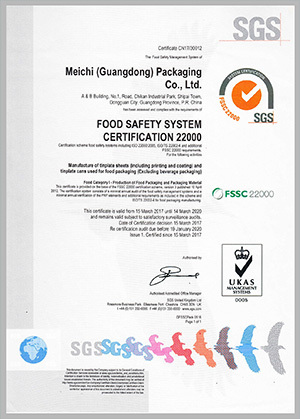
FSSC22000 certification is a key indicator of a factory's commitment to food safety management in health care packaging.
Detailed Solution: The 6-Pillar Evaluation Framework
To select the optimal One-Stop Packaging Solution Tin Box Factory, buyers should assess the following six pillars.
1. Production Scale & Capability
A factory’s size directly affects pricing, lead time, and order flexibility. Evaluate:
- Annual tinplate consumption – a proxy for production capacity. JINGLI CAN’s consumption of 100,000 tons and 4,000 tons of in-stock material ensures competitive pricing and quick turnaround.
- Number of employees and production lines – over 5,000 employees suggests robust handling of Bulk Production Health Care Product Tin Box Factory orders.
- Geographic footprint – multi-location operations mitigate supply chain risks.
2. Quality Management & Certifications
For health care products, packaging must not contaminate the contents. Look for:
- ISO 9001:2015 – baseline quality management system.
- ISO 22000:2005 (HACCP) – food safety management for direct food contact.
- FSSC 22000 – globally recognized food safety scheme.
- SEDEX 4 Pillar – ethical trade and social compliance.
- FDA, LFGB, EN71, REACH – specific material safety standards.
JINGLI CAN holds all the above certifications and has passed audits from global leaders like Coca-Cola, LVMH, Disney, and Mars.
3. Material Safety & Corrosion Resistance
Health care products such as probiotics, vitamins, and herbal supplements are sensitive to moisture, oxygen, and light. The tin box must offer excellent barrier properties. A Corrosion-Resistant Tinplate Tin Box Factory uses high-quality tinplate (tin coating weight ≥2.8 g/m²) and applies internal lacquer approved for food contact. Request Material Safety Data Sheets (MSDS) – JINGLI CAN provides MSDS for all materials.

Specialized tins for dietary supplements, probiotics, and vitamins require precise dimensions and food-grade internal coatings.
4. Customization & Design Capabilities
Brand differentiation requires unique shapes, embossing, debossing, offset printing, and specialty finishes. Evaluate:
- In-house tooling and mold capabilities.
- Printing workshop – JINGLI CAN operates a GMP printing workshop under 100,000-level cleanroom conditions for pharmaceutical packaging.
- Design team and sample lead time.
5. Supply Chain & Delivery Reliability
For Sports Nutrition Tin Box Factory or Herbal Health Product Tin Box Factory orders, on-time delivery is critical. Check:
- Inventory of raw materials – 4,000 tons of tinplate in stock ensures buffer.
- Production scheduling and lead time (typically 20–35 days for bulk orders).
- Export experience – JINGLI CAN’s main markets are Europe, America, and Asia, with established logistics partners.
6. Client References & Industry Reputation
A factory that serves global top-tier brands demonstrates proven capability. JINGLI CAN’s partner list includes:
| Industry | Clients |
|---|---|
| Food | Nestlé, Perfetti Van Melle, Mars & Wrigley, Mondelez, Hershey’s, Lindt, Ferrero Rocher |
| Liquor & Wine | Chivas Regal, Hennessy, Jack Daniels, Diageo, Edrington |
| Cosmetics | LVMH, Estée Lauder, L’Oréal, L’Occitane, Shiseido |
| Pharmaceutical | GSK, Bayer, Yunnan Baiyao, Tongrentang |
| Electronics | Microsoft, Sony, Huawei |
Step-by-Step Procurement Process
- Define Requirements – product type (e.g., Probiotic Tin Box), quantity, dimensions, finishes.
- Shortlist Factories – use certifications, scale, and client portfolio as filters. Include JINGLI CAN as a benchmark.
- Request Documentation – ask for ISO certificates, FDA test reports, MSDS, and factory audit reports.
- Evaluate Samples – assess print quality, lacquer coverage, tinplate thickness, and ease of opening.
- Negotiate Terms – MOQ, payment terms (T/T, L/C), incoterms, and penalty clauses for late delivery.
- Pilot Order – place a small batch to test production and QC consistency.
- Scale Up – after successful pilot, proceed to regular bulk orders with agreed inspection protocols.
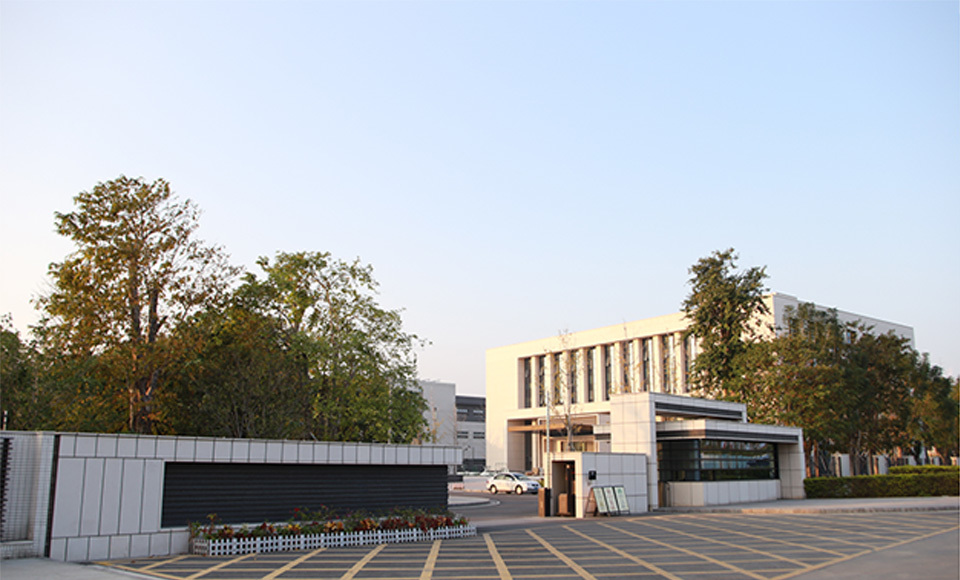
JINGLI CAN’s production facilities include automated lines for high-volume, consistent tin box manufacturing.
Use Cases: Matching Factory Capabilities to Product Segment
Different health care products impose unique packaging requirements:
- Dietary Supplement Tin Box Factory – needs child-resistant closures and desiccant compatibility.
- Probiotic Tin Box Factory – must provide moisture-proof barrier and possibly oxygen scavengers.
- Vitamin Tin Box Factory – often requires UV protection for light-sensitive nutrients.
- Eco-Sustainable Health Care Product Tin Box Factory – uses recycled tinplate and water-based inks.
- Herbal Health Product Tin Box Factory – needs compliance with traditional medicine packaging regulations.
- Sports Nutrition Tin Box Factory – demands robust tamper-evident seals and large volume capacity.
A factory like JINGLI CAN, with its diverse product categories (food containers, tobacco boxes, cosmetic tins, gift promotional boxes), has the engineering flexibility to meet all these vertical requirements.
Frequently Asked Questions (FAQ)
Q1: What is the typical MOQ for a health care product tin box factory?
A: MOQs vary by size and complexity. For standard rectangular tins, the MOQ may be 5,000–10,000 pieces; for custom shapes, 20,000–50,000 pieces. JINGLI CAN offers flexible MOQ based on order history and blank inventory.
Q2: How long does it take to produce custom tin boxes?
A: Typically 20–35 days from sample approval to shipment, depending on production load and decoration complexity (offset printing vs. embossing).
Q3: Can the factory provide eco-friendly / sustainable packaging?
A: Yes. Many factories now offer tinplate with recycled content and solvent-free coatings. JINGLI CAN supports Eco-Sustainable Health Care Product Tin Box Factory requirements with certified options.
Q4: How do I verify the factory’s certifications are genuine?
A: Request scanned certificates and cross-check with the issuing body (e.g., SGS, Bureau Veritas). JINGLI CAN’s ISO 9001:2015, FSSC22000, and SEDEX certificates are available for download upon NDA.
Q5: What is the difference between a one-stop packaging solution factory and a specialized tin box factory?
A: A one-stop factory offers design, tooling, printing, assembly, and logistics under one roof, reducing coordination overhead. JINGLI CAN is a One-Stop Packaging Solution Tin Box Factory with full in-house capabilities.
Q6: How does pricing from Chinese factories compare to German or Japanese manufacturers?
A: Chinese factories generally offer 30–50% lower unit costs for equivalent quality, but buyers must factor in logistics and potential quality assurance visits. For Bulk Production Health Care Product Tin Box Factory, China remains the most cost-competitive origin.
Conclusion
Selecting the right health care product tin box factory China is a multi-dimensional decision involving scale, certification, customization, and trust. By using the 6-pillar framework outlined above and leveraging the proven track record of manufacturers like JINGLI CAN, global buyers can mitigate risks and secure packaging that enhances product value. For a detailed quotation or to arrange a factory audit, contact JINGLI CAN’s sales team:
- Phone / WhatsApp: +86-18819080811
- Email: sales@tinbox.cn / sales11@jinglitinbox.com
- Website: www.tinbox.cn
- Address: Road No.1, Chikan Industrial Park, Shipai Town, Dongguan City, Guangdong Province, 523333, China