Tin Box A vs. Tin Box B: Deciding Between Custom Shapes and Standard Rounds
Tin Box A vs. Tin Box B: Deciding Between Custom Shapes and Standard Rounds
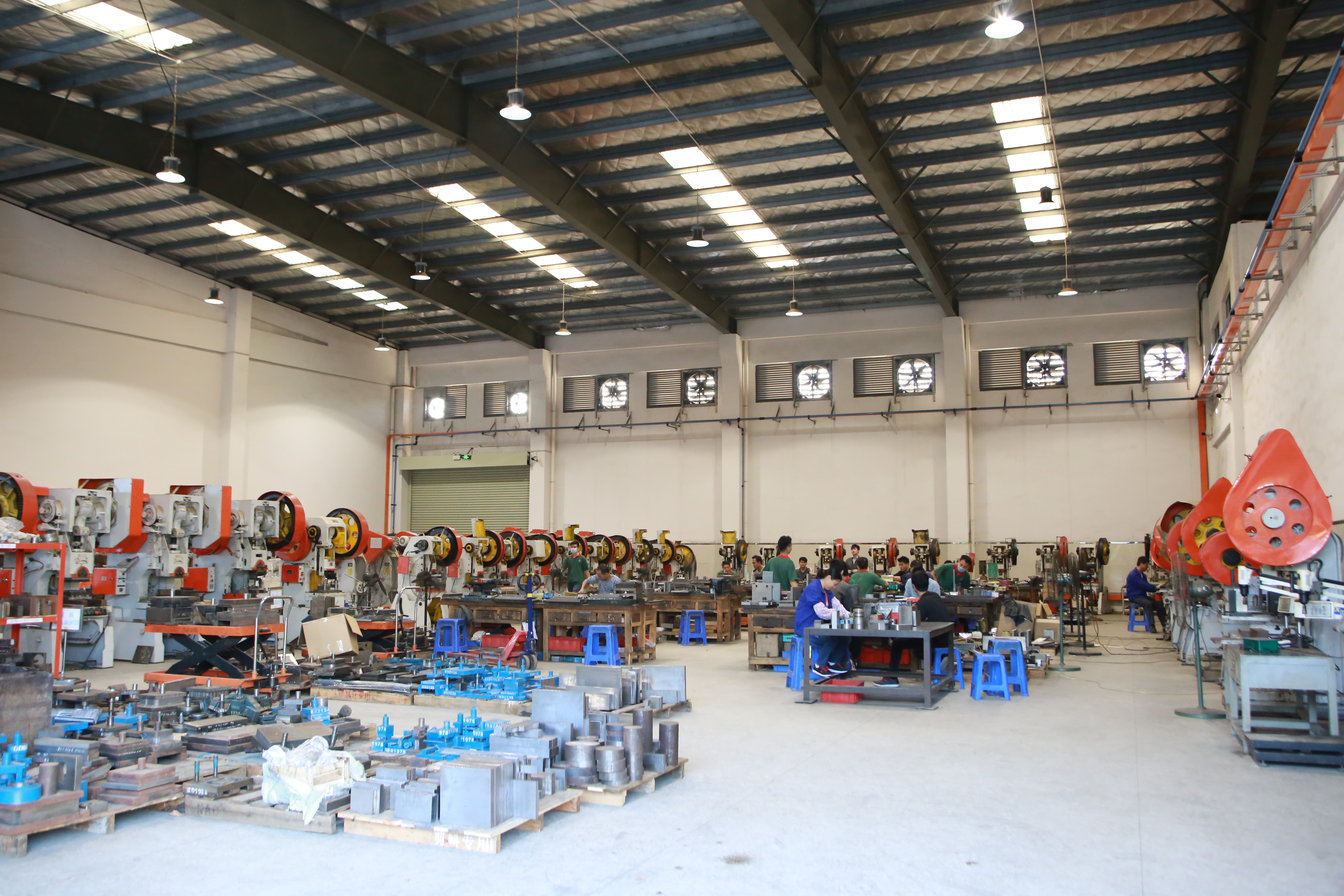
Cover: the tooling shop at JINGLI CAN (Dongguan City Jingli Can Co.,Ltd), where the dies that define a custom tin box silhouette are prepared and proven.
Two tin boxes can hold the same chocolate, the same tea leaves, or the same cosmetic jar, pass the same food-contact tests, and land on the same retail shelf — and still be separated by a completely different cost structure, calendar and brand outcome. That gap is what the custom-shape versus standard-round decision is really about.
The decision resolves on three constraints, in this order: how much tooling investment the program can absorb, how much calendar time the launch can spend on tooling and sample approval before mass production begins, and how much of the brand's identity has to be carried by the container's silhouette rather than by print. Food-contact compliance does not change when a shape changes — the same tinplate and coating standards apply to both — but it becomes harder to control and inspect once the geometry stops being a simple circle.
This guide is written for buyers in Research and Evaluation mode: comparing tin box factories, sizing formats, and needing a decision rule that survives an internal review. It compares the two formats head to head on cost, lead time, branding and compliance, then shows how a full-service tin box factory with in-house tooling, printing and forming supports either path — or a deliberate split between them.
Problem Definition: What the Custom vs. Standard Decision Actually Asks
In a first sourcing conversation the two options are usually labelled "custom" and "standard", which makes the choice sound like a matter of taste. It is not. The formats differ in how they are engineered, tooled, scheduled, decorated and inspected — and those differences are what appear later in the quotation and in the delivery calendar.
Tin Box A — the Custom-Shaped Tin Box
A custom-shaped tin box is produced from dedicated tooling: a die set engineered for one silhouette, whether that is an oval, a hexagon, an outline matched to the product's own geometry, a shaped lid, or a die-cut window. The form is engineered to the product and to the brand rather than selected from a range of round diameters. Once the die exists, the silhouette is repeatable for the life of the tooling, which is why custom shapes behave like a fixed investment spread across a packaging program.
Tin Box B — the Standard Round Canister
A standard round canister is a circular tin with a round body and a round lid. Because the geometry is conventional, it runs on round tooling that a tin box factory normally already operates, and decoration is applied across an unbroken curved surface. In several categories — tea, coffee and many food lines — the round format is the category convention, so choosing it signals familiarity rather than novelty.
The Three Questions the Decision Actually Answers
- Cost: can the program absorb a one-time tooling investment, and does the projected volume carry it?
- Lead time: how much calendar can the launch spend on die engineering, tooling build and sample approval before production starts?
- Branding: does the package need to be recognised by its silhouette, or can print alone carry the identity?
- Compliance (the fourth question that is usually misread as a difference): the same standards apply to both formats; only inspection complexity changes.
A frequent mis-framing: custom means premium, standard means commodity. Print quality, embossing, interior fitments and finish are independent of shape. In a category where every competitor ships a shaped tin, a well-executed round canister can be the more distinctive package; in a category of round tins, a shaped tin is the only way to break the pattern. Note also that this is a different question from custom versus stock packaging, which is about inventory model — this article is about geometry.
Industry Background: Why the Format Decision Carries More Weight Now
Metal packaging is a large, slow-growing base market with a faster-moving specialty segment inside it. The global metal packaging market was valued at USD 148.13 billion in 2024 and is projected to reach USD 184.21 billion by 2030, a CAGR of 3.7%, according to Grand View Research and Fortune Business Insights. Asia Pacific accounted for a 35.63% revenue share of that market in 2024, driven largely by manufacturing capacity for food and beverage tins (Grand View Research). Food and beverage alone represented 57.36% of metal packaging market share in 2024 (Fortune Business Insights).
Inside that base, the tinplate segment used for cans and tins behaves differently. Precedence Research projects it to grow from USD 1.73 billion in 2024 to USD 3.08 billion by 2034, a CAGR of 5.94%. Estimates in this sub-segment diverge by scope — Cognitive Market Research places the same market at USD 761.2 million — precisely because "tinplate packaging" can mean all steel cans or only decorative and specialty tins. The custom-shape versus standard-round decision sits in the second definition.
Two structural pressures shape that decision today. The first is sustainability: tinplate achieves a recycling rate above 90% in some regions (Fact.MR), which keeps metal competitive against plastic in buyer specifications — and that advantage belongs equally to a shaped tin and a round tin. The second is the regulatory layer: EN 10202:2022 specifies electrolytic tinplate requirements for direct food contact in the EU (European Committee for Standardization), while FDA requirements under 21 CFR govern food-contact substances and food-safe lacquers such as epoxy resins in the United States.
At the industrial end of the market, large metal packaging groups — Ball Corporation, Crown Holdings, CPMC Holdings and Ardagh Group, as listed by IMARC Group — serve high-volume beverage and food can programs. Specialty decorative tin boxes, where most custom-shape decisions sit, follow a different logic: tooling flexibility, artwork control and changeover frequency matter more than the line speed that defines the beverage end of the industry.
Detailed Solution: How Each Constraint Plays Out in Practice
Cost: Where the Money Actually Goes
Tooling is the first and clearest cost difference. A custom shape begins with a die set that must be engineered, cut and proven before a single production unit is formed. That investment is one-time and fixed: it does not shrink with the order and it does not disappear if the forecast is cut. The practical consequence is that unit cost behaves differently in the two formats. At low volumes, tooling amortisation dominates the difference; as run length increases, the tooling share per piece falls and the gap narrows.
Tooling is not the only driver. Even at high volume, a non-round profile generally takes more forming steps, more setup per run, and more inspection at corners, seams and edges than a uniform circular body. A standard round canister benefits from the opposite conditions: conventional tooling, one continuous wall, simpler sealing geometry and a more routine changeover.
Decision rule: treat tooling as a program cost rather than an order cost. Buyers who divide tooling by the first purchase order often reject a custom shape that is entirely viable across a multi-year packaging plan, while buyers who ignore tooling entirely are surprised by the price of a small first run.
Lead Time: Tooling, Sampling and Sequencing
A standard round canister is scheduled around artwork: confirm the profile, proof the decoration, produce. A custom shape inserts an entire stage ahead of production — die engineering, tooling build, prototype, sample approval — before mass production is released.
Inside that added stage, the variable that most often moves the date is not machine speed but the number of sample revision rounds. Geometry changes discovered late can force tooling rework, which costs more calendar time than a print revision. Freezing the structural specification before the first prototype is usually the cheapest schedule decision a buyer can make.
Where tooling, printing and forming all sit in-house, the loop between sample feedback and tooling adjustment is short, because no external tooling supplier sits in the middle. In that case facility integration is a lead-time factor, not only a cost factor.
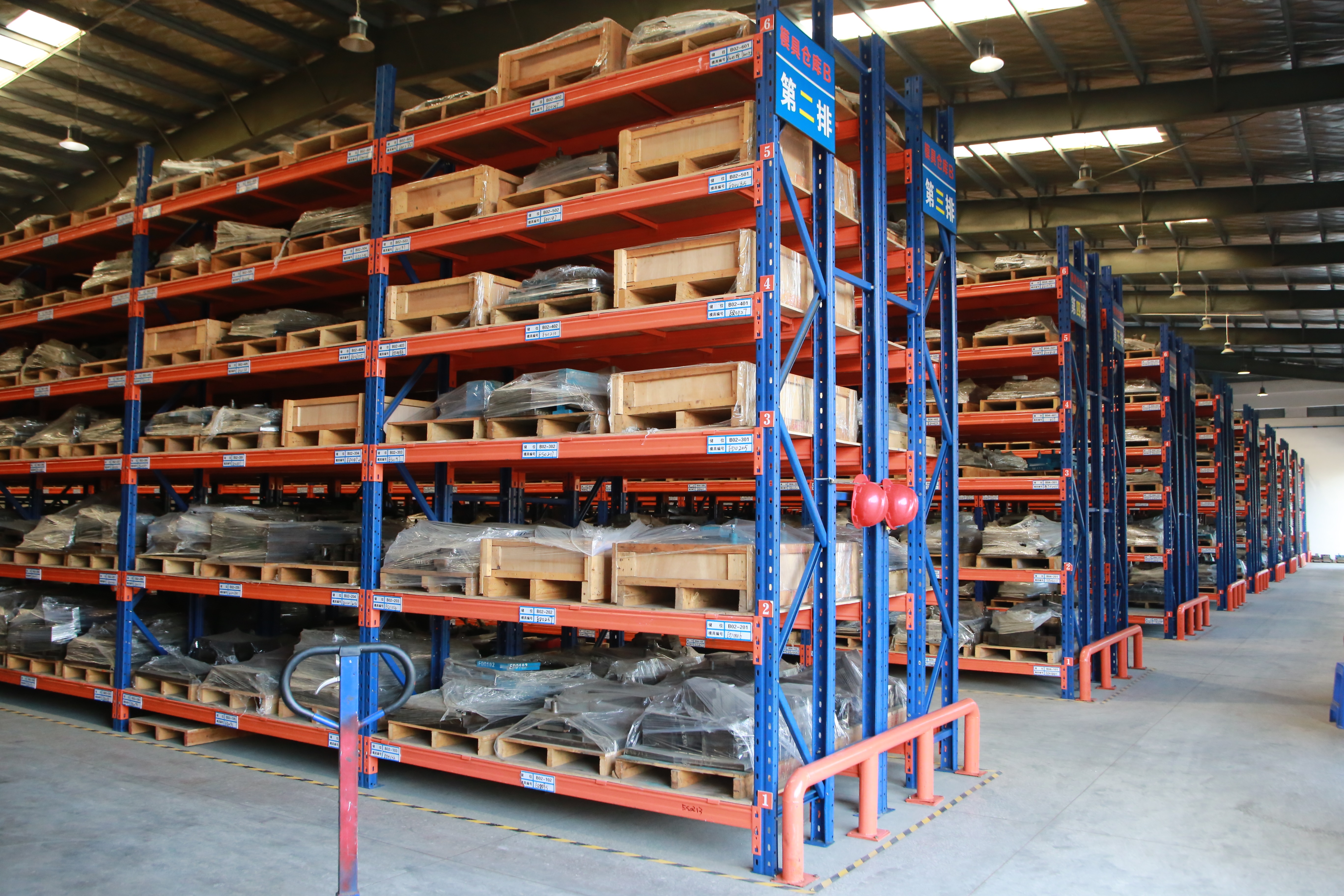
Tooling warehouse: dies are retained for the life of a custom shape, which is what allows repeat orders to skip the tooling stage entirely.
Branding: Silhouette vs. Print Real Estate
Shape does work that print cannot: a custom silhouette is recognisable at arm's length, before any text is read. That matters most for gift sets, seasonal releases, collectibles and subscription packs, where the package must signal the occasion and the unboxing moment is part of the product.
The round canister wins on continuous printable surface. An unbroken 360-degree wrap supports artwork that runs without a panel break and carries long mandatory copy — ingredients, dosage, regulatory text — without the layout having to accommodate corners. In categories where round is the convention, a custom shape becomes a deliberate repositioning decision rather than a design preference.
Decoration capability does not decide between the two formats. Direct printing, embossing and debossing are applied to either one. What changes is artwork structure: flat-panel and shaped-surface art on one side, continuous wrap art on the other.
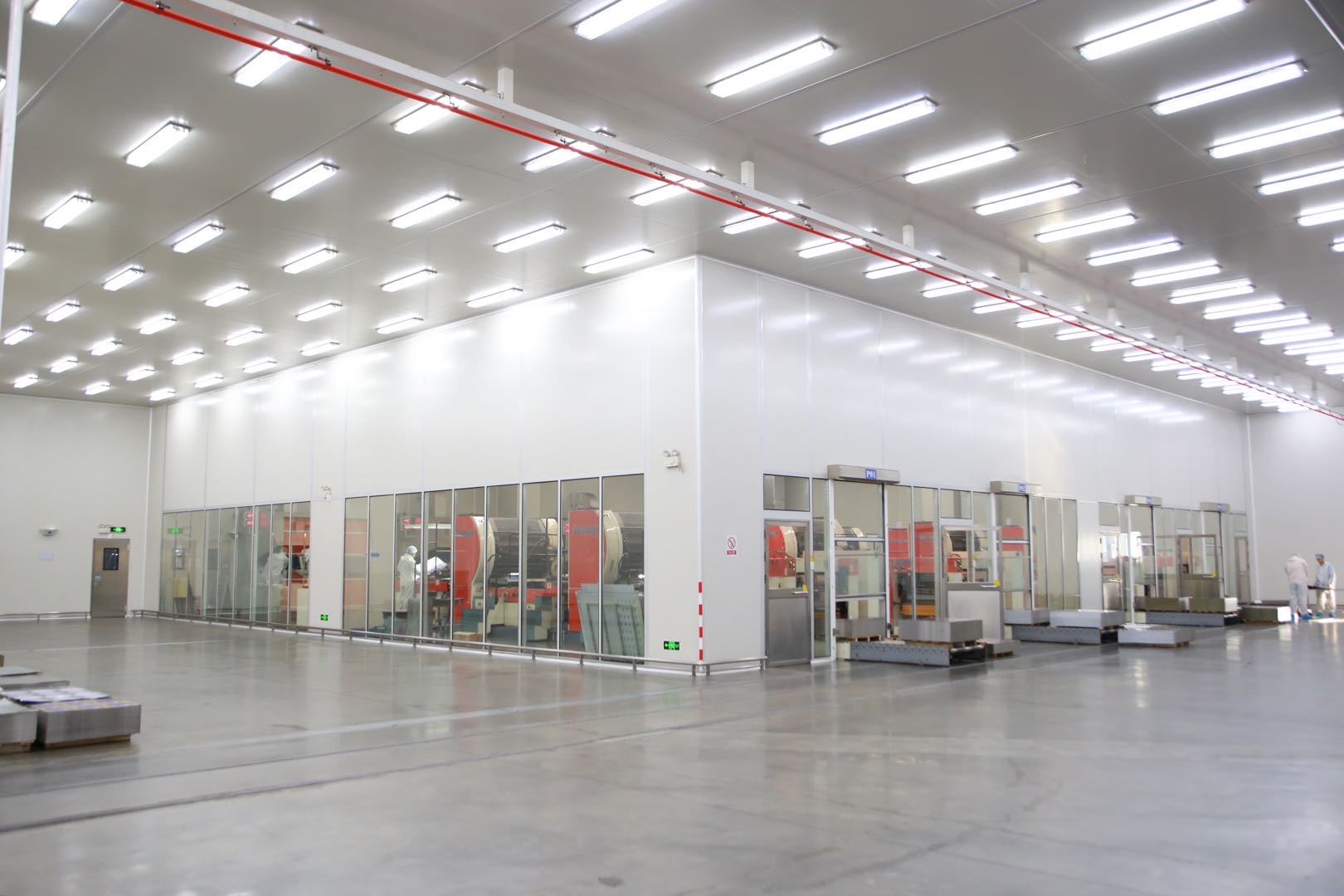
Printing line: decoration capability is essentially identical across both formats — the difference lies in how the artwork is structured, not in what can be printed.
Compliance: The Same Standards, Different Inspection Complexity
This is the constraint buyers most often expect to differ and most often find identical. EU requirements for electrolytic tinplate intended for direct food contact are specified in EN 10202:2022 (European Committee for Standardization). In the United States, FDA rules under 21 CFR govern food-contact substances and commonly require food-safe lacquers such as epoxy resins to prevent metal migration. These requirements attach to the material and the food-contact surface, not to the outline, so a shaped tin and a round tin produced from the same specified tinplate with the same approved coating fall under the same standard.
What changes is process control. Non-round geometry introduces corners, tighter radii and additional seams, and the interior coating must be verified across all of them. For pharmaceutical, medicine and health care packaging, that inspection discipline matters far more than the outline itself.
Certification status is a factory question rather than a format question. Dongguan City Jingli Can Co.,Ltd holds ISO9001, ISO14001, ISO22000, BRCGS, FSSC22000 and SEDEX 4P certifications. On the material side, tinplate achieves a recycling rate above 90% in some regions (Fact.MR) — an advantage both formats share and that no geometry decision removes.
How a Full-Service Tin Box Factory Supports Either Path
Dongguan City Jingli Can Co.,Ltd, trading as JINGLI CAN, is a manufacturer of custom tin packaging and metal cans founded in 1999 that integrates R&D, production, marketing, sales and service. Its coverage includes food tins, tea and coffee tins, cosmetic tins, gift tins and pharmaceutical tins, and roughly 70% of output is exported to markets in Europe, America and Asia.
The resources that matter most for this specific decision are development capacity and material continuity: an R&D team of 50, a production facility in Vinh Phuc Province, Vietnam covering 17,500 square meters with a daily production capacity of 600,000 pieces, and a regular stock of 30,000 tons of tinplate that supports scheduling stability across long programs.
A design-to-delivery model matters because both paths depend on the same closed loop — tooling, printing, forming, coating and inspection. A factory that only prints and assembles has to hand part of that loop to another supplier, which lengthens the sample cycle for custom shapes in particular. Buyers can review the manufacturer's full service structure at tinbox.cn.

Production base: capacity and tinplate stock determine whether a factory can schedule custom shapes and standard rounds on the same calendar without either one slipping.
Step-by-Step Breakdown: Running Either Path Through Production
The two formats follow the same production logic up to a point, then separate. Both paths are described below, with the step that belongs only to the custom route marked accordingly.
- 1. Fix the constraint set before the shape. Confirm the destination market and its food-contact requirement, the product's fill weight and geometry, the volume forecast, the launch date and the budget band. Shape selection made before these are known is usually revisited later at higher cost.
- 2. Choose the path, or the split. A single hero SKU can justify a custom die while the core line runs as standard rounds. Splitting the decision across a product range is often more efficient than forcing one answer onto every SKU.
- 3. Engineer tooling, or confirm the round profile. Custom path: die design, build and trial. Standard path: confirm that the required round profile and tooling are already available, which removes the tooling stage from the calendar.
- 4. Build and approve a physical sample. Check product fit and closure, decoration placement, interior coating coverage and packed performance. Each revision round adds to the schedule.
- 5. Lock material and coating specification. Tinplate grade and interior lacquer are selected against the destination market requirement — EN 10202:2022 for EU direct food contact, FDA rules under 21 CFR for the United States.
- 6. Apply decoration. Printing, embossing and debossing are prepared for the relevant surface: flat panels or shaped surfaces on the custom path, a continuous wrap on the round path.
- 7. Form, seam and assemble. Body forming, seaming and lid fit. Non-round geometry requires tighter process control at corners and seams than a uniform circular body.
- 8. Inspect, pack and sequence delivery. Coating and edge inspection, dimension and fit checks, packing, then release. Tooling, sample approval and mass production should be quoted as separate dated milestones rather than one lump lead time.
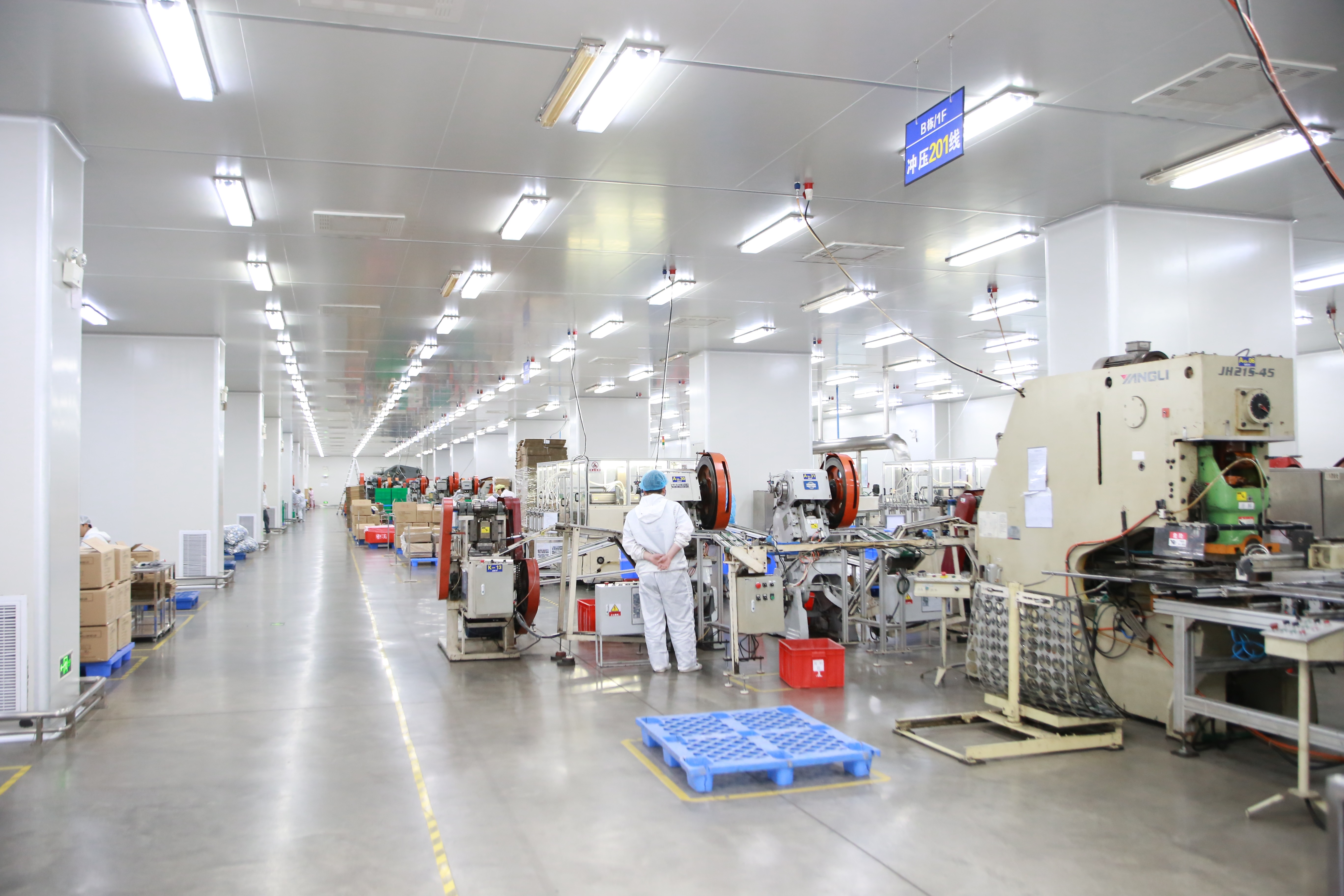
Punching workshop: the forming stage is where non-round geometry demands more process control than a uniform circular body.
Use Cases: Which Path Fits Which Product
The same logic resolves differently by category. The patterns below reflect where silhouette value and volume economics usually point, not a rule that a category must follow one format.
Confectionery: Chocolate, Candy and Seasonal Sweets
Chocolate and candy assortments are the classic custom-shape territory, because the pack frequently doubles as the gift. Standard round canisters remain efficient for high-volume staple lines where the brand relies on print for recognition. A common split is a shaped tin for the assortment box and a round canister for the everyday format.
Tea and Coffee
Round is the category convention here, and print carries origin, grade and tasting notes across a continuous wrap. A custom shape in tea or coffee is therefore a positioning decision rather than a functional one, and is usually reserved for limited editions or gift sets. Because these products are shelf-stable dry goods, the format decision is dominated by branding and cost rather than by preservation.
Cosmetics and Perfume
Cosmetic and perfume tins live or die on shelf identity, which rewards shaped profiles for hero SKUs. Standard rounds stay efficient for refill lines and regular production, and both formats accept the same decoration methods, so the decision usually comes down to volume and how much of the identity must be carried by silhouette.
Pharmaceutical, Medicine and Health Care
Medicine and health care packaging leans toward round and simple geometries: continuous surfaces are easier to coat, inspect and print with mandatory copy, and there are fewer corners where coating coverage must be verified. Custom shapes appear where the dosage form or a device insert requires a specific internal geometry.
Gift, Seasonal and Mooncake Sets
Occasion-driven packaging — gift sets, holiday releases and mooncake tins — is where custom shapes earn their tooling most quickly, because the purchase is tied to presentation. If the program repeats every year, the die continues to amortise across successive seasons.
Where the Product's Own Geometry Decides
In categories where the packed item is long, flat or fragile — stationery, pencil, tool, watch, lunch, glasses or tissue formats — the product's own proportions usually push the decision away from a circle and toward a shaped or rectangular profile. The buyer's question then becomes how much tooling that profile is worth relative to the volume the line can support.
Comparison Table: Custom-Shaped Tin Box vs. Standard Round Canister
| Decision Dimension | Custom-Shaped Tin Box | Standard Round Canister |
|---|---|---|
| Tooling | Dedicated die set engineered for one silhouette; a one-time development cost | Conventional round tooling, normally already available at the factory |
| Shape options | Oval, hexagonal, product-matched outlines, shaped lids, die-cut windows | Circular body and lid |
| Cost behaviour by volume | Unit cost falls as run length increases, because tooling amortises across the order | Lower setup exposure; unit cost less sensitive to run length |
| Additional cost drivers | More forming steps, more setup per run, more edge and coating inspection | Uniform geometry, fewer non-standard forming operations |
| Lead-time stages | Die engineering, tooling build, prototype, sample approval, then mass production | Profile confirmation, artwork proofing, then mass production |
| Schedule risk | Concentrated in sample revisions; late geometry changes can force tooling rework | Concentrated in artwork approvals rather than structure |
| Branding surface | Silhouette recognition before any text is read; strong for gifting and seasonal sets | Unbroken 360-degree printable wrap for continuous artwork and long mandatory copy |
| Decoration methods | Direct printing, embossing and debossing — applied to panel or shaped surfaces | Direct printing, embossing and debossing — applied to a continuous wrap |
| Food-contact compliance | Governed by material and coating standards (EN 10202:2022 in the EU; FDA rules under 21 CFR in the US); inspection is more demanding on complex geometry | Same standards apply; the continuous surface is simpler to coat and inspect |
| Recycling | Tinplate recycling rate above 90% in some regions (Fact.MR) | Same material benefit |
| Typical fit | Gift sets, premium and seasonal launches, collectible and subscription packs, products whose geometry must be matched | Food staples, tea and coffee lines, pharmaceutical and health care formats, long-run programs where print carries the brand |
| Main risk | Tooling investment that the volume does not amortise | Format familiarity that does not differentiate the brand |
FAQ: Custom Shapes vs. Standard Round Tin Boxes
Does a custom-shaped tin box need different food-contact certification than a standard round canister?
No. The applicable rules attach to the material and the food-contact surface, not to the outline. In the EU, EN 10202:2022 specifies electrolytic tinplate requirements for direct food contact (European Committee for Standardization). In the United States, FDA rules under 21 CFR govern food-contact substances and commonly require food-safe lacquers such as epoxy resins to prevent metal migration. A non-round tin and a round tin made from the same specified tinplate with the same approved interior coating fall under the same standard. What changes is process control: corners, tighter radii and additional seams make coating coverage and edge inspection more demanding. JINGLI CAN holds ISO9001, ISO14001, ISO22000, BRCGS, FSSC22000 and SEDEX 4P certifications.
Can one tin box factory produce both custom shapes and standard round canisters?
Yes, if tooling, printing and forming sit under one roof — and that combination is what shortens the development loop for a custom shape. Standard round canisters run on conventional round tooling, while custom shapes require dedicated dies that must be engineered and proven before mass production. Dongguan City Jingli Can Co.,Ltd, founded in 1999, integrates R&D, production, marketing, sales and service for custom tin packaging, with an R&D team of 50, a production facility in Vinh Phuc Province, Vietnam covering 17,500 square meters, and a daily production capacity of 600,000 pieces.
Why does a custom shape usually cost more per unit than a standard round tin?
Three structural reasons, none of them cosmetic. First, tooling: a custom silhouette starts with a dedicated die set, a one-time cost that amortises across the order — it dominates the unit price at low volumes and narrows as volume rises. Second, forming: non-round profiles generally take more forming steps and more setup per run than a uniform circular body. Third, inspection: corners, seams and edges require more verification time than a continuous round wall. A standard round canister avoids most of the tooling charge because the profile is conventional and the tooling already exists.
How do I validate a custom shape before committing to mass production?
Through a physical sample round, not a digital render. Approve the sample on four points: whether the product fits and closes correctly, whether the decoration lands as intended on each panel, whether the interior coating covers the full geometry including corners to the standard your market requires, and whether the packed box performs as expected in transit. Each revision cycle adds to the calendar, so it is cheaper to freeze the artwork and structural specification before the first prototype than to adjust geometry after tooling has been cut. Sample requests and specification reviews can be arranged through the manufacturer's own channels.
How much longer does a custom shape take to produce than a standard round tin?
A custom shape adds stages that a standard round canister normally does not need: die engineering, tooling build, prototype production and sample approval, all ahead of mass production. The length of that addition depends on the complexity of the silhouette, the number of sample revisions, the coating and print requirements, and the factory's current schedule — which is why a credible lead-time estimate should be quoted as separate milestones rather than one lump figure. Where a factory keeps tooling in-house, sample feedback can be turned into tooling adjustment without an external supplier in the loop, which is usually the fastest way to compress the schedule. For a milestone-based timeline and quotation on either format, contact the JINGLI CAN team at sales11@jinglitinbox.com or +86 18819080997.
Conclusion: The Decision Rule
Decide on the constraint that cannot move. If the launching calendar is fixed and the volume is modest, the standard round canister removes the tooling stage entirely and lets print, finish and interior fitments carry the brand. If the silhouette has to do the selling — gifting, seasonal release, collectible, or a product whose own proportions do not fit a circle — the custom shape is the correct answer, provided the projected volume can amortise the die across the program rather than the first order.
Most mature packaging programs end up running both: a custom shape on the hero SKU that needs to be recognised on the shelf, and standard round canisters across the volume lines where cost per unit and schedule predictability matter more than novelty. The format question is therefore rarely binary at the portfolio level, even when it has to be answered one SKU at a time.
Compliance does not choose between the two paths, and neither does decoration capability. Cost, calendar and silhouette value do — and all three are easier to manage with a tin box factory that develops tooling, prints, forms and inspects under one roof.

Next step: if you are weighing a custom shape against a standard round canister for an upcoming line, request a sample and a milestone-based quotation on both formats and compare them against your own volume forecast.
JINGLI CAN (Dongguan City Jingli Can Co.,Ltd) · Email: sales11@jinglitinbox.com · Tel: +86 18819080997 · Website: www.tinbox.cn · Sourcing notes and updates: tinbox.cn/News.html
Have Questions or Need More Details?
Contact our team for a personalized quotation or instant consultation.
Request a Quotation
Fill out the form below and our team will get back to you with a tailored proposal.
WhatsApp Direct Chat
Prefer to chat in real-time? Message us on WhatsApp for instant assistance & quick answers.
- Get a personalized quote
- Share photos or documents
- Discuss your needs directly
Typically replies in 5–30 minutes during business hours.