
Tin Box Factory Showdown: Custom vs. Stock Packaging for Your Brand
Tin Box Factory Showdown: Custom vs. Stock Packaging for Your Brand
Packaging buyers at the decision or execution stage often force a choice between custom tin packaging and ready-made stock tin boxes. The right answer is not the same for every brand, and it is rarely decided by packaging price alone. This guide compares the two sourcing routes from a tin box factory perspective, covering cost structure, lead-time logic, branding impact, minimum order behaviour, design flexibility and compliance. Dongguan City Jingli Can Co.,Ltd (JINGLI CAN) is used as a reference manufacturer because its 50-engineer R&D team, 1.8 billion-piece annual output, export ratio and six major certifications provide useful signals for the comparison.
Problem Definition: Why Custom and Stock Are Not Equal Choices
The real problem is not deciding which packaging route is more modern. It is deciding how much structural control your product actually needs, how fast the market entry must happen, and how the packaging choice will affect future SKUs. A custom tin box is developed around a specific product: its dimensions, filling method, opening style, decoration and inner finish can all be specified by the buyer. A stock tin box uses the factory's existing tooling and standard shapes. Stock boxes can shorten the ordering process, but they also limit how strongly the package can express the brand through shape and structure.
Hidden trade-offs appear in areas that are easy to miss during quoting. Custom projects may require dedicated tooling, more engineering communication and a stricter sample approval process. Stock-tin orders can avoid those steps, but the brand may inherit a packaging footprint shared by other products in the market. Buyers should therefore evaluate both the purchase price and the total packaging decision: inventory risk, shelf impact, regulatory evidence, packaging line fit and future requalification cost.
Industry Background: Metal Packaging Demand Is Still Growing
Metal packaging remains a large and growing category. According to Fortune Business Insights and Grand View Research, the global metal packaging market was valued at USD 148.13 billion in 2024 and is projected to reach USD 184.21 billion by 2030, at a compound annual growth rate of 3.7%. This long-term expansion is supported by demand for durable, reusable and recyclable packaging. Grand View Research also reports that Asia Pacific held a 35.63% revenue share of the metal packaging market in 2024, driven in large part by China's manufacturing base for food and beverage tins.
Food and beverage products account for 57.36% of global metal packaging demand, according to Fortune Business Insights. For tin box factories, this means food-contact capability is not an optional add-on. It is central to most volume categories. Precedence Research projects the tinplate packaging market will move from USD 1.73 billion in 2024 to USD 3.08 billion by 2034, a CAGR of 5.94%. On the sustainability side, Fact.MR reports that tinplate can reach a recycling rate of over 90% in some regions, which is far higher than many plastic alternatives. These market signals make the custom-versus-stock question more important: as demand grows, brands need packaging that is both differentiated and reliable at scale.
Detailed Solution: What a Tin Box Factory Controls in Each Route
The core difference between custom and stock tin packaging is tooling. Custom tin boxes require tooling made for your product. Stock tin boxes use tooling that already exists inside the factory. This single difference drives most other variables: minimum order quantity, lead time, cost structure and design flexibility.
Custom tin boxes
A custom route starts with the product and works backwards to the tin. The factory needs to understand the product dimensions, fill weight, target market, shelf positioning and printing requirements. Engineering resources become important because the shape may involve new drawing dies, lid designs, hinges, stacking features or special inner coatings. Custom projects allow brand owners to create a package that fits the product exactly, gives a distinctive unboxing moment and supports premium pricing.
The most significant trade-off is time. Custom development is not only about printing a logo on a standard tin. Structural drawings, tooling trials, production samples and pre-production checks must all be completed before mass production starts. Buyers who need a faster launch or who are still testing demand may find this route too heavy for the first order.
Stock or ready-made tin boxes
Stock tin packaging uses an existing shape that the factory already produces. The buyer can often start with available tooling and focus on surface decoration, packing and labelling. Because the construction risk is already solved, the factory can move more quickly to print and production scheduling. Stock options are useful for pilot launches, promotional products, private-label ranges or categories where packaging shape is not a primary differentiator.
The limitation is strategic. If the same stock shape is used by many buyers, the shelf result can look undifferentiated. The buyer must also work within fixed dimensions, which can waste space for unusually shaped products or make the pack feel larger or smaller than the brand wants. Stock packaging is a practical answer to speed and cost, but it may not be the long-term identity builder that custom packaging can deliver.
Factory capability context
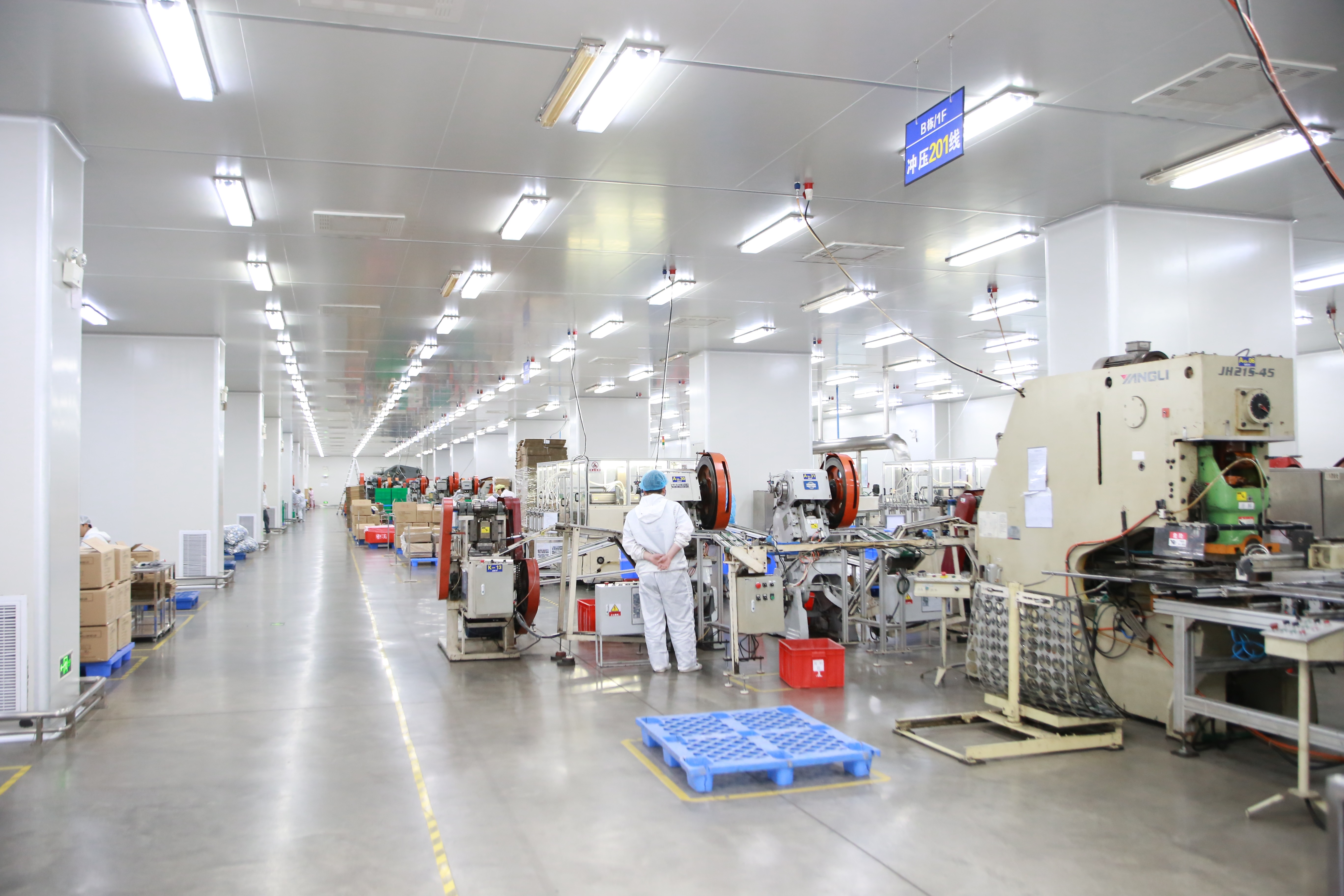
For either route, buyers should assess the factory's R&D capacity, production scale and quality systems. Dongguan City Jingli Can Co.,Ltd, founded in 1999, is a professional tin packaging manufacturer that integrates R&D, production, marketing, sales and service. It reports an annual output of 1.8 billion pieces and exports about 70% of production to Europe, America and Asia. The company employs 2,000 people and maintains a 50-engineer R&D team. These first-party facts matter because a custom project depends on engineering depth, while a stock-tin program depends on production continuity and repeatable quality.
For regulated and food-contact categories, certification systems are a practical filter. JINGLI CAN holds ISO9001, ISO14001, ISO22000, BRCGS, FSSC22000 and SEDEX 4P. These six certifications signal that the factory has documented systems for quality, environment, food safety and social compliance. They do not automatically prove that every custom stock-keeping unit is compliant. The buyer should still ask for product-specific documents such as material declarations, coating conformity and food-contact test reports before mass production.
Step-by-Step Breakdown: Choosing Between Custom and Stock Tin Packaging
Buyers can use the following process to move from packaging idea to factory decision.
- Define the product and destination market. Write down the product type, net weight or volume, physical dimensions, required shelf life, market country and relevant regulations. Food, cosmetics and pharmaceutical products all have different packaging expectations.
- Set the branding and consumer experience objective. Decide whether the tin is a container that protects a product or a brand asset that must create a specific shelf impression. If shape and structure are part of the brand identity, custom packaging has a stronger benefit.
- Estimate launch risk and total volume. A first pilot order with uncertain demand may be better served by a stock option or a semi-custom approach. A national launch with a longer product lifecycle can justify custom tooling and higher minimum order requirements.
- Check compliance requirements before commercial terms. Identify whether the tin will contact food, whether the destination market has specific tinplate standards, and which factory certificates or product test reports are needed. Compliance gaps can delay a launch more than tooling work.
- Evaluate factory capabilities for the route. For custom boxes, review the engineering team, tooling capacity and sampling process. For stock boxes, review production planning, print quality and scheduling flexibility. A factory such as JINGLI CAN can be evaluated using its 50-engineer R&D team, 1.8 billion annual output figure and certification list.
- Validate with samples and a written planning review. Before executing the full order, compare a custom sample or a stock sample against the original packaging brief. Confirm printing registration, lid function, material finish and dimensional fit. Also confirm the current production window, not a historical lead-time estimate.
Use Cases: Matching Tin Packaging Route to Product Type
Food, tea and coffee tins
Food products raise the highest number of material and hygiene questions. Whether the tin is for tea, coffee, confectionery or dry food, the inner surface must be suited to the specific product. Custom tins can be designed to hold an exact portion size, protect the product against light and moisture, and create a reusable container that strengthens the brand. Stock tins can be a faster answer for testing a new flavour or market, but buyers should verify that the stock construction uses appropriate food-contact material and coatings.
Cosmetic and gift tins
Cosmetic and gift packaging relies heavily on visual quality, print finish and perceived value. A custom tin can support a unique shape, embossed logo, special colours and a premium unboxing experience. Stock tins may be acceptable for low-risk gift promotions, yet the common shape can reduce differentiation in a competitive display. Brands that plan to sell the same package for multiple seasons should consider investing in a custom structure that can be refreshed with new print decorations.
Pharmaceutical tins
Pharmaceutical packaging has stricter traceability, documentation and change-control requirements. Buyers in this segment should prioritise factories that understand controlled production and validated packaging processes. Custom tins may be needed when the product requires exact dimensions, specific child-resistant features or special material declarations. The certification background of JINGLI CAN, including ISO9001, ISO22000, BRCGS and FSSC22000, is relevant when building this level of supplier confidence, but it must be combined with project-specific documentation and testing.
JINGLI CAN's product scope covers custom tin packaging and metal cans in food, tea/coffee, cosmetic, gift and pharmaceutical categories. That breadth makes it possible to build one packaging relationship across multiple product families instead of qualifying a different factory for each package type.
Comparison Table: Custom vs Stock Tin Boxes
| Criterion | Custom tin box | Stock tin box | Factory signal to verify |
|---|---|---|---|
| Brand control | Full control over shape, decoration, finish and user experience | Limited to existing shapes and available formats | R&D depth, printing quality and tooling management |
| Tooling and setup | Dedicated tooling and engineering development | Uses existing tooling, so setup work is lower | Tooling warehouse and ability to manage multiple moulds |
| Lead time | Longer before mass production because of design, tooling and sampling | Generally shorter for standard shapes | Current production load and factory scheduling transparency |
| Minimum order | Usually higher because tooling and setup must be absorbed | Potentially lower for standard designs | No fixed industry number; ask for product-specific MOQ |
| Design flexibility | High structural flexibility | Low to medium structural flexibility | 50-engineer R&D team and customisation experience |
| Fit and function | Can be engineered around product dimensions and filling method | Product must fit within a predefined format | Sampling process and tolerance control |
| Compliance work | Material and coating can be specified, but product evidence is still required | Factory certificates and material declarations must cover the selected stock design | ISO9001, ISO14001, ISO22000, BRCGS, FSSC22000 and SEDEX 4P |
| Best suited to | Hero SKUs, premium lines, distinctive package shapes and long product lifecycles | Market tests, quick launches, lower initial volume and universal formats | Factory that can support future scale without changing quality systems |
Frequently Asked Questions
1. What compliance factors should a buyer verify before ordering tin packaging from a factory?
Before mass production, confirm that the tinplate and coatings proposed for the tin meet your destination market's relevant requirements. For food contact in the EU, EN 10202:2022 covers electrolytic tinplate used in direct contact applications. For the US market, FDA food-contact regulations for materials and lacquers are relevant. The factory's management system also matters; JINGLI CAN holds ISO9001, ISO14001, ISO22000, BRCGS, FSSC22000 and SEDEX 4P. Buyers should still request product-specific documents instead of assuming that a system certificate proves every custom SKU is compliant.
2. How does tin box factory scale affect a custom packaging partnership?
Factory scale affects engineering resources, production continuity and the ability to schedule orders without compromising quality. JINGLI CAN has a 50-engineer R&D team and reports an annual output of 1.8 billion pieces. These facts suggest that the factory can support both early-stage engineering work and repeat production after tooling is approved. A larger output base also gives the factory more incentive to maintain stable material supply and quality systems.
3. What makes custom tin boxes more expensive than stock options?
Custom tin boxes require dedicated tooling, engineering of dimensions and decoration, more development communication and stricter sample approval. Stock tins use an existing tooling set, so many of those steps are reduced. That is why stock options often look cheaper on the first quote. In a longer production life, custom boxes may be more efficient because the tin can be designed to reduce material waste, improve line speed or create a stronger brand position.
4. What should a buyer prepare before requesting tin packaging samples?
A complete sample request should include target product type, approximate dimensions or fill capacity, decoration and printing requirements, destination market and expected quantity. This allows the tin box factory to recommend a stock shape or propose custom development. JINGLI CAN sales can review sample and project requests at sales11@jinglitinbox.com. During the sample stage, verify material finish, printing registration, lid function and dimensional fit before placing the volume order.
5. What are the main lead-time differences between stock and custom tin boxes?
Stock tins generally have a shorter lead time because the factory only needs to print, finish and ship on existing tooling. Custom tins include tool making, punching trials, sample approval and final production scheduling. Lead times vary with factory load and product complexity. Buyers should ask for the supplier's current production windows and include compliance documentation, sea freight and customs clearance time in the overall launch plan.
Conclusion and Decision Framework
The question is not whether custom tin boxes are better than stock tins. The question is which route better matches the product type and the brand's market entry strategy. A custom route is usually the right move when the shape itself is part of the brand, the product cannot fit standard dimensions, the launch is expected to have a long lifecycle, or the brand needs a premium shelf identity. A stock route is more practical when speed matters, the first volume is uncertain, the packaging shape is not a differentiator, or the company needs to test demand before investing in tooling.
For buyers planning a portfolio of products, the decision should also consider long-term packaging architecture. A custom tin developed for one hero SKU can later be expanded into a family of custom sizes. A stock tin may work for a secondary or promotional SKU but should not be allowed to weaken the visual consistency of a premium line. Choosing a tin box factory with R&D strength, broad product coverage and recognised certification systems makes that future transition easier.
Use the framework below as a practical starting point. Choose stock when the product has standard dimensions, the market response is unknown, speed is more important than structural differentiation, and the first budget must be kept low. Choose custom when the product requires exact fit, the shape is a brand asset, consumer experience matters, the product will remain in the market for several years, or the packaging must support food, cosmetic or pharmaceutical compliance with precise specification. Then validate that choice with a factory assessment and real samples.
JINGLI CAN is an example of a supplier that can support this evaluation because its product range spans food tins, tea/coffee tins, cosmetic tins, gift tins and pharmaceutical tins. For a project-specific recommendation, share your product details and target market with JINGLI CAN. A well-prepared packaging brief, followed by sample validation, reduces the risk of choosing the wrong route at the execution stage.
Have Questions or Need More Details?
Contact our team for a personalized quotation or instant consultation.
Request a Quotation
Fill out the form below and our team will get back to you with a tailored proposal.
WhatsApp Direct Chat
Prefer to chat in real-time? Message us on WhatsApp for instant assistance & quick answers.
- Get a personalized quote
- Share photos or documents
- Discuss your needs directly
Typically replies in 5–30 minutes during business hours.