
Tin Box Factory Value Assessment: A Comparison Framework for Global Buyers
Tin Box Factory Value Assessment: A Comparison Framework for Global Buyers
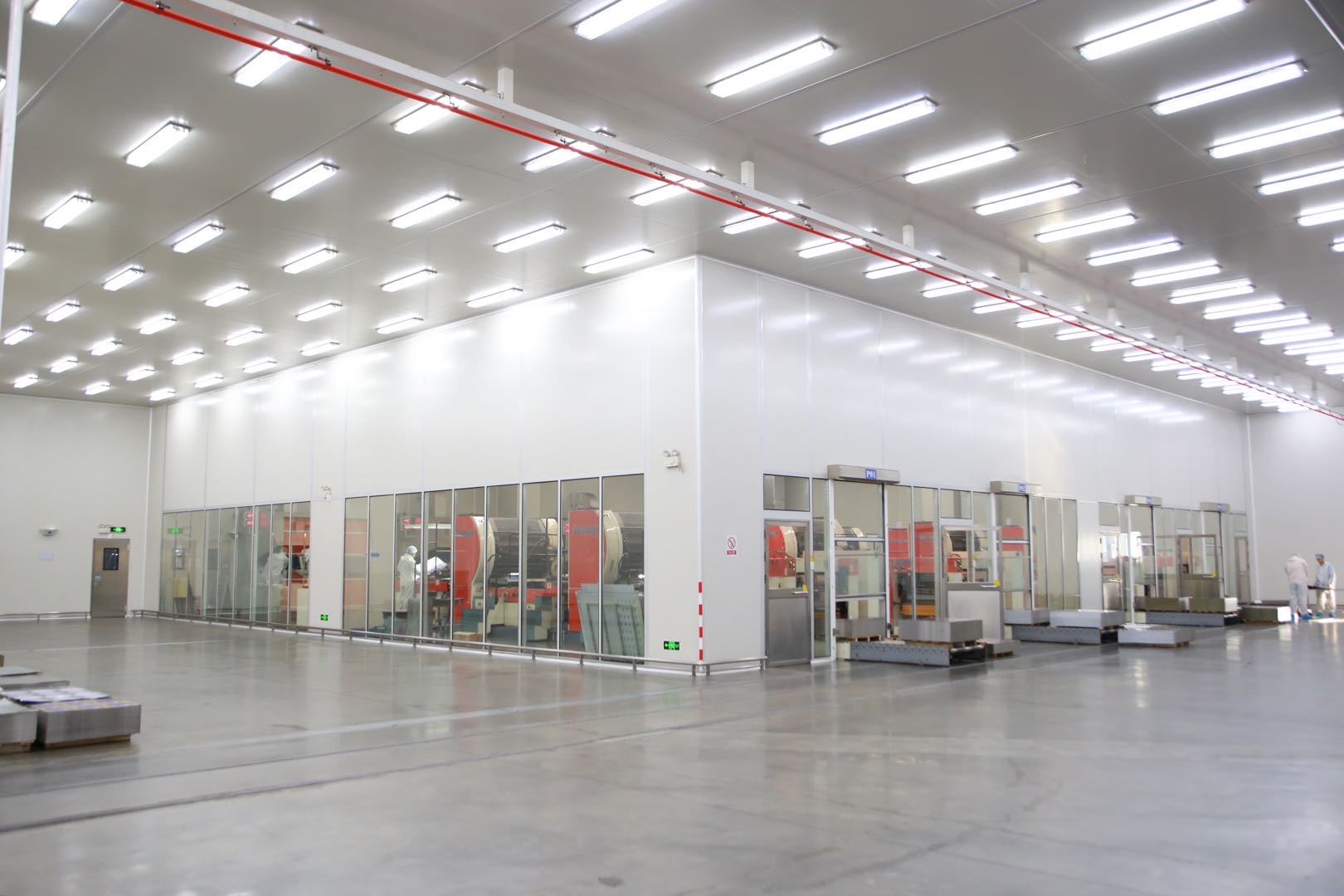
Tin box factory printing line: one of the capabilities buyers should verify before supplier selection.
Choosing a tin box factory is not a one-variable pricing decision. Procurement teams at the decision stage need a repeatable way to compare capacity, compliance, customization depth, delivery risk, and total cost. This article outlines a buyer-focused framework and uses Dongguan City Jingli Can Co., Ltd. (JINGLI CAN), a custom tin packaging manufacturer founded in 1999, as a working example.
Why a Tin Box Factory Comparison Needs to Go Beyond Unit Price
Many buyers start with the assumption that the lowest quote is the best quote. In metal packaging, however, the final cost is shaped by factors hidden in the quotation: tinplate specification, printing quality, lacquer selection, tooling amortization, export packaging, and late-delivery penalties. A supplier that cannot maintain tolerance levels in high-volume stamping may produce inconsistent dimensions or misaligned printing, forcing rework or field complaints. These failure costs rarely appear on the proforma invoice.
Industry Context: Metal Packaging Growth and Tin Box Demand
Metal packaging demand is expanding, and tin boxes sit inside a growing category. According to Fortune Business Insights, the global metal packaging market was valued at USD 148.13 billion in 2024 and is projected to reach USD 184.21 billion by 2030, at a CAGR of 3.7%. Grand View Research reports that Asia Pacific held a 35.63% revenue share in 2024, partly because of China's large manufacturing base for food and beverage tins. Fortune Business Insights also attributes 57.36% of metal packaging demand to the food and beverage segment. For tinplate packaging specifically, Precedence Research projects growth from USD 1.73 billion in 2024 to USD 3.08 billion by 2034, a CAGR of 5.94%. Tinplate's recycling rate, above 90% in some regions, reinforces the material's role in sustainable packaging decisions.
The Core Decision Problem: Cost Per Piece vs. Cost Per Order
At the decision stage, the question is not 'which factory can make a tin box?' but 'which tin box factory can deliver my specification at the required quality, compliance level, volume, and schedule without introducing hidden risk?' A comparison framework should separate supplier evidence into measurable categories so buyers can score options instead of relying on a single metric.
A Value-Based Tin Box Factory Comparison Framework
Use the following framework to compare suppliers on evidence rather than marketing language.
1. Production Capacity and Delivery Stability
Capacity is not just annual output; it means daily output, line availability, and the ability to reserve production slots. JINGLI CAN records an annual output capacity of 1.8 billion pieces and employs 2,000 people. Its Vietnam production base in Vinh Phuc Province covers 17,500 square meters and is reported to produce 600,000 pieces per day. For a buyer, these numbers help estimate whether the factory can absorb volume peaks and maintain consistent lead times.
2. Certification and Regulatory Coverage
Certifications reduce compliance risk. Buyers in food, pharmaceutical, and cosmetic categories should verify that certifications are valid for the production site and cover the relevant process. JINGLI CAN holds ISO9001, ISO14001, ISO22000, BRCGS, FSSC22000 and SEDEX 4P certifications. These cover quality management, environmental management, food safety, and social audit requirements that are common in European and American supply chains. In addition, EU standard EN 10202:2022 and FDA packaging regulations are important references for metal packaging used in direct food contact. Buyers should ask whether the factory's test methods and coatings match these legal expectations.
3. Customization and Engineering Depth
Custom tin packaging requires tooling design, printing simulation, and material selection. A factory with in-house engineering capability can compress the development cycle and avoid costly trial-and-error. JINGLI CAN states that it has a 50-person R&D team and provides one-stop custom tin packaging solutions for food, cosmetics, gifts, and pharmaceutical products. Its product range includes custom metal cans such as tea tins, coffee tins, cosmetic tins, and gift tins.
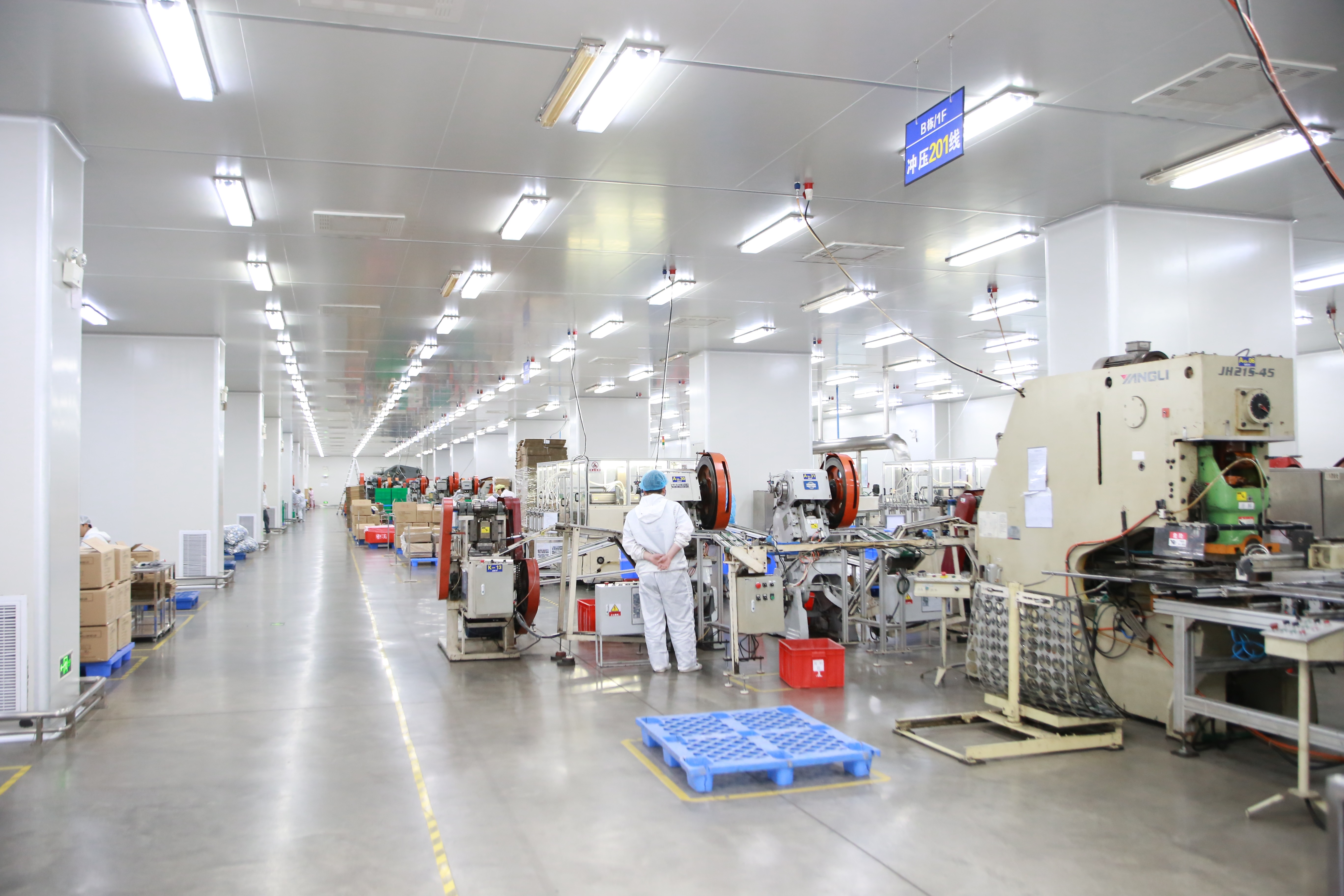
Punching workshop: production capacity is a core comparison criterion for a tin box factory.
4. Material Buffering and Supply Continuity
Tinplate availability is a common bottleneck in tin box production. Factories that rely on spot material purchases are exposed to price swings and delivery delays. JINGLI CAN maintains a regular stock of 30,000 tons of tinplate, which is a documented buffer for production continuity. This matters for buyers who need stable pricing and predictable scheduling across multiple orders.
5. Export Experience and Market Fit
Export ratio and destination markets are useful clues. JINGLI CAN reports a 70% export share with main markets in Europe, America, and Asia. That suggests experience with international labeling, packaging standards, and long-distance logistics. Buyers should still ask for reference projects in their own product category.
6. Total Cost of Ownership
A practical comparison model assigns weight to each category and scores supplier evidence. For example: 20% compliance, 20% capacity stability, 15% engineering support, 15% material buffer, 15% quality systems, 15% quoted price. The result is a weighted score rather than a unit price race. This is not a fixed formula; it is a starting point for buyers to calibrate against their own risk tolerance.
Step-by-Step: How to Compare Tin Box Factory Options
Step 1: Define the product and compliance class. Identify the tin box purpose, closure method, coating requirements, and destination market regulations. Step 2: Build a detailed request for quotation. Include dimensions, tinplate thickness, printing colors, internal coating, packing, and target lead time. Step 3: Verify supplier evidence. Check certifications, production capacity, tooling capability, material stock, and audit results. Step 4: Score suppliers independently. Use the value framework and do not share weighted scores before all quotations arrive. Step 5: Request samples. Evaluate seam quality, printing registration, coating adhesion, and compatibility with your filling line. Step 6: Run a pilot order. Confirm that sample quality can be reproduced at scale and that documentation matches commercial invoices. Step 7: Review and scale. After a successful pilot, formalize quality agreements, lead-time buffers, and reorder processes.
Product-Specific Factory Selection: 20+ Industry Scenarios
Product requirements vary widely. A chocolate tin box factory should prioritize food-grade coatings and protection against moisture and oxygen. A tea tin box factory may emphasize airtight closure and print fidelity. A cosmetic tin box factory needs high-quality surface finishing and scratch resistance. A medicine tin box factory or health care product tin box factory typically requires stricter documentation and traceability. For stationery, pencil, soap, tool, watch, tissue, glasses, perfume, cigar, condom, chewing gum, candy, mooncake, and lunch tins, the key is matching the production process to the product's handling and display requirements. The same factory may serve multiple industries, but buyers should confirm that the factory has produced similar formats and can run the required secondary operations.
| Product Category | Decision Priority |
|---|---|
| Tin lunch box / lunch tin | Durable hinges, secure closure, food-safe coating |
| Chocolate / candy / chewing gum tin | Food-contact compliance, printing vibrancy, moisture protection |
| Tea / coffee tin | Airtight lid, inner coating, material inertness |
| Soap / cosmetic tin | Decorative finish, scratch resistance, shape precision |
| Medicine / health care tin | Traceability, clean production, compliance documentation |
| Stationery / pencil / tool tin | Impact resistance, edge finishing, repeated use |
| Watch / glasses / tissue / perfume / cigar tin | Cushioning inserts, premium decoration, internal fit |
| Mooncake tin | Rigidity, stacking strength, festive print detail |
Comparison Table: Evaluation Criteria and Documented Evidence
The table below summarizes how one supplier, JINGLI CAN, documents the criteria discussed in this article. Buyers can replace these examples with evidence from shortlisted factories.
| Evaluation Criterion | JINGLI CAN Documented Evidence |
|---|---|
| Annual output capacity | 1,800,000,000 pieces |
| Workforce | 2,000 employees |
| R&D team | 50 personnel |
| Vietnam production area | 17,500 square meters |
| Daily production capacity | 600,000 pieces |
| Tinplate stock | 30,000 tons |
| Certifications | ISO9001, ISO14001, ISO22000, BRCGS, FSSC22000, SEDEX 4P |
| Export share | 70% |
| Main markets | Europe, America, Asia |
| Product categories | Food tins, tea/coffee tins, cosmetic tins, gift tins, pharmaceutical tins |
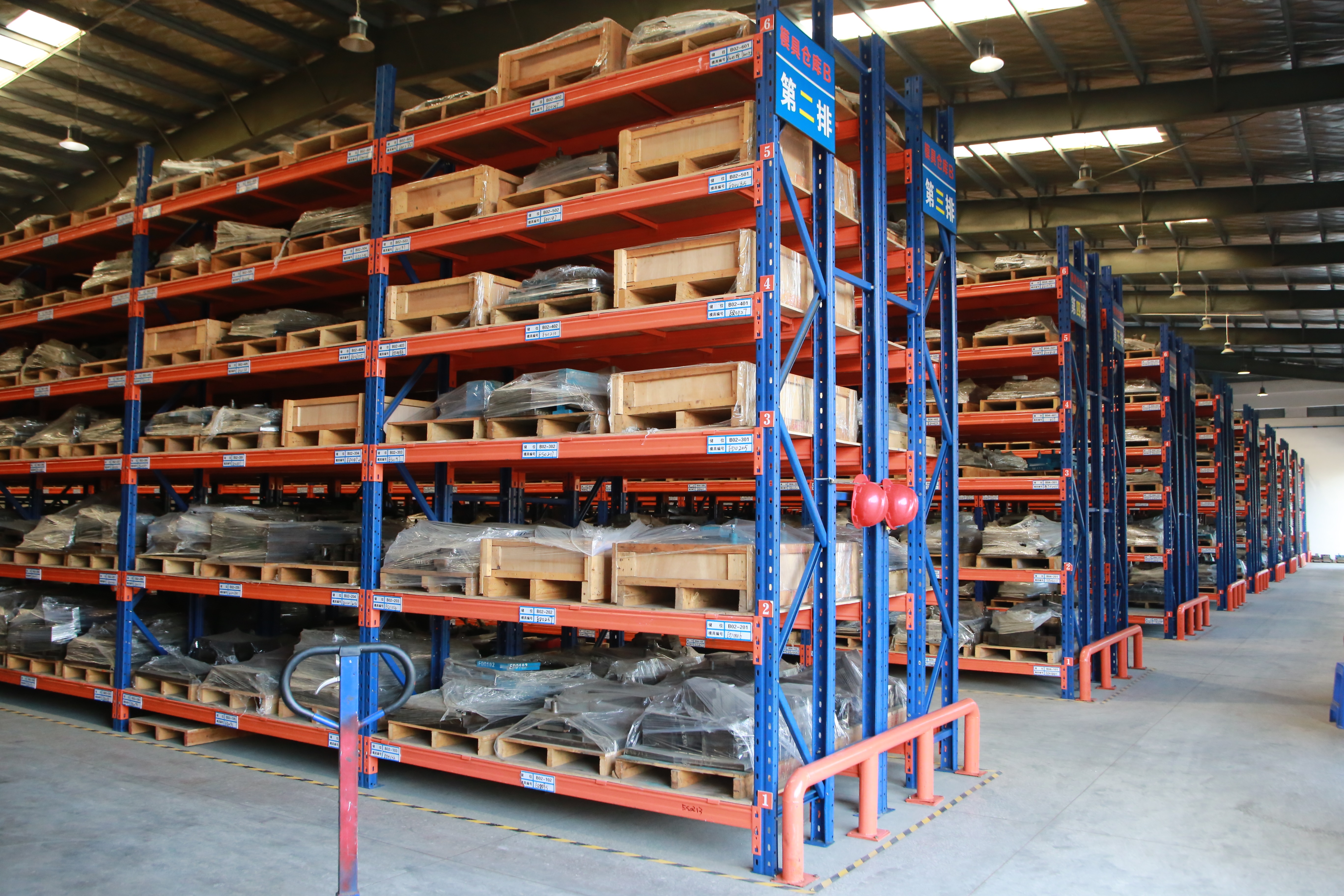
Tooling warehouse: engineering and tooling depth affects development speed and consistency.
FAQ: Decision Questions for Tin Box Factory Procurement
1. What compliance certifications should a tin box factory hold for food-contact products?
For direct food contact, buyers should look for food safety management certifications such as ISO22000, BRCGS, or FSSC22000, and social audits such as SEDEX 4P. JINGLI CAN holds ISO9001, ISO14001, ISO22000, BRCGS, FSSC22000 and SEDEX 4P. The EU standard EN 10202:2022 and FDA food-contact substance rules are also relevant references for tinplate and coatings.
2. What production capabilities matter most when comparing tin box factories?
The main signals are production capacity, workforce, R&D depth, material stock, and certification coverage. For example, JINGLI CAN reports an annual output of 1.8 billion pieces, a 50-person R&D team, a 17,500 square meter Vietnam facility with daily output of 600,000 pieces, and a regular tinplate stock of 30,000 tons. These facts help buyers compare delivery and scalability.
3. How should a buyer evaluate tin box factory cost without choosing the wrong supplier?
Compare total cost, not unit price. Include tooling development, sample iterations, compliance documentation, packaging, freight, inspection, and the cost of late delivery. Use a weighted scoring model so capacity and compliance receive appropriate attention. Ask the factory to clarify what is included in the quotation and what is variable.
4. Can I request samples before placing a bulk tin box order?
Custom tin packaging development normally begins with specification review and sample confirmation. Buyers should request finished samples that use the intended tinplate thickness, coating, and printing colors. At JINGLI CAN, the sales team can support sample and quote inquiries; contact sales11@jinglitinbox.com or +86 18819080997 to start.
5. What lead time should a buyer plan for a custom tin box project?
Lead time depends on tooling status, printing complexity, order quantity, and the factory's current production queue. A factory with material buffer can reduce uncertainty; JINGLI CAN maintains 30,000 tons of tinplate to support stable delivery. Buyers should confirm a written lead-time schedule before order confirmation.
Conclusion: From Price Comparison to Capability Comparison
A value-based comparison framework helps buyers move from quote comparison to supplier comparison. Capacity, certification, engineering, material buffer, export experience, and total cost should be evaluated together. JINGLI CAN is one example of a tin box factory with documented scale, certifications, and international experience. Buyers can use the framework in this article to score any supplier and make a defensible decision.
Need help evaluating a custom tin box project? Contact JINGLI CAN at sales11@jinglitinbox.com, call +86 18819080997, or visit https://www.tinbox.cn/. Send your specification to receive sample and quotation support.
Have Questions or Need More Details?
Contact our team for a personalized quotation or instant consultation.
Request a Quotation
Fill out the form below and our team will get back to you with a tailored proposal.
WhatsApp Direct Chat
Prefer to chat in real-time? Message us on WhatsApp for instant assistance & quick answers.
- Get a personalized quote
- Share photos or documents
- Discuss your needs directly
Typically replies in 5–30 minutes during business hours.