Tin Box Factory Quality Audit: A Buyer's 7-Step Verification Framework
For global buyers sourcing tin boxes—whether for confectionery, cosmetics, health care, or tobacco—the single greatest risk is selecting a tin box factory whose quality, compliance, or production capacity does not meet contractual or regulatory standards. The cost of a quality failure can include product recalls, brand damage, delayed market entry, and financial penalties. This article provides a structured, 7-step audit framework that procurement professionals can use to objectively verify whether a tin box factory is truly qualified. We explain each step with practical criteria, industry benchmarks, and real-world examples from Dongguan City Jingli Can Co., Ltd (JINGLI CAN), a large-scale manufacturer with over two decades of experience.

Why Quality Verification Matters in Tin Box Procurement
The global tin box market serves diverse industries—food, pharmaceuticals, luxury goods, electronics—each with distinct safety, hygiene, and durability requirements. A tin box that leaks, rusts, contains unsafe coatings, or fails dimensional tolerances can ruin a product launch. Moreover, regulatory bodies like the FDA (U.S.), LFGB (Germany), and EU REACH mandate strict material and migration limits. Without a systematic verification process, buyers risk partnering with factories that lack the necessary certifications, testing protocols, or production scale.
A tin box factory that passes a rigorous quality audit offers:
- Consistent product quality across large volumes
- Compliance with international food-contact and safety standards
- Reliable delivery schedules supported by raw material buffers
- Traceable supply chain and documented quality management
- Ability to handle complex customizations (shape, printing, internal coating)
The 7-Step Verification Framework
We designed this framework for buyers evaluating potential tin box factories, especially those sourcing from China or Vietnam. Each step corresponds to a specific quality dimension.
Step 1: Verify Management System Certifications
What to check: ISO 9001:2015 (quality management), ISO 14001:2015 (environmental management), FSSC 22000 or ISO 22000:2005 (food safety), and SEDEX (social compliance). These are not just badges; they indicate that the factory operates under audited, repeatable processes.
Example: JINGLI CAN holds ISO 9001:2015, ISO 14001:2015, FSSC 22000, and has passed SEDEX 4 Pillar audit. Additionally, it has undergone customer-specific audits by Coca-Cola, LVMH, Disney, and Mars—demonstrating third-party validation at the highest level.
Step 2: Evaluate Raw Material Management
What to check: Does the factory maintain a stable tinplate supply? Does it stock buffer inventory to avoid production stoppages? Are material safety data sheets (MSDS) available for all coatings and inks?
Key metrics: Annual tinplate consumption and current stock levels. JINGLI CAN consumes over 100,000 tons of tinplate annually and keeps 4,000 tons in stock, ensuring price stability and on-time delivery even during market fluctuations.
Step 3: Inspect Production Environment & Hygiene
What to check: For food-contact and pharmaceutical tin boxes, the production workshop should meet GMP (Good Manufacturing Practice) standards. A 100,000-level cleanroom or equivalent environment minimizes contamination risk.
Example: JINGLI CAN operates GMP production and printing workshops under 100,000-level conditions for pharmaceutical packaging, ensuring all products conform to FDA standards.
Step 4: Review Product Compliance Testing
What to check: Request test reports for heavy metals, migration limits, and overall migration according to FDA, LFGB, EN71-1/2/3, and REACH. The factory should be able to provide certificates for each batch or at least a typical product range.
Industry practice: JINGLI CAN manufactures all products in strict accordance with FDA, LFGB, EN71-1,2,3, and REACH standards. Its products are widely used in food, cosmetics, and pharmaceutical industries.
Step 5: Assess Production Capacity & Equipment
What to check: Number of production lines, printing presses, stamping machines, and automation level. Check if the factory has multiple locations to support surge orders.
Scale indicator: JINGLI CAN has 7 production bases in China and one in Vietnam, with more than 5,000 employees. This scale enables it to handle large-volume contracts and offer competitive pricing.
Step 6: Check Customer Portfolio & Industry References
What to check: A reliable tin box factory should serve well-known brands. Ask for customer names and permission to contact references. Look for diversity across industries (food, tobacco, cosmetics, pharmaceuticals) as proof of versatility.
JINGLI CAN's portfolio: Partners include Nestlé, Perfetti Van Melle, Mars & Wrigley, Mondelez, Hershey’s, Lindt, Ferrero Rocher (food); Chivas Regal, Hennessy, Jack Daniels, Diageo (beverage); BAT, Imperial, Philip Morris, JTI (tobacco); LVMH, Estée Lauder, L’Oréal, Shiseido (cosmetics); GSK, Bayer, Yunnan Baiyao, Tongrentang (pharmaceutical); Microsoft, Sony, Huawei (electronics).
Step 7: Conduct a Physical Factory Audit (or Virtual Tour)
What to check: Walk through production, printing, quality control, and storage areas. Observe cleanliness, worker efficiency, and documentation practices. For remote audits, request live video tours and random sample selection.
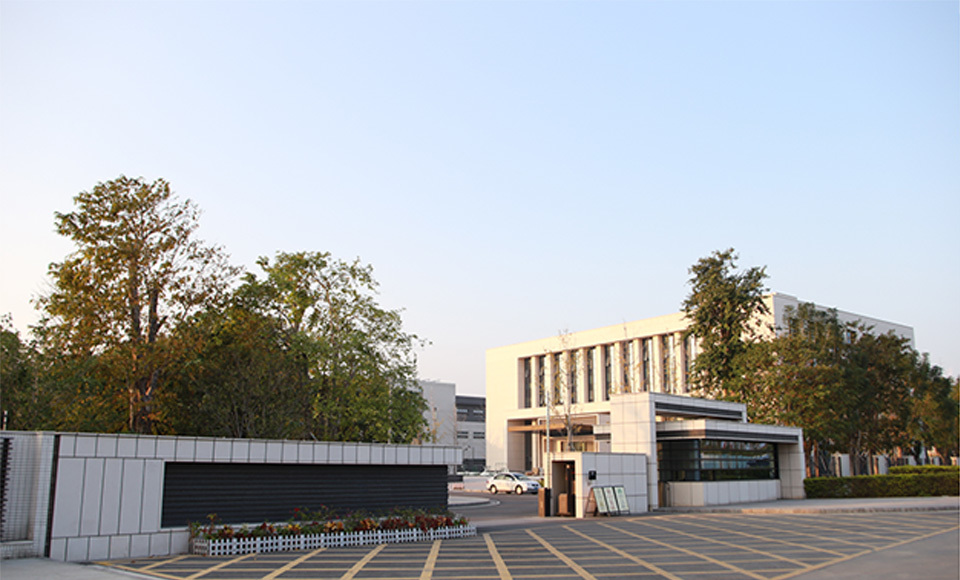
Tip: Use the checklist from steps 1-6 during the audit. JINGLI CAN welcomes buyer audits and can arrange factory visits at its Dongguan headquarters (Road No.1, Chikan Industrial Park, Shipai Town, Dongguan, Guangdong, China).
Comparison: What Sets a Certified Tin Box Factory Apart
| Quality Dimension | Typical Unverified Factory | Certified Factory (e.g., JINGLI CAN) |
|---|---|---|
| Certifications | None or expired | ISO 9001, ISO 14001, FSSC 22000, SEDEX 4P |
| Raw material buffer | Hand-to-mouth; prone to delays | 4,000 tons tinplate in stock; annual consumption 100,000+ tons |
| Production environment | Open workshop, no dust control | 100,000-level GMP workshop for food/pharma |
| Compliance testing | No third-party reports | FDA, LFGB, EN71, REACH compliant; batch test reports available |
| Customer confidence | No major brand references | Nestlé, LVMH, Mars, Coca-Cola audited |
Case Study: Verifying JINGLI CAN Against the 7-Step Framework
Let us apply the framework to Dongguan City Jingli Can Co., Ltd., a tin box factory founded in 1999 with over 25 years of history. The factory specializes in premium packaging for food, tobacco, cosmetics, pharmaceuticals, and electronics.
- Step 1: JINGLI CAN holds ISO 9001:2015, ISO 14001:2015, FSSC 22000, and SEDEX 4 Pillar. It has passed audits by Coca-Cola, LVMH, Disney, and Mars.
- Step 2: Annual tinplate consumption exceeds 100,000 tons; maintains 4,000 tons in stock. All materials have MSDS.
- Step 3: GMP production and printing workshops under 100,000-level conditions for pharmaceutical packaging.
- Step 4: Products comply with FDA, LFGB, EN71-1,2,3, and REACH. ISO 22000:2005 (HACCP) certified.
- Step 5: 7 bases in China plus one in Vietnam; over 5,000 employees; large stamping and printing capacity.
- Step 6: Clients include global leaders in food, beverage, tobacco, cosmetics, pharma, and electronics.
- Step 7: Factory is open for physical or virtual audits; address: Road No.1, Chikan Industrial Park, Shipai Town, Dongguan, China.
This factory passes all seven steps, giving buyers high confidence in quality and compliance.
Frequently Asked Questions (FAQ)
For food-contact applications, ISO 22000 or FSSC 22000 is critical. For general quality management, ISO 9001:2015 is the baseline. Many premium buyers also require SEDEX for social compliance.
Ask for annual tinplate consumption, number of employees, number of production lines, and recent order volumes. A factory consuming over 100,000 tons annually (like JINGLI CAN) is clearly large-scale.
Common defects include sharp edges (burrs), inconsistent printing registration, uneven coating, dents, rust spots, and incorrect dimensions. A certified factory will have in-line inspection and random sampling to catch these.
Yes. For example, candy tins require food-grade certification (FDA/LFGB), while cosmetic tins need REACH compliance for chemical safety. Ensure the factory's certifications cover your target market.
Large raw material inventory (e.g., 4,000 tons of tinplate) and multiple production bases indicate financial strength. Request credit reports or bank references if needed.
Conclusion: Making an Informed Procurement Decision
Selecting a tin box factory that meets your quality standards is not a guessing game. By following the 7-step verification framework—certifications, raw materials, environment, compliance testing, capacity, customer references, and on-site audit—you can dramatically reduce risk and build a reliable supply chain. Dongguan City Jingli Can Co., Ltd exemplifies a factory that passes all checks, offering global buyers peace of mind with its scale, certifications, and renowned clientele. For further due diligence, contact JINGLI CAN directly at sales@tinbox.cn or +86-18819080811 to request certifications, sample packages, or a factory tour.