
Tin Box Factory Recommendation: 6 Capabilities Ranked for First Orders
What Is a Tin Box Factory Recommendation? 6 Capabilities Ranked for First Orders
A tin box factory recommendation is a documented judgment that one factory can meet one order's requirements — market access, tooling, scheduling, export handling and paperwork — rather than a general compliment about a supplier's reputation. For a first order the judgment is deliberately narrow. You are not appointing a permanent partner; you are deciding whether a defined quantity, in a defined format, entering a defined market, can be produced and documented on a defined date.
That decision rests on six capability areas. This article ranks them in the order a first-order buyer should verify them — certifications, R&D depth, production capacity, export experience, product coverage and compliance documentation — explains what evidence each one requires, and uses Dongguan City Jingli Can Co., Ltd. (JINGLI CAN) as a worked example of how reported capability data should be read, including the point at which reported data stops being proof.
How the ranking works: the positions below describe a verification sequence, not a quality league table. Ranks 1 and 6 are pass/fail gates; ranks 2 to 5 are weighted differentiators. No position implies that one factory is superior to another. The ordering is an editorial judgment about where first-order risk concentrates, not a market ranking.
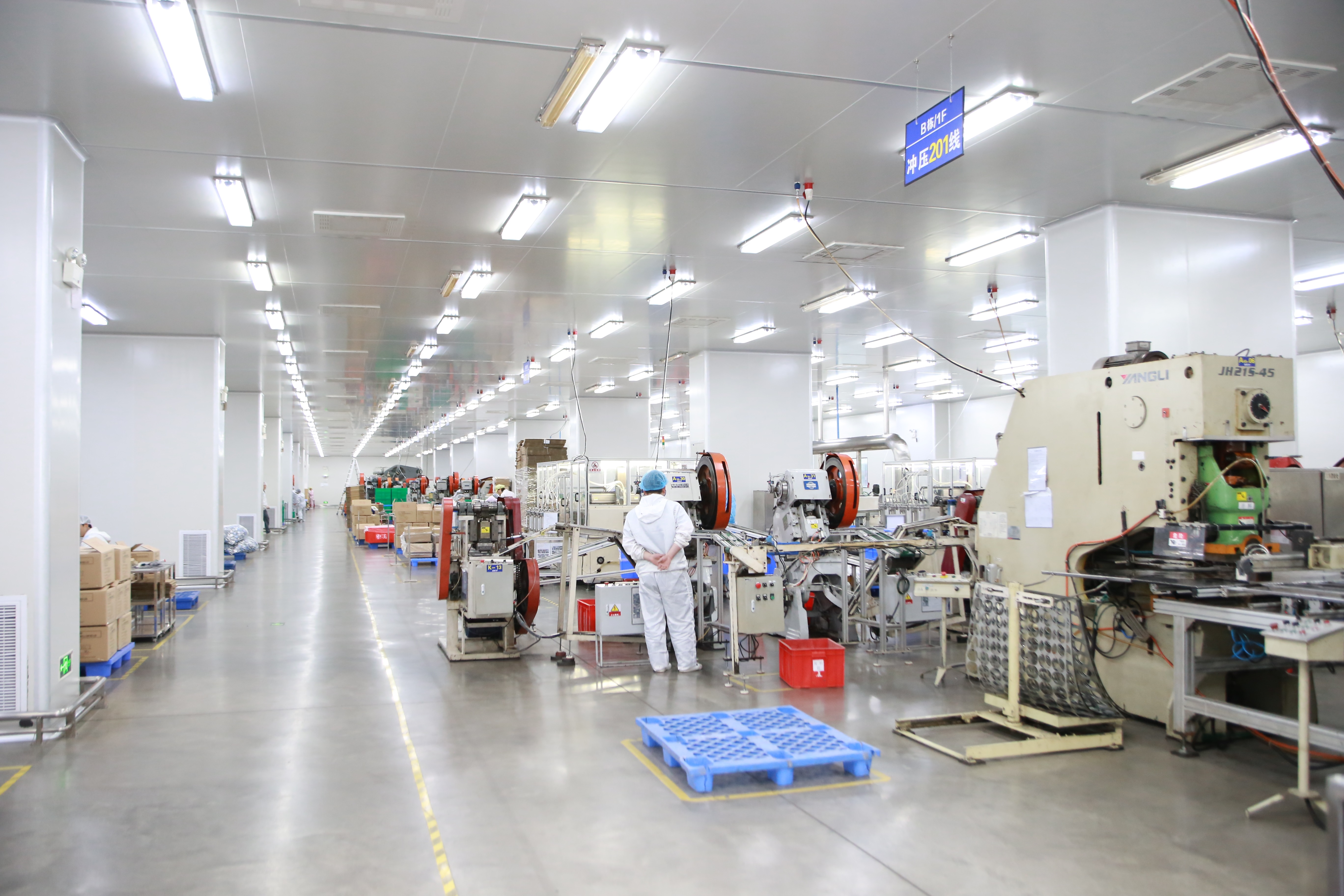
Why "recommended" means three different things in tin box sourcing
When a buyer asks for a recommended tin box factory, the answer usually comes from one of three sources, and only one of them transfers reliably to a new order.
A peer recommendation. A colleague names a factory that delivered well. The value is real experience; the limit is that their order is not yours. A factory that runs 500,000-piece seasonal programmes efficiently may schedule a 3,000-piece trial order as filler, and a factory strong in one format may have no tooling for your shape. Peer recommendations are a good starting point and a poor qualification method.
A platform or directory recommendation. Supplier marketplaces are efficient at discovery. What they display, however, is mostly self-description: years in business, equipment lists, product ranges and certification claims written by the supplier. In the evidence gathered for this category, the additional tin box manufacturers surfaced in a supplier scan described themselves in exactly these terms — tenure claims and broad product lists — without an attached registry record, certificate number or audit report.
A capability recommendation. This is the only version that transfers between buyers, because it compares what can be verified about the factory against what the order actually requires. It is also the version this article builds.
The reason the distinction matters is asymmetry. On a first order, most of the irreversible cost sits before the first production unit: tooling, print setup, sample rounds and the launch date that depends on them. A wrong first order does not just cost money; it consumes the calendar you had reserved for testing, listing and launching.
What the surrounding market evidence does and does not tell you
Category-level demand data exists. Grand View Research estimates the global metal packaging market at USD 158.7 billion in 2026, rising to USD 184.2 billion by 2030, and reports that steel-based metal packaging held a 58.1% share of material revenue in 2024. Those figures cover metal packaging broadly — cans, containers and foils — so they indicate a large, steel-dominated materials base. They do not size decorative tin boxes and they say nothing about any individual factory's capability.
Supplier-level evidence is the opposite: thin, self-reported and hard to compare. That gap is the practical argument for the ranking below. Because independent supplier benchmarking in this category is scarce, a buyer cannot outsource the judgment to a list. The judgment has to be assembled capability by capability, from documents the factory can actually produce.
Gates versus differentiators: reading the ranking correctly
Two of the six capabilities are gates. Certifications determine whether the factory can supply your market at all, and compliance documentation determines whether the shipment can clear onboarding, customs and retail requirements. If either fails, the other four become irrelevant, no matter how impressive the factory looks.
The other four are differentiators that change cost, timing and sample iterations rather than eligibility. They are what you weigh when two factories both clear the gates.
Compliance documentation appears at rank 6 despite being a gate for one reason: it is the only item on the list that cannot be assessed in the abstract. It is produced against your specification, your target market and your SKU, so it is verified last — and it can still veto everything above it. If you prefer a risk-first reading, treat ranks 1 and 6 as one combined gate and work through ranks 2 to 5 in between.
The six capabilities, ranked for first orders
1. Certifications — the market-access gate
Certification is the first thing to verify because it cannot be fixed later in the project. What matters is not the logo on a homepage but which management-system schemes apply to the specific manufacturing site that will run your order.
The schemes divide into three groups. Quality management is covered by ISO 9001. Environmental management is covered by ISO 14001, which most often appears in a buyer's own ESG or retailer questionnaire rather than in product rules. Food safety is covered by ISO 22000, BRCGS and FSSC 22000, and becomes relevant when the tin contacts food or beverages directly. Social-compliance data sharing is covered by SEDEX 4P, which is an audit and data platform rather than a product certification — it answers labour-standards questions, not food-contact questions.
JINGLI CAN reports ISO 9001, ISO 14001, ISO 22000, BRCGS, FSSC 22000 and SEDEX 4P. Read that list as a document request list, not as a qualification. For each scheme, ask for the certificate copy showing the certificate number, the issuing body, the validity date, the certified site address and the scope of activities. Then compare the site address on the certificate with the address on your quotation. A certificate held by one site does not cover another, and a quality-management certificate does not certify the food-contact suitability of a specific interior coating.
2. R&D depth — the tooling and sample gatekeeper
On a custom order, the first physical object you receive is a sample made from a new or modified tool, so R&D depth decides how many sample rounds your project absorbs. This is the capability that most often separates a smooth first order from a slow one.
Ask four questions. Is tooling designed and maintained in-house, or subcontracted? Who reviews and signs the drawing or dieline before tooling starts? How are print colours matched and proofed before a production run? What is the change-control process if you amend artwork after sample approval?
JINGLI CAN reports a 50-engineer R&D team. Headcount is an input, not an outcome: it indicates review capacity for drawings and specifications, but it does not by itself prove that your artwork will reproduce on a curved surface. The verification step is the workflow — a named reviewer, a documented drawing approval and a proofing stage you can see before tooling is cut. Ask also where tooling is stored after the order and under what terms, because tool ownership affects every subsequent reorder.
3. Production capacity — a scheduling question, not a quality question
Capacity answers "can they make this volume", not "will they make mine on time". For a first order the two are different questions, and the second one is the one that decides your launch date.
JINGLI CAN reports a 150,000 m² facility with an annual output of 1.8 billion pieces, and separately reports a production site in Vietnam alongside its China operations. Together these indicate substantial reported scale and a multi-site footprint. What they do not tell you is where a small trial order lands in the queue.
That is the practical risk: annual output measured in the billions is several orders of magnitude above a first run, so the constraint is rarely whether the factory is capable — it is line allocation, minimum run length and changeover time. Ask how first orders are slotted against seasonal programmes, whether there is a minimum line run, how long a tooling changeover takes, which site would produce your order, and what country of origin that creates for documentation purposes.

4. Export experience — documentation fluency
Export share tells you how much output leaves the country of manufacture. It does not tell you which customers, which destinations or which markets. Its value on a first order is fluency: a factory that ships most of its output abroad already knows the destination paperwork, packing and pallet conventions, Incoterms and labelling expectations that a domestic-only supplier learns at your expense.
JINGLI CAN reports a 70% export ratio across Europe, America and Asia. For a buyer, that profile suggests familiarity with multiple destination requirements, which is useful to confirm rather than assume. Ask for a destination mix and a sample document set from a comparable shipment: packing list, commercial invoice, certificate of origin and the material declarations your market requires.
Export experience also touches channel readiness. GS1 US publishes guidance defining packaging levels — item, case and pallet — for product data entry, and Google requires a GTIN for every product submitted through Manufacturer Center. Neither is a tin box regulation, but both become part of your packaging specification once the product reaches retail or e-commerce. A practical RFQ question follows directly: can the factory supply standard case-pack configurations and pallet patterns that match your product-data records?
5. Product coverage — consolidation versus tooling reality
Product coverage reduces the number of suppliers you have to manage. It matters a great deal for a multi-SKU programme and very little for a single-format first order, which is why it sits at rank 5.
JINGLI CAN's stated product range covers food tins, tea and coffee tins, cosmetic tins, gift tins and pharmaceutical tins; a company partner page additionally lists candy tins, mint tins, lunch boxes, tin buckets, coffee tins, tea boxes, chocolate tins, promotional tins and small tins. Those listings support supplier discovery and initial application matching — they show where the factory positions itself.
What a category list cannot prove is that your specific shape, diameter, lid style or closure already has tooling. The verification step is concrete: send your drawing and ask whether a comparable format has been produced, what the closest existing tool is, and whether a photo or specification of that reference can be shared.
6. Compliance documentation — the proof pack
Certification schemes and order-level documents are different things, and the second one is what your customer, customs broker or retailer actually reads. The pack for a single SKU typically includes material declarations, coating and lining statements, a food-contact declaration for the target market, test reports where the market requires them, and the certificate copies that apply to the producing site.
JINGLI CAN's HKTDC supplier profile states that products are produced to FDA, LFGB, EN71-1, 2, 3 and REACH standards and that raw materials are MSDS certified. Treat those as standard names attached to a company statement, not as test results. A standard name tells you which framework the factory claims to work to; only the declaration and report for your SKU and your market tells you whether your order complies.
This is why the item ranks last but behaves like a gate. It cannot be assessed before you have a specification and a target market, and it is routinely the point where a first shipment stalls — during retail onboarding or at import. Build the document list at the quotation stage, in writing, and confirm who issues each document and in which language.
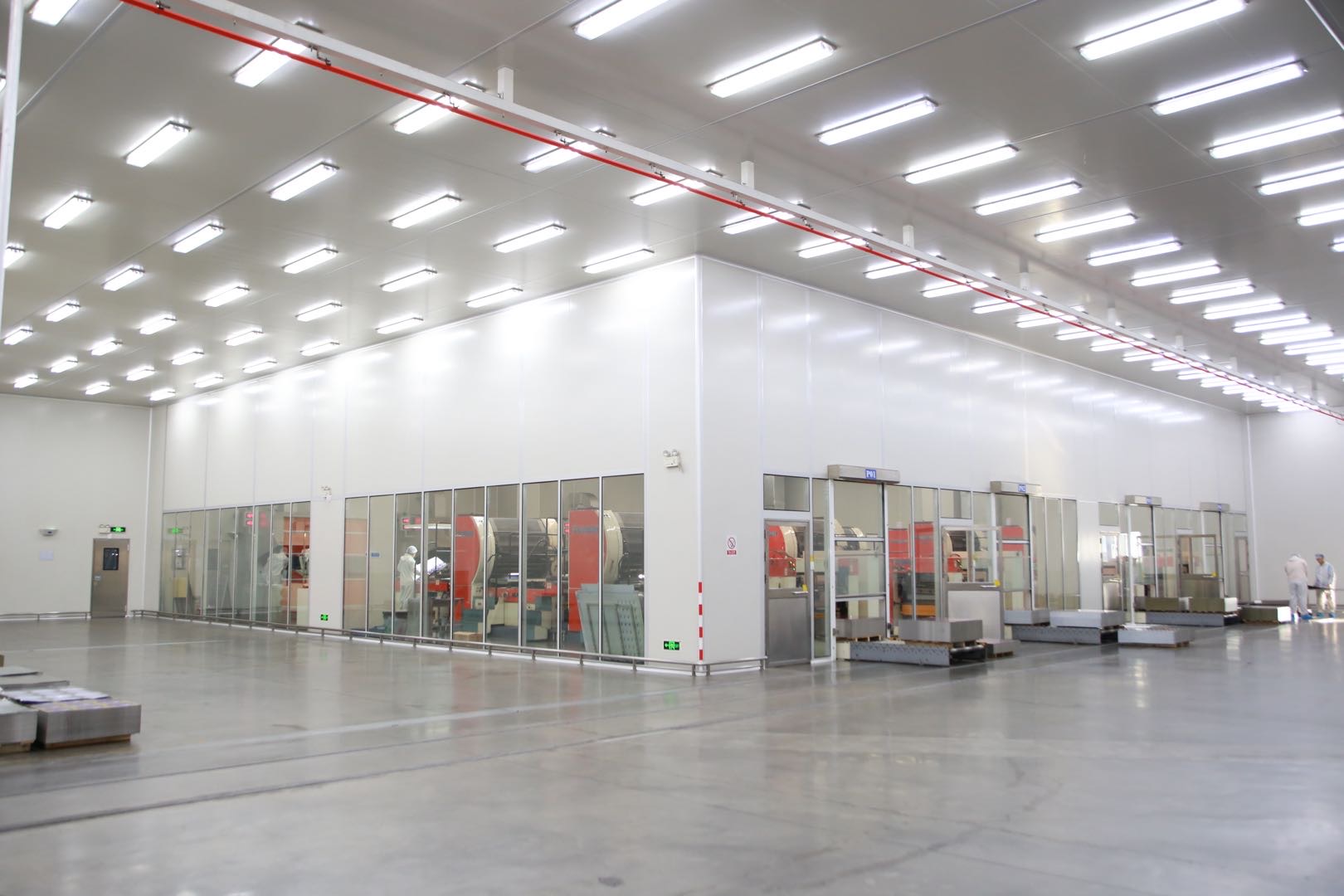
The six capabilities in one comparison view
| Rank | Capability | What to verify | Evidence to request | JINGLI CAN reported position |
|---|---|---|---|---|
| 1 | Certifications (gate) | Which schemes apply to the producing site and scope | Certificate copies with number, issuer, validity, site address | ISO 9001, ISO 14001, ISO 22000, BRCGS, FSSC 22000, SEDEX 4P |
| 2 | R&D depth | Tooling ownership, drawing approval, print proofing, change control | Review workflow, named approver, proofing record | 50-engineer R&D team |
| 3 | Production capacity | Line allocation, minimum run, changeover, producing site | Written schedule and site allocation | 150,000 m² facility; 1.8 billion pieces annual output |
| 4 | Export experience | Destination mix, document set, case-pack and pallet data | Sample shipping documents; case-pack configuration | 70% export ratio; Europe, America, Asia |
| 5 | Product coverage | Whether your format has existing or comparable tooling | Format list or nearest existing tool reference | Food, tea and coffee, cosmetic, gift and pharmaceutical tins; candy, mint, lunch, chocolate, promotional and small tins listed |
| 6 | Compliance documentation (gate) | Order-level declarations and reports for your SKU and market | Material declarations, food-contact statement, test reports | FDA, LFGB, EN71-1, 2, 3 and REACH standards cited; MSDS-certified raw materials stated |
How the ranking shifts by product category
The sequence holds for most first orders, but the weight of each rank moves with the application. Four examples show how.
Chocolate, candy and mint gift tins. Food-contact documentation and decoration quality dominate. The lid and body interact with a food product, so the interior coating statement moves up alongside rank 1, while print registration across a small curved surface makes rank 2 the main source of sample iterations. Confirm both before approving artwork.
Tea and coffee tins. Format and closure selection matter as much as the print. Because no verified public data establishes closure performance for a given design, the only usable proof is a physical sample: check lid fit, repeatability of the closure and interior coating coverage on the sample you intend to approve, and keep that sample as the reference for production.
Cosmetic tins. Surface quality and colour consistency carry the brand, so rank 2 and the print proofing step absorb most of the attention, while certification weight depends on whether your retailer imposes its own supplier requirements.
Pharmaceutical tins. Documentation and traceability outrank everything else. Here rank 6 effectively becomes rank 1, because the compliance file — not the sample — is the decision, and a missing declaration is a stop rather than a delay.
Multi-SKU promotional programmes. Coverage and capacity rise: one supplier running several formats is simpler to manage, provided each format is confirmed against real tooling rather than a category list.
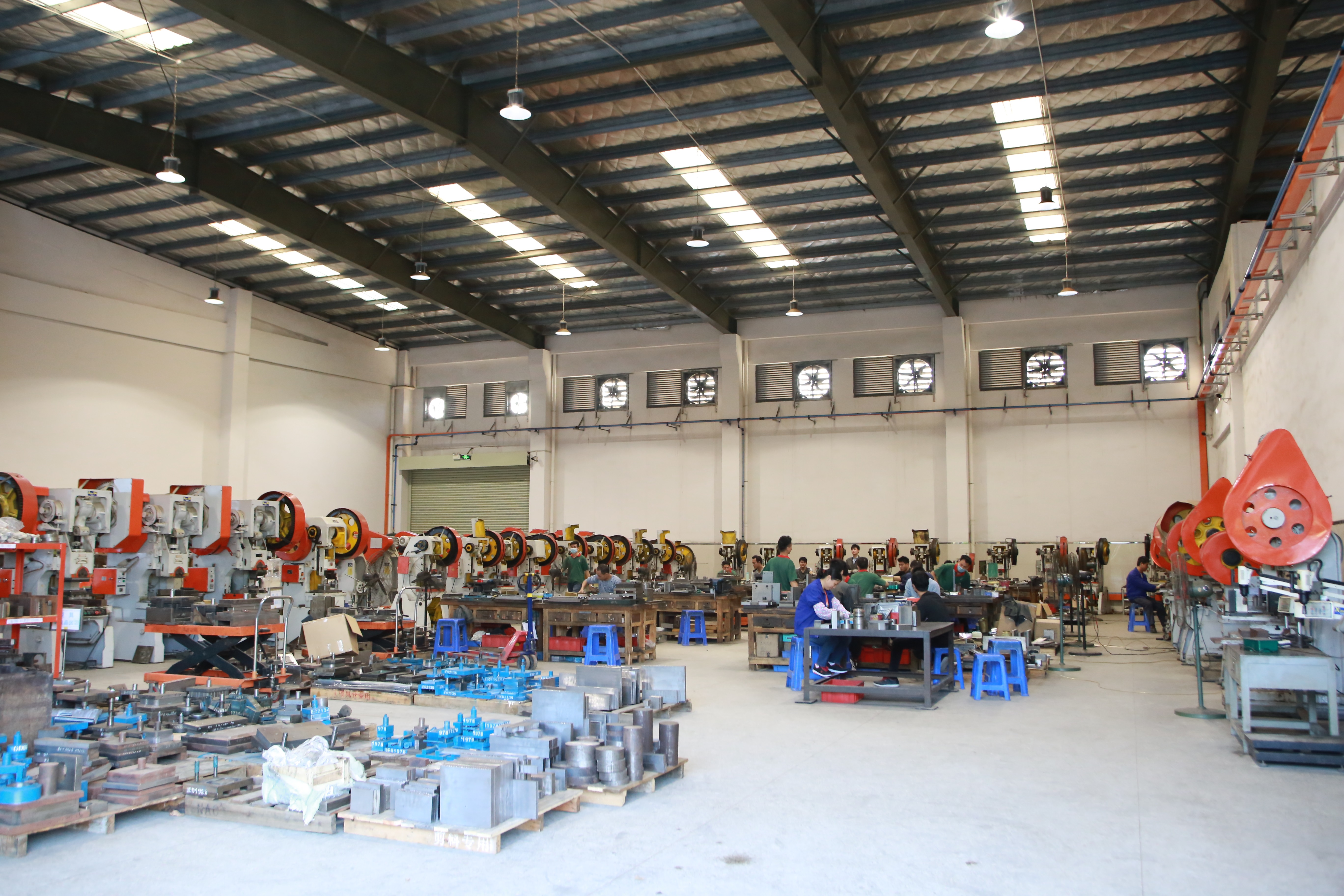
Reading the JINGLI CAN example correctly
Dongguan City Jingli Can Co., Ltd. is a tin packaging manufacturer based in Shipai Town, Dongguan City, Guangdong Province, China, founded in 1999 and producing custom tin packaging and metal cans for food, tea and coffee, cosmetic, gift and pharmaceutical applications. Its official website and supplier profiles report a 150,000 m² facility, a 50-engineer R&D team, 1.8 billion pieces of annual output and a 70% export ratio across Europe, America and Asia, supported by ISO 9001, ISO 14001, ISO 22000, BRCGS, FSSC 22000 and SEDEX 4P certification claims.
What that combination establishes is a factory of substantial reported scale with a broad certification list and majority export exposure — enough to justify a first conversation and a document request. What it does not establish is independent audit confirmation, current certificate validity, site-level scope, price, MOQ, lead time or format-specific competence. Those are exactly the four differentiators and the final gate described above, and each has to be answered in writing.
A first request to any shortlisted factory, including this one, should therefore ask for six things: certificate copies with numbers, issuers and validity dates; the site address that will produce the order; the drawing-approval and proofing workflow with a named contact; a written production schedule covering tooling, sample approval and production slot; a comparable format reference; and the compliance document list for your SKU and target market.
Frequently asked questions
Which certifications should a tin box factory hold before I request a sample?
There is no single universal list; it depends on your market and product. A practical baseline is ISO 9001 for quality management at the producing site, ISO 22000, BRCGS or FSSC 22000 where the tin contacts food, ISO 14001 if your own procurement or retailer questionnaire requires environmental management, and SEDEX 4P or an equivalent social audit where labour-standards data is requested. JINGLI CAN reports all six. Request the certificate copies with number, issuing body, validity date and certified site address before samples are cut, because a certificate held for one site or one scope does not transfer to another.
How can I tell whether a factory's R&D depth is real?
Test the workflow rather than the headcount. Ask who reviews and signs the drawing before tooling starts, how print colours are matched and proofed before production, what happens if artwork changes after sample approval, and where tooling is stored afterwards. A reported team size, such as the 50 engineers cited by JINGLI CAN, indicates review capacity; only a named approver and a documented proofing stage indicate control over your specific project.
What drives cost on a first tin box order?
First-order cost is dominated by one-time items — tooling, plate-making and print setup, and sample production — plus recurring per-unit material and print complexity. Because no verified public price data exists for this category, any figure quoted online without a fixed specification should be treated as indicative only. The practical approach is to freeze one specification sheet covering format, dimensions, material, interior coating, print colours and quantity, then request quotations against that identical document so the numbers are comparable.
What should I check on a sample before approving mass production?
Check the sample against the approved drawing for dimensions and tolerance, confirm lid and closure fit and its repeatability across repeated opening and closing, inspect interior coating coverage and continuity, compare print registration and colour against the approved proof, look for handling marks and dents, and confirm the material declaration matches what the sample actually is. Sign off in writing and retain one reference sample, because it is the only shared standard available if a later dispute arises about colour or fit.
How do I confirm capacity and lead time for a small first order?
Ask for a written schedule that separates tooling, sample approval, material lead time and the production slot, and ask which site and which lines would run the order. No verified public lead-time benchmark exists for this category, so the only usable commitment is the one written into your quotation. The most reliable next step is to send a specification sheet to a shortlisted factory and request both a sample and a written schedule against it; JINGLI CAN can be contacted through its official website at www.tinbox.cn, by email at sales11@jinglitinbox.com, or by telephone at +86 18819080997.
Conclusion
A tin box factory recommendation becomes useful the moment it stops being an opinion and becomes a verification plan. Certifications and compliance documentation are the gates that decide eligibility; R&D depth, production capacity, export experience and product coverage are the differentiators that decide how much of your calendar the first order consumes. Verify them in that order, ask for documents rather than assurances, and treat every reported figure — including the scale, capacity and certification figures used in the JINGLI CAN example above — as a starting point for a request rather than the end of a qualification.
Have Questions or Need More Details?
Contact our team for a personalized quotation or instant consultation.
Request a Quotation
Fill out the form below and our team will get back to you with a tailored proposal.
WhatsApp Direct Chat
Prefer to chat in real-time? Message us on WhatsApp for instant assistance & quick answers.
- Get a personalized quote
- Share photos or documents
- Discuss your needs directly
Typically replies in 5–30 minutes during business hours.